Perplexity AI CEO Aravind Srinivas just made a surprising admission. While launching his company’s new Comet browser for iPhone, he openly said Google handles everyday searches better than anyone else, even Perplexity. This comes months after he offered more than $34 billion to buy Google’s Chrome browser.
The move shows a practical side to the fierce AI search competition. Instead of fighting Google head on for every query, Perplexity is teaming up in a smart way on mobile.
The Bold Offer That Shocked The Tech World
Last August, Srinivas sent a letter to Google CEO Sundar Pichai with a $34.5 billion all-cash offer for Chrome. At the time, that bid was nearly double what Perplexity was worth. The idea was to take Chrome and run it as an independent company, possibly as part of bigger antitrust efforts against Google.
Google never took the offer seriously. The bid grabbed headlines and put Perplexity firmly in the spotlight as a bold challenger. Many saw it as a publicity stunt, but it highlighted how quickly AI startups were growing and eyeing pieces of the search giant’s empire.
Seven months later, Srinivas took a very different tone. On the same day Comet launched for iOS, he posted on X explaining why his new browser defaults to Google for many searches.
Google Gets The Default Spot On Comet iOS
Srinivas explained it clearly. Most searches on phones involve quick tasks like finding a nearby restaurant, checking sports scores, shopping deals, or booking hotels.
“Google does a much better job here than anyone else in the world, including Perplexity,” he wrote.
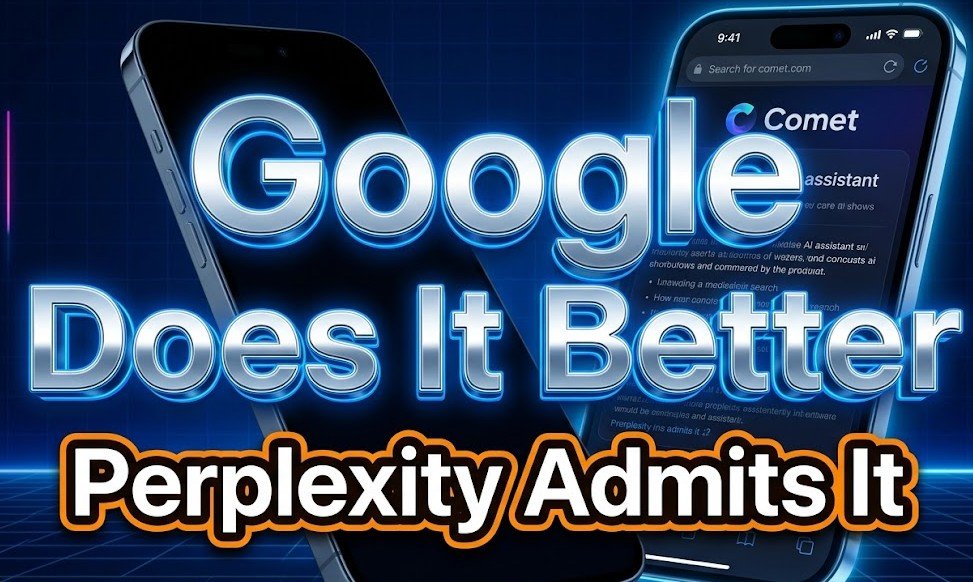
This sets the iOS version apart from the desktop Comet, where Perplexity powers the main search experience. On iPhone, Google handles those fast navigational queries while Perplexity’s AI assistant sits ready to jump in for deeper questions.
The approach feels honest. Srinivas did not try to pretend his tool beats Google at everything. He recognized where Google shines and built around it.
How The Hybrid Setup Actually Works
Comet on iOS delivers a blended experience. Users type in the search bar and get Google’s familiar results for simple needs. The Comet Assistant then overlays on top of any page, including Google’s own search results.
Want more than just directions or a score? Ask the assistant to summarize an article, compare options, or even take action like filling out a form or adding something to your calendar.
Voice mode works smoothly too. Speak your question and get answers without breaking your flow. The assistant can even pull insights from your open tabs.
Early users like the seamless handoff. Google speeds through the everyday stuff while Perplexity handles the thoughtful follow-ups that turn quick lookups into real decisions.
The app itself runs free on iOS. This marks a big change from the desktop version, which started at a steep $200 per month before adjustments. Perplexity clearly wants broad adoption on mobile where most people spend their time.
Why Navigational Searches Matter So Much
Mobile browsing differs from desktop use. People grab their phones for instant answers while out and about. They need speed and accuracy for local information, real-time updates, and simple directions.
Google built its empire on exactly these strengths. Its Maps data, review system, business listings, and fast indexing give it an edge that AI companies still struggle to match in real time.
Srinivas pointed this out directly. Perplexity excels at research, explanations, and synthesis. It shines when users want context, comparisons, or creative help. But for “where is the closest gas station” or “what is the score right now,” Google remains king.
This admission from a top AI leader carries weight. It shows the search market has layers. Different tools can win in different areas rather than one winner taking all.
What This Reveals About The AI Browser Wars
The tech world watches every move between Google and AI challengers like Perplexity, OpenAI, and others. Many expected all-out competition with new tools trying to replace Google entirely.
Instead, Srinivas chose pragmatism. By defaulting to Google where it wins and layering Perplexity’s strengths on top, Comet positions itself as a helpful companion rather than a full replacement.
This could influence how other AI browsers develop. Building something users actually want to use daily matters more than winning every benchmark. People care about results that fit their real lives, not just impressive demos.
Perplexity continues pushing its own tech forward. The company added features like deeper research modes and better action capabilities. Users can start a project on desktop and pick it up smoothly on their iPhone.
Strong Points Of The New Approach
- Fast access to Google’s reliable local and navigational results
- Perplexity AI ready for complex questions and summaries
- Voice commands that understand context from open pages
- Native ad blocking and smooth video playback
- Free access on iOS to encourage wide use
Many reactions on X praised the honesty. One user called it a “sensible split” between quick navigation and deeper thinking. Others noted it feels like the first time an AI layer truly fits naturally into daily browsing.
Some remain skeptical. A few wonder why anyone would choose Comet over plain Chrome or Safari if Google powers the core search. Yet the assistant features and cleaner interface give reasons to switch for power users who do heavy research.
The Bigger Picture For Search And AI
Google still dominates mobile search by a huge margin. Its control over Android and strong position on iOS through defaults give it staying power. Yet AI tools bring new ways to interact with information that go beyond simple links.
Perplexity’s strategy suggests the future might involve smart combinations rather than total disruption. Users could benefit most from this. They get the best of proven systems plus fresh AI capabilities without losing the speed they expect.
Srinivas built his reputation on ambitious ideas. From the Chrome offer to launching a full browser, he keeps pushing boundaries. This latest move shows he also knows when to respect the competition’s strengths.
The launch comes at an interesting time. Regulators continue examining Google’s power while AI changes how people find and use information. How these forces play out will shape the web for years ahead.
Comet for iOS gives regular people a new option that feels thoughtful. It does not promise to kill Google. It promises to work alongside it in ways that make daily life easier.
In the end, that practical focus might win more users than bold claims ever could. People want tools that solve real problems without forcing them to change everything about how they browse.