Jio OPPO 5GA support on the Find X9 Ultra and Find X9s gives India a cleaner test of 5G Advanced than another speed banner in a phone ad. The useful signal is narrower and more concrete: Jio’s standalone 5G network now has two new flagship devices that can show a 5GA badge, while OPPO is tying antenna design, lab-tested speed claims and AI LinkBoost software to one carrier’s network.
That makes the partnership less about a single peak download number and more about whether India’s largest broadband provider can turn its early 5G Standalone build into handset-level features people notice in crowded stations, concerts, high-rise apartments and indoor dead zones.
Jio Turns a Network Lead Into a Phone Badge
OPPO India, the smartphone maker’s local unit, said in OPPO’s April Find X9 India notice that the Find X9 Ultra and Find X9s would expand its local flagship lineup to four devices. The company has since put the Jio 5G Advanced message directly on both product pages, not as a buried modem line.
Reliance Jio Infocomm, Reliance Industries’ telecom arm, is the reason that badge matters. Jio built 5G Standalone (5G SA, a network that uses a 5G core rather than depending on a 4G core for control functions) from the start. That architecture gives the operator a stronger base for features such as low latency, network slicing and tighter quality control than a non-standalone layer.
- Two phones now carry the new 5GA positioning in OPPO’s India flagship range.
- Three times internet speed is OPPO’s lab comparison claim for 5G Advanced versus standard 5G on these devices.
- 523.44 million broadband subscribers put Jio at the top of TRAI’s March 2026 broadband table.
The badge is useful for one more reason: it pulls 5G marketing out of the tower map and puts it on a handset screen. If the icon appears but the experience feels ordinary, the weak point becomes visible to the user.
The Standard Behind the 5GA Icon
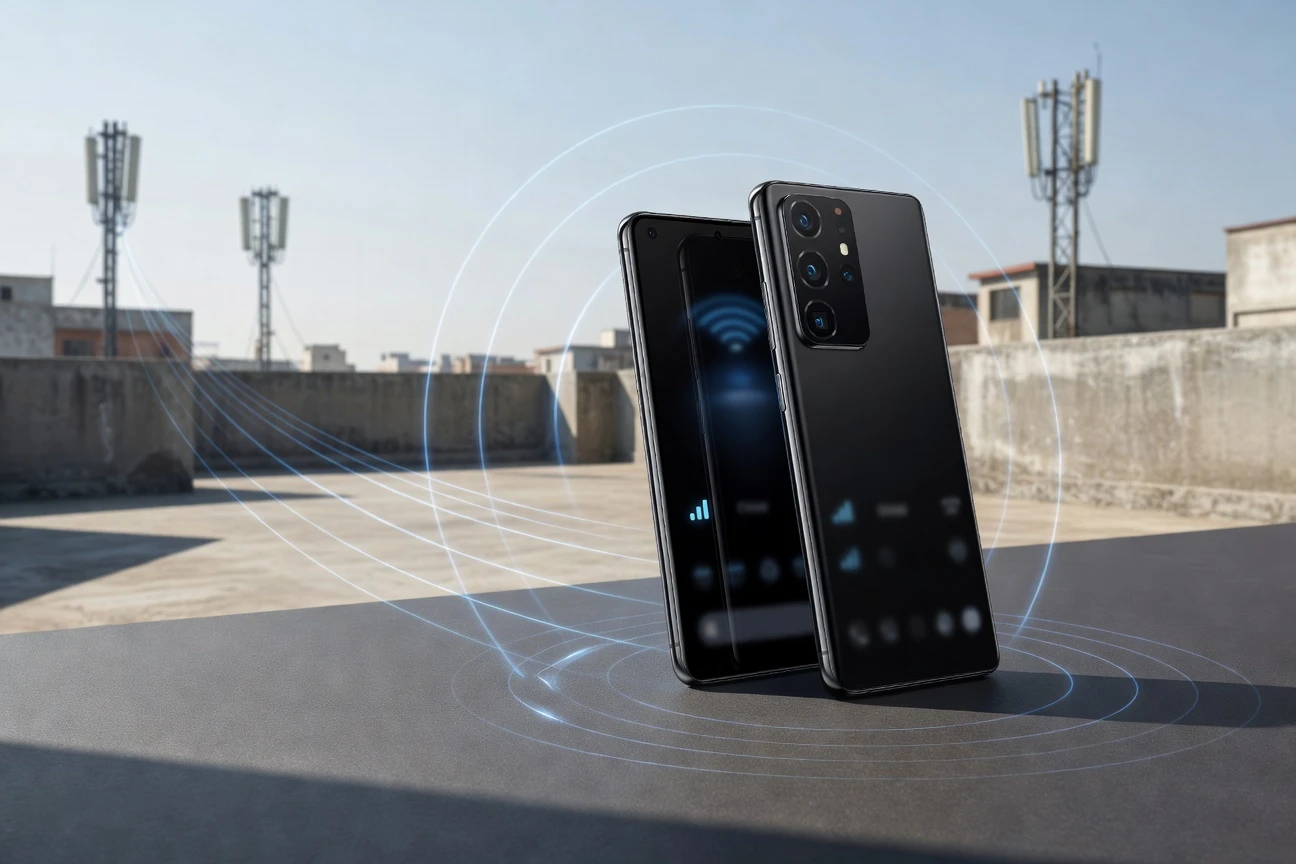
5G Advanced is not a Jio slogan. The 3rd Generation Partnership Project (3GPP, the global standards group that defines mobile network releases) says Release 18 marks 5G Advanced for its specifications and reports. That matters because the label should point to a generation of capabilities, not a carrier-specific skin.
Release 18 work includes improvements across radio performance, positioning, satellite access, Internet of Things support and network efficiency. For consumers, the headline will still read as speed. For carriers, the more valuable pieces are control and differentiation. They want to sell distinct grades of service instead of treating every bit as the same commodity.
Ericsson, the Swedish network equipment maker, described the 5G SA core as flexible and programmable in its 5G standalone capabilities report, with support for assured quality of service, lower latency and network slices. Reduced Capability (RedCap, a lighter 5G device class for cheaper sensors and wearables) also depends on a standalone network.
That is where Jio’s early choice becomes important. A phone badge can sell the next upgrade cycle, but the commercial prize is broader: home broadband, enterprise connectivity, live events, gaming and industrial links that need a defined level of service.
Two OPPO Phones Carry Different Jobs
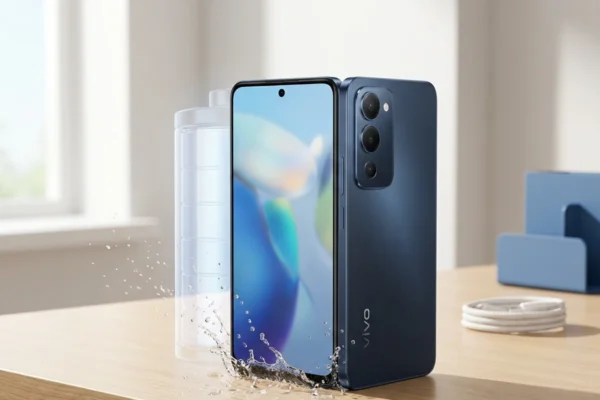
The Find X9 Ultra is the showpiece. OPPO’s India page for the Find X9 Ultra’s 5GA and camera features says the phone pairs a 360-degree surround antenna architecture with a self-developed NetworkBoost Chip S1, 100W wired charging and a 7050mAh battery. The same page claims a 144Hz 2K ProXDR display and Snapdragon 8 Elite Gen 5 performance.
The Find X9s has a different role. OPPO presents it as the more accessible flagship, with a 50MP triple camera system, Dimensity 9500s, ColorOS 16, a 7025mAh battery and a refreshed design. Its network section is still explicit: the phone partners with Jio for the 5G Advanced experience and uses a 360-degree surround antenna plus AI LinkBoost.
| Device | Network Hook | Performance Pitch | Camera Position |
|---|---|---|---|
| Find X9 Ultra | Jio 5G Advanced, 360-degree surround antenna, NetworkBoost Chip S1 | Snapdragon 8 Elite Gen 5, 144Hz 2K ProXDR display, 7050mAh battery | Hasselblad system with 200MP main and 200MP 3x telephoto claims |
| Find X9s | Jio 5G Advanced, 360-degree surround antenna, AI LinkBoost | Dimensity 9500s, 120Hz ProXDR display, 7025mAh battery | 50MP triple camera system for everyday creation |
The split is tidy. One phone makes the case that OPPO can compete at the very top of Android hardware. The other tests whether 5GA can become a selling point below the most expensive slab.
The Speed Claim Needs Fine Print
OPPO’s pages for both devices say the 5G Advanced experience can deliver three times internet speeds compared with standard 5G. The footnote is doing heavy work. The comparison comes from OPPO Labs, and the company says actual experience may vary because of software, hardware optimization, network conditions and user habits.
That caveat does not make the claim meaningless. It makes it a starting point. Mobile networks are shared systems. The same phone can feel spectacular near a lightly loaded mid-band site and ordinary inside a concrete building at rush hour. Antenna design helps, but it cannot rewrite spectrum physics or congestion.
- Device support has to be present, including the right modem, software build and radio bands.
- Network mode has to be 5G SA in the place where the phone is being used, not only 5G coverage in a broad city map.
- Capacity has to hold up when many users gather in the same cell, such as a railway platform or cricket stadium.
- Carrier policy has to let the user stay on the service, with the right plan, SIM and provisioning.
The best way to read the badge is as a capability marker, not a guaranteed speed floor. If a user sees 5GA, the phone and network have met the conditions to expose that mode. The lived result still depends on the cell, the crowd and the plan.
India’s Scale Makes the Trial Matter
India is not a small proving ground. The Telecom Regulatory Authority of India, the country’s telecom regulator, said in its March 2026 subscription release that total telephone subscribers reached 1.33 billion, while total broadband subscribers reached 1.07 billion. Jio led the broadband provider table with 523.44 million subscribers.
Fixed Wireless Access (FWA, broadband delivered over a wireless last mile rather than a fiber drop) is part of the same story. TRAI reported 12.32 million 5G FWA subscribers at the end of March. That number matters because home broadband can use the same standalone network strengths Jio wants to showcase on phones: capacity planning, low latency and slices with defined quality.
Ericsson’s India case study, written with Jio, said the operator adopted 5G SA from day one and used low-band 700 MHz, mid-band 3.5 GHz and high-band 26 GHz spectrum. It also said Jio deployed more than 1 million 5G cells in 12 months after launch in October 2022, at a peak rate of one cell every 10 seconds.
Scale cuts both ways. A big network gives OPPO a national stage for 5GA claims. It also gives unhappy users a bigger megaphone if the badge becomes another icon that appears more often than the benefit.
The Carrier Fight Moves From Coverage to Control
The first phase of India’s 5G race was about rollout speed and coverage. The next phase is about what operators can make the network do after coverage is no longer rare. That is why the OPPO deal lands at an interesting moment: it puts a consumer device at the front of a more technical shift toward programmable networks.
For Jio, the partnership is a way to make the standalone investment visible before most users care about phrases like network slicing. For OPPO, it gives the Find X9 line a local India feature that rivals cannot copy only by adding a faster chip. The operator, the device maker and the standards body all meet at the same point on the screen.
There is risk in that. If users buy the story as a promise of constant top speed, disappointment will arrive quickly. If they treat it as a sign that the phone is built for Jio’s most advanced mode, the claim is more durable.
If the 5GA badge produces steadier calls, faster uploads and fewer dead-zone complaints in the places where 5G usually strains, Jio gets proof that standalone architecture can be sold to consumers. If it only wins benchmark screenshots, the badge becomes another small icon competing for space at the top of a phone display.