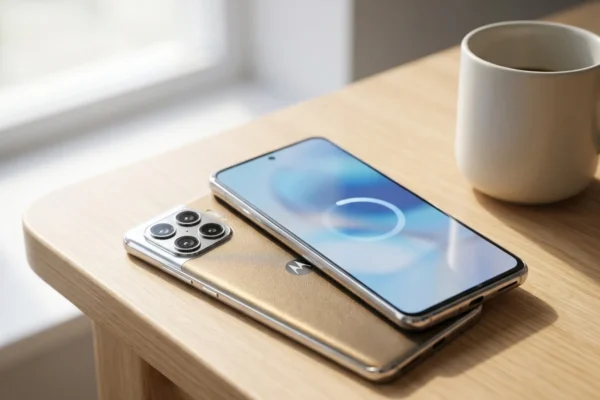
Boltt Ace 5G and Evo go on sale exclusively on Flipkart from September 1 at 12 pm, with day-one prices starting at Rs 9,999 after a flat Rs 1,000 cut on every variant. The pair marks the first smartphones from the team behind Fire-Boltt, the wearables brand that claims more than 50 million units sold.
Founder and CEO Arnav Kishore is putting real money and the company’s existing customer base behind a simple pitch: clean Android 16, big battery, no bloatware, and Google Gemini tools, all under Rs 16,000. The segment already belongs to Redmi, Realme and Poco, who refresh every few months.
Shared Screens, Batteries and the Slim Frame
Both phones use the same 6.79-inch HD+ LCD with 120Hz refresh rate and 600 nits peak brightness. Resolution sits at 720 x 1640. Each carries a 6,000mAh battery and an 8MP front camera with Real Tone. The frames measure 7.95mm thick.
Android 16 ships with no preloaded bloatware. Circle to Search, Google Lens and AI Night Mode arrive ready. Both support microSD expansion to 1TB and dual SIM.
- 6.79-inch 120Hz HD+ display, 600 nits
- 6,000mAh battery on both models
- 8MP selfie camera with Real Tone
- Android 16 stock experience, Gemini tools included
- Side-mounted fingerprint sensor
The Ace 5G adds NFC for payments and 18W charging with the charger in the box. The Evo skips those extras.
Two Unisoc Chips Split the Lineup
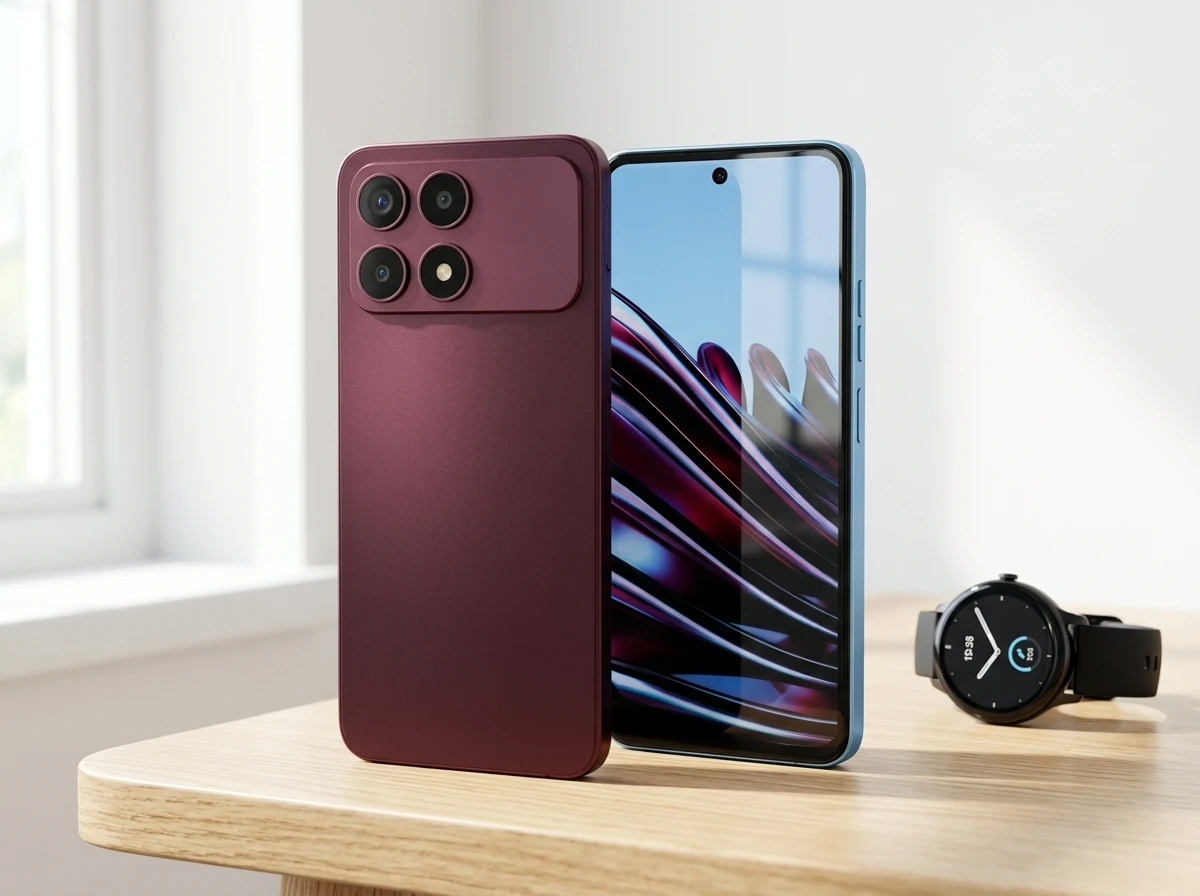
The Ace 5G runs the octa-core Unisoc T8200. Boltt says it clears more than 5,47,000 points on AnTuTu. RAM options run 4GB, 6GB or 8GB with 64GB or 128GB storage. The main camera is 64MP with AI Portrait and Night modes. A secondary rear sensor sits beside it, though Boltt has not named the resolution.
The Evo uses the Unisoc T7250 and scores over 3,90,000 on AnTuTu according to the company. It tops out at 6GB RAM and 128GB storage. Its rear setup is 50MP main plus 2MP macro. AI Selfie Enhancement is listed for the front camera. The Evo is a 4G phone only.
Both phones weigh about 233g and measure roughly 170 x 77.7 x 8.5mm in some listings, though Boltt and Flipkart materials highlight the 7.95mm slim profile. Storage uses LPDDR4X RAM; the Ace gets UFS 2.2 while the Evo appears to use eMMC.
Day-One Prices Drop Every Variant by Rs 1,000
Regular and launch-day pricing sit close enough that early buyers save meaningfully.
| Model / Variant | Regular Price | Day-One Price |
|---|---|---|
| Evo 4GB/64GB | Rs 10,999 | Rs 9,999 |
| Evo 6GB/128GB | Rs 11,999 | Rs 10,999 |
| Ace 5G 4GB/64GB | Rs 13,999 | Rs 12,999 |
| Ace 5G 6GB/128GB | Rs 14,999 | Rs 13,999 |
| Ace 5G 8GB/128GB | Rs 15,999 | Rs 14,999 |
Ace 5G colours are Arctic White, Burgundy Bliss, Forest Green, Lavender Bloom, Midnight Black and Sky Blue. Evo drops Forest Green and adds Berry Red, for five options total.
The $50 Million Wager and a Captive Audience
Fire-Boltt committed an initial $50 million investment commitment toward product development, manufacturing, marketing, distribution and ecosystem work. The company targets 5 lakh to 10 lakh units in the first four to five months, with a nationwide push timed for the festive season.
Arnav Kishore has spent about a year preparing the move. In a detailed conversation he described the decision as timing plus groundwork: several budget brands had stumbled, supply chains were ready, and 4G demand was returning as 5G prices rose.
boltt smartphones will offer everything you need, nothing you don’t.
Arnav Kishore, Founder & CEO, in 91mobiles interview
He points to Fire-Boltt’s 50 million units sold claim and a captive base of over 40 million customers as the conversion engine. The brand already reaches tier-2 and tier-3 markets offline through its wearables network. Online launch is Flipkart exclusive; a dedicated smartphone distribution layer is planned over the next six months.
Kishore also flagged roughly 400 service centres already in place and an in-app support channel that connects users to live agents. Software updates will follow GMS guidelines, with a two-year security promise but no guaranteed Android version upgrades.
Clean Software Meets a Crowded Field
The no-bloatware stance is the clearest differentiator Kishore keeps returning to. Budget phones often arrive loaded with trial apps that raise privacy and performance complaints. Boltt ships close-to-stock Android 16 and leans on Gemini for camera and search features. Additional AI tools are promised in later updates.
That pitch lands in a segment where 4GB RAM is already viewed as tight for multitasking and longer software life. Competitors refresh lineups every few months with higher peak charging speeds, AMOLED panels or louder marketing. Realme, Redmi and Poco dominate the volume numbers. Recent sub-Rs 15,000 options commonly offer 45W or faster charging and more aggressive camera branding.
Boltt’s 18W on the Ace and unspecified charging on the Evo look modest by comparison. The 120Hz LCD and 6,000mAh cell match common specs at the price, and the AnTuTu claims put the T8200 in mid-pack for entry 5G. The Unisoc chipset maker site lists the broader family as volume-oriented 5G silicon with Mali graphics.
Wearables Brands Eye the Same Door
Fire-Boltt is not alone. Mivi has also teased a smartphone move on Flipkart. Tech observers on X noted the pattern: Indian wearable makers with large domestic followings testing whether brand trust and distribution can transfer to handsets. TrakinTech asked openly whether boAt, Noise or others would follow.
Kishore’s longer roadmap adds a premium tier from January with AMOLED displays and stronger cameras. The two current models are framed as long-term foundational products rather than short tactical launches, each in five or six colourways. The bigger goal is an ecosystem that ties smartphones to the existing smartwatches, hearables and Fire Lens AI glasses under one software layer.
He acknowledges other brands have tried and failed at the same ecosystem story. Fire-Boltt’s edge, in his view, is already owning the wearable user behaviour data and now controlling the phone OS side as well.
What Buyers Get on September 1
Early purchasers walk away with a large battery, high refresh display, current Android version free of extra apps, and Gemini features at prices that undercut many 5G rivals after the day-one discount. The Ace 5G adds NFC and faster charging. Expandable storage and dual SIM remain standard.
Trade-offs are clear: HD+ rather than Full HD or AMOLED, Unisoc silicon instead of Dimensity or Snapdragon, modest charging speeds, and only two years of security patches with no OS upgrade promise. Service relies on the existing 400-centre network plus the in-app channel.
The full Arnav Kishore full interview lays out the conversion plan from wearable owners and the six-month offline rollout. Sales numbers in the first festive window will show whether the bet on clean software and captive customers pays off against the monthly refresh cycle of the established budget players.
Flipkart holds the exclusive window starting 1 September at noon. After the launch-day Rs 1,000 cut ends, the Evo returns to Rs 10,999 and the Ace 5G to Rs 13,999 as starting points.