Georgia logged a record 249,201 visits from European Union countries and the United Kingdom in the first half of 2026, up 23.4% from a year earlier. Tourism spending from those same visitors hit $335.7 million, a 21.2% jump, the National Tourism Administration said.
The same agency also reported the fuller picture. Georgia’s total tourism revenue for those six months came to $1.9 billion, down 2% from a year earlier, weighed down by a war in the Middle East that has nothing to do with Georgia at all.
The Numbers Behind Georgia’s EU and UK Record
Start with what actually broke the record. Visits from the EU and UK reached 249,201 between January and June, and the growth wasn’t confined to a handful of big markets. Twenty six of the 27 EU member states sent more visitors than a year earlier.
The second quarter alone brought 152,975 EU and UK visits, up 19.4%, with $194.9 million in spending, up 12.1%. Both figures, the administration said, were quarterly records in their own right.
Set against that, Georgia’s national numbers look far flatter. International tourist visits for the half totaled 2,272,964, essentially unchanged at plus 0.1%. A broader count that includes all visitor categories, not just tourists, came to 3,050,173, down 3.3%. The gap between a booming European segment and a stagnant national total is the story the press release didn’t lead with.
| Metric, H1 2026 | EU and UK Markets | Georgia National Total |
|---|---|---|
| Visits | 249,201 (up 23.4%) | 2,272,964 tourist visits (up 0.1%) |
| Broader traveler count | n/a | 3,050,173 (down 3.3%) |
| Revenue | $335.7 million (up 21.2%) | $1.9 billion (down 2%) |
| Q2 revenue alone | $194.9 million (up 12.1%) | $1.1 billion (down 3.8%) |
The decline was sharper in the second quarter than the first, which suggests the gap between Europe’s growth and the national slowdown is widening rather than closing.
Slovakia Leads a Broader European Growth List
The fastest growing single markets were mostly small ones. Slovakia, Finland, Croatia, Malta and Slovenia posted the steepest annual increases in visits from any EU country.
- Slovakia – visits up 51.2% year on year
- Finland – visits up 50.3%
- Croatia – visits up 46.5%
- Malta – visits up 42.1%
- Slovenia – visits up 41.1%
None of that happened by accident. The National Tourism Administration runs business meetings, roadshows, presentations and sales missions in European cities to link Georgian tour operators with buyers abroad. It has expanded its presence at major European travel exhibitions and bought outdoor advertising in London and Paris.
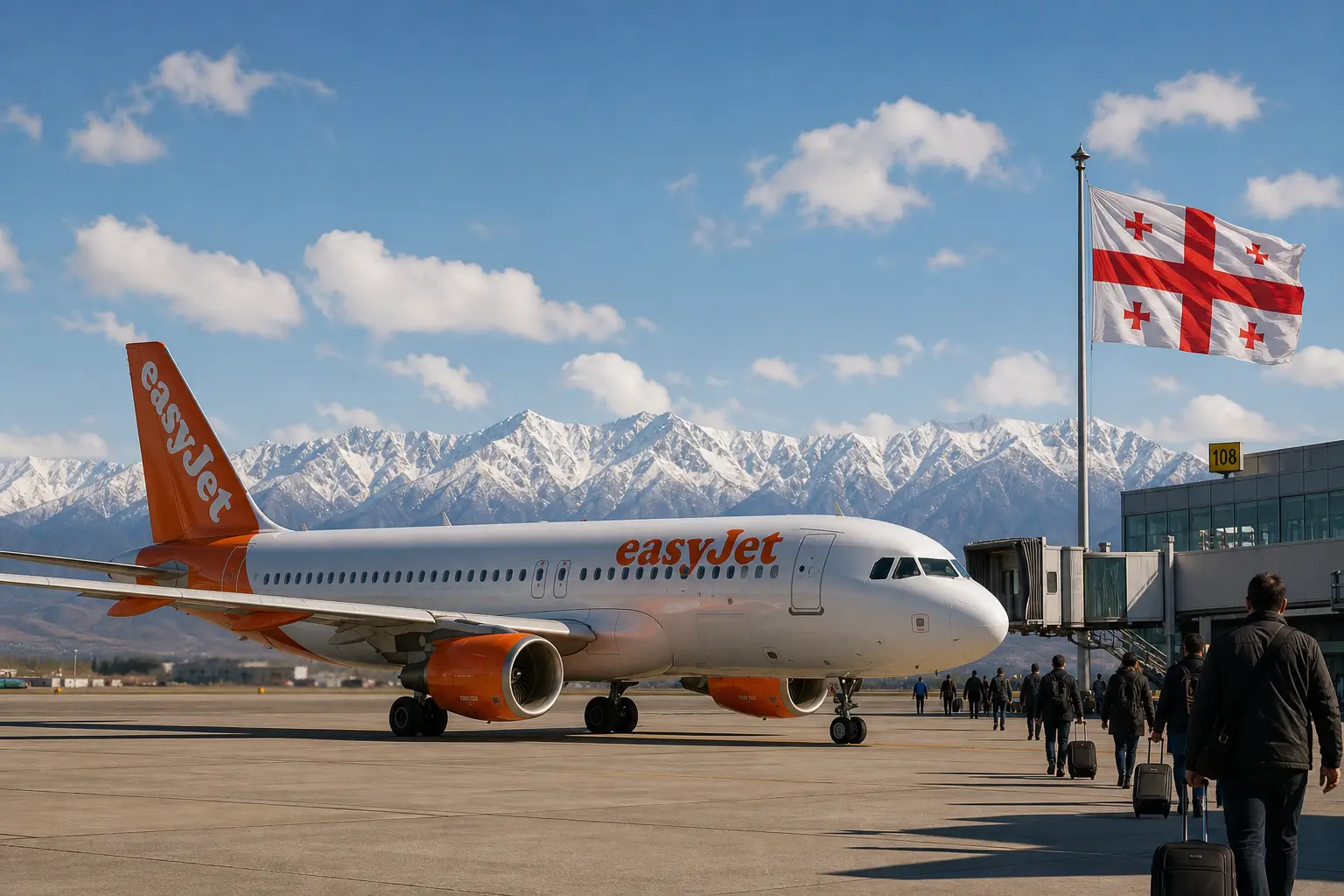
Airline capacity backs the marketing up. The administration named British Airways, Austrian Airlines, Edelweiss, Transavia France, Wizz Air and EasyJet as partner carriers, alongside familiarization trips for journalists, influencers and tour operators. Georgian airports currently connect to 42 destinations across the EU and UK.
By the Ministry of Economy’s own count, the EU held a 17% share of Georgia’s tourism revenue in the first quarter, ahead of every other single market bloc including Turkey.
Why Did Georgia’s Overall Tourism Revenue Fall Anyway?
Georgia’s tourism administration traces the decline to reduced visitor flows from countries hit by regional conflict and the flight restrictions that followed. Iran, Saudi Arabia and Israel, three markets that were still growing a year ago, all posted steep revenue losses in the first half, enough to outweigh the gains coming out of Europe.
Iran’s tourism revenue to Georgia fell 65.1% for the half. Arrivals had already dropped 49% in the first quarter alone, to 13,757. Saudi Arabia’s reversal was sharper still: arrivals were still climbing 36% and spending was up 48% in the first quarter, yet Saudi tourism revenue for the full half ended down 61.9%, one of the steepest swings in the entire dataset. Israeli tourism revenue slipped a more modest 3%, though arrivals had already fallen 17.5% in the opening quarter, to 66,744.
Behind those numbers sits a war that began in late February 2026, when the United States and Israel launched strikes on Iran. Regional carriers rerouted around closed airspace, Gulf airports absorbed missile strikes and cancellations, and travel advisories piled up across the Middle East. Industry forecasters have projected the region’s overall arrivals could fall anywhere from 11% to 27% for the year, a collapse that reached as far as a South Caucasus country with no role in the fighting.
Georgia has adjusted in smaller ways too, tightening entry requirements for visitors from the United Arab Emirates as it recalibrates how it handles arrivals from a Gulf region still working through the fallout.
Ordinary Tourists Keep Coming as Georgian Officials Lose Visa Access
The record EU and UK numbers arrive against a political backdrop that looks nothing like a tourism success story. Georgia’s own bid to join the EU has been frozen since 2024, and the freeze was a choice, not an accident.
We have decided not to bring up the issue of joining the European Union on the agenda until the end of 2028.
Irakli Kobakhidze, Georgia’s prime minister, said that in November 2024, hours after the European Parliament voted to reject the results of Georgia’s disputed October 2024 election. Street protests followed and have continued for well over a year.
Brussels responded in kind. The Council of the EU decided in January 2025 to suspend parts of the EU-Georgia visa facilitation agreement, a measure that requires Georgian diplomats and officials to apply for a Schengen visa before entering the bloc. Ordinary Georgian citizens traveling on standard passports kept their visa-free access. The EU’s own account of the relationship still describes Georgia’s accession bid as halted, tied to what it calls the government’s backsliding on democratic reforms.
That has not slowed European tourists down. If anything, the marketing campaigns built to draw them in have gotten more aggressive precisely as the diplomatic relationship cooled, a split between how European governments treat Tbilisi and how European travelers spend their holidays.
Russia Still Dwarfs Europe’s Share of Georgia’s Tourists
Europe’s growth is real, but it hasn’t overtaken Georgia’s biggest source market. Russia remained the country’s largest single supplier of tourists last year, with 1.61 million arrivals in 2025, up 13.4%, more than six times the EU and UK’s combined total for the first half of 2026 alone, even at a record pace.
Other non-European markets grew too. Visits from China rose 16.7% to 54,554, and Central Asian countries sent 115,416 visitors, up 3.1%, both part of a diversification push that predates this year’s Middle East shock. Russia’s continued weight fits a wider regional pattern, in which Russia and its Central Asian neighbors have turned into some of the fastest growing tourism destinations anywhere, reshaping who travels where across Eurasia broadly, not just who visits Georgia.
The Second Half Must Outrun the First
Galt and Taggart, a Tbilisi based investment research firm, still forecasts $4.9 billion in full year tourism revenue for Georgia in 2026, above last year’s record $4.69 billion. Reaching that number means the second half of the year has to outperform the second half of 2025 by a wider margin than the first half of 2026 managed against the first half of 2025, which fell short by 2%.
Frequently Asked Questions
Do EU and UK Travelers Need a Visa to Enter Georgia?
Georgia does not require entry visas for EU or UK passport holders for short tourist stays. That policy has stayed in place even as the EU restricted visa-free travel for Georgian diplomats and officials, meaning the asymmetry runs in only one direction.
Why Did the EU Freeze Georgia’s Accession Talks?
The freeze followed the European Parliament’s non-binding resolution rejecting the results of Georgia’s October 26, 2024 parliamentary election over reported irregularities. Georgian Dream, the ruling party, responded by announcing it would not pursue accession negotiations until 2028, a decision the European Council said it regretted.
Is Saudi Arabia Still a Growth Market for Georgian Tourism?
Not for now. Saudi arrivals were still climbing 36% in the first quarter of 2026, with spending up 48%, but by the end of June, revenue from Saudi visitors for the half had fallen 61.9%, one of the sharpest reversals of any market Georgia tracks.
How Many Airlines Fly to Georgia in Total?
Eighty five airlines currently operate flights to Georgia across 125 routes, according to the National Tourism Administration. Only a portion of those routes connect to the 42 EU and UK destinations behind the current visitor record.
How Does the First Half of 2026 Compare With All of 2025?
Georgia’s full year tourism revenue for 2025 reached a record $4.69 billion, up 6% from 2024, on 6.86 million international visits, up 6.2%. The first half of 2026 fell short of that annual growth pace despite the EU and UK record.