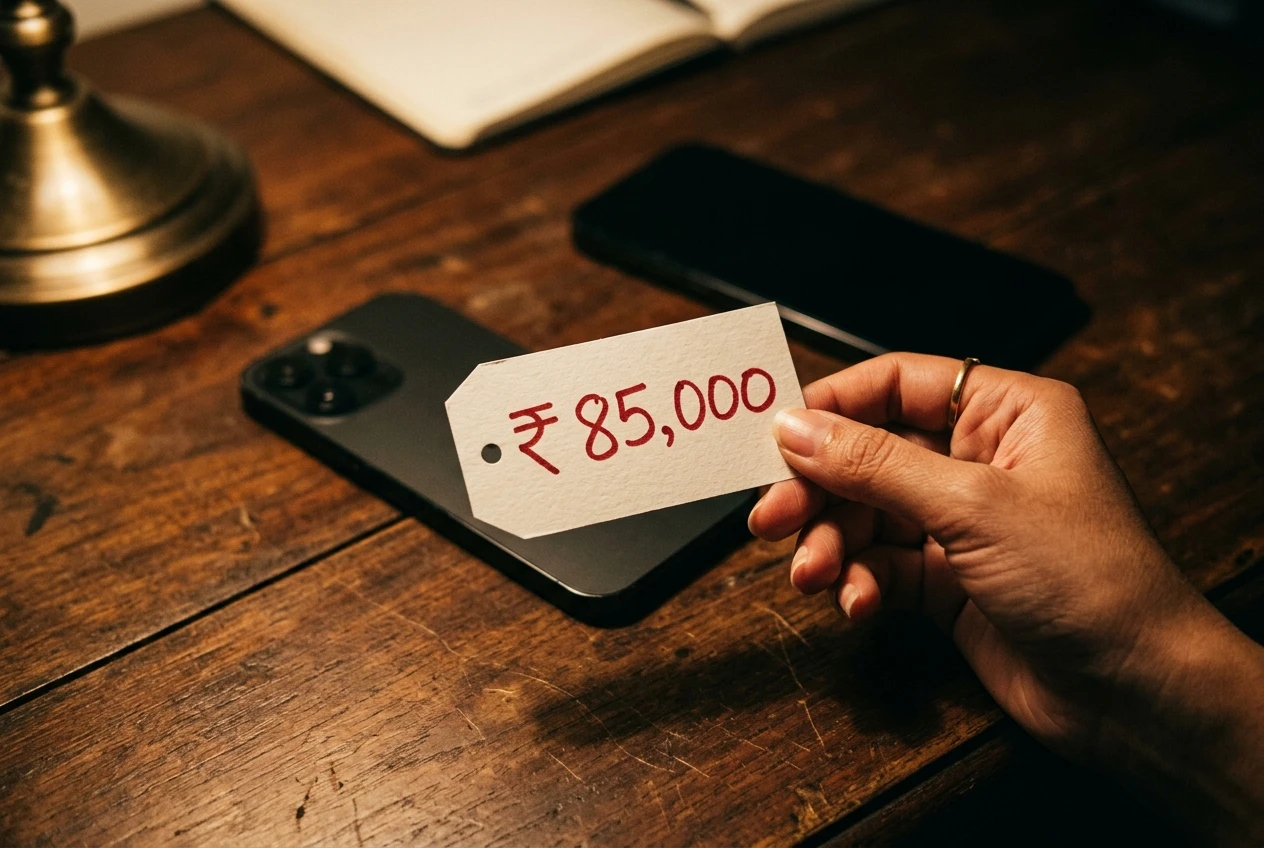
The iQOO 16 may not launch in India this year, according to tipster Yogesh Brar, who on July 4 posted on X that rising memory component costs have pushed the flagship’s expected price past Rs 85,000. Brar wrote that the phone would struggle to compete in the value-flagship segment where iQOO built its India brand. iQOO has not publicly responded to the report.
A memory chip crunch is now reshaping the Indian smartphone shelf. iQOO’s current flagship, the iQOO 15, has already absorbed price hikes on both its storage variants. Brar’s tweet added that only one new budget Z-series phone remains on iQOO’s India launch calendar this year, with the rest of its product lineup reportedly scrapped. The lone device confirmed so far is the iQOO Z11 Lite, flagged by iQOO India CEO Nipun Marya in the days that followed.
A Tipster Says iQOO 16 Won’t Reach India
Tipster Yogesh Brar posted on X on July 4 that the iQOO 16 would not launch in India this year, citing ‘current memory rates’ as the reason. Brar added that the phone’s expected price would cross Rs 85,000, well above iQOO’s usual India ceiling. He also said iQOO has only one budget Z-series phone left for India in 2026.
We may not see iQOO 16 launch in India.. With current memory rates, iQOO 16 will cross Rs 85k. iQOO has only 1 budget Z series phone for this year, all other products have been scrapped..
Brar has a track record of pre-release smartphone leaks, with the July 4 tweet quickly picked up by Gadgets360, 91Mobiles, and PCQuest. The Rs 85,000 forecast would put the iQOO 16 close to Apple’s iPhone 16 base model and several Samsung Galaxy S26 variants, in a band where iQOO has no track record of competing. The same post said all other products had been ‘scrapped’ for India. None of the outlets added independent confirmation beyond Brar’s tweet.
Yogesh Brar’s July 4 post on the iQOO 16 carries the three claims in full. iQOO has not officially responded to the report.
iQOO’s India Roadmap Shrinks to One Budget Phone
Brar’s post added that only one budget Z-series phone remains on iQOO’s India launch schedule this year, with the rest of its 2026 lineup reportedly shelved. That device is the iQOO Z11 Lite, which iQOO India CEO Nipun Marya confirmed in early July. Marya positioned the Z11 Lite as an AI-focused device built for ‘students’ and ‘Gen Z.’
A teaser image on Marya’s X account showed a vertically aligned rear camera module with a circular notification ring, with Amazon India confirmed as the sales channel. Earlier leaks had pegged the related Z11 at under Rs 30,000 with a Snapdragon 7s Gen 4 chipset and Android 16, though the Z11 Lite sits lower in the lineup. The roadmap contraction aligns with a wider industry pattern, with Gadgets 360 reporting in March that iQOO was already changing its Neo series release schedule in India over rising component costs. iQOO Z11 Turbo specs and China pricing covers the wider Z-series rollout. The brand had been moving toward a flagship-led approach.
The iQOO 15 Has Already Been Hiked
The pressure is already visible in iQOO’s current India lineup. The iQOO 15 has absorbed price hikes on both its storage variants since launch, with the broader Indian market also seeing increases on iQOO 15R, iQOO Neo 10, and Vivo T5 Pro models. iQOO did not announce the changes publicly; revised pricing went live directly on retail platforms. The hikes are part of a wider wave that Indian tech outlets have linked to memory component costs.
| Variant | Launch Price | Current Price |
|---|---|---|
| 12GB + 256GB | Rs 72,999 | Rs 76,999 |
| 16GB + 512GB | Rs 79,999 | Rs 83,999 |
The iQOO 15R 8GB + 128GB moved from Rs 46,999 to Rs 47,999, the 12GB + 256GB from Rs 50,999 to Rs 52,999, and the 12GB + 512GB from Rs 57,999 to Rs 59,999. The iQOO Neo 10 8GB + 256GB rose from Rs 35,999 to Rs 37,999, and the 12GB + 256GB from Rs 40,999 to Rs 42,999. The Vivo T5 Pro took the largest absolute hike, with the 8GB + 128GB moving from Rs 29,999 to Rs 32,999 and the 8GB + 256GB from Rs 33,999 to Rs 36,999. OPPO’s India price hikes from the AI memory squeeze captures the same wave at the industry level. Brar’s Rs 85,000 forecast for the iQOO 16 sits above the iQOO 15’s Rs 72,999 launch price.
The iQOO 15 has been through two waves of price hikes in India, with the latest taking the top variant to Rs 83,999. iQOO has not framed the increases as a memory-cost adjustment, but Indian tech outlets covering the changes have pointed to the same component squeeze Brar now cites for the iQOO 16.
Why Memory Costs Have Suddenly Spiked
The driver is demand from AI data centers. Major memory makers Samsung Electronics, SK Hynix, and Micron Technology have pivoted their capacity toward high-bandwidth memory and high-capacity DDR5 used in AI servers, leaving less DRAM available for smartphones.
Counterpoint Research forecasts that memory prices could rise another 40% through Q2 2026, lifting bill-of-materials costs by 8% to 15% above already elevated levels. The same firm noted that the bill-of-materials cost for low-end smartphones priced below $200 has already risen 20% to 30% since the start of the year, with mid and high-end devices up 10% to 15%. Counterpoint expects the average selling price of smartphones in 2026 to jump 6.9% year-on-year, up from its earlier forecast of a 3.6% rise. Counterpoint’s memory price forecast carries the figures in full.
IDC, tracking the supply side, projects 2026 DRAM supply growth at 16% year-on-year and NAND supply growth at 17%, both below historical norms. For a high-end flagship device, memory typically represents 10% to 15% of the total bill of materials, according to IDC. The same firm models two downside scenarios for 2026 smartphones: a 2.9% market contraction with ASPs up 3% to 5% in a moderate case, or a 5.2% contraction with ASPs up 6% to 8% in a pessimistic case. HBM and high-capacity DDR5 have become a zero-sum game for memory makers, with every wafer allocated to an AI server a wafer denied to an LPDDR5X module in a mid-range phone. IDC’s memory supply analysis outlines the same dynamic from the supply side.
The shift in capacity has reordered the market. ‘Apple and Samsung are best positioned to weather the next few quarters,’ MS Hwang, research director at Counterpoint, said in a note. ‘But it will be tough for others that don’t have as much wiggle room to manage market share versus profit margins.’
A Two-Tier Smartphone Market Is Taking Shape
The cost pressure is drawing a sharper line between smartphone brands that can absorb it and brands that cannot. On one side sit Apple and Samsung, cushioned by long-term supply agreements and cash reserves large enough to lock in memory 12 to 24 months ahead, according to IDC. On the other side sit Chinese volume brands including Vivo, Xiaomi, Oppo, Honor, and Huawei, which IDC flags as running on thin margins and likely to pass cost increases to buyers. Gartner’s February 2026 forecast warns of the steepest contraction in device shipments in over a decade. The same forecast expects basic smartphone buyers to exit the market five times faster than premium buyers in 2026. Indian smartphone price hikes across Vivo, Nothing, and Realme traces the same pressure at the retail level.
- Smartphone shipments projected to fall 8.4% in 2026
- Average smartphone prices projected to rise 13% over 2025
- Combined DRAM and SSD prices projected to surge 130% by end of 2026
Gartner’s February 2026 press release carries the full projections, including a separate note that PC shipments are expected to drop 10.4% in the same year. Gartner’s February 2026 device forecast is the source for both.
This is the steepest contraction in device shipments witnessed in over a decade. Higher prices will narrow the range of devices available, prompting buyers to hold on to devices for longer, fundamentally altering upgrade cycles.
Ranjit Atwal, senior director analyst at Gartner, gave the quote in the same release. He separately framed the supply shock as a structural shift rather than a passing shortage.
iQOO Doubles Down on the Z-Series Instead
For Indian buyers, the Z-series is now the centre of iQOO’s story. The Z11 Lite, positioned as an AI-focused budget device for younger buyers, is the only Z-series phone confirmed for India this year. Earlier leaks pegged the related Z11 at under Rs 30,000 with a Snapdragon 7s Gen 4 chip and Android 16, though the Z11 Lite’s final spec sheet has not been published.
The shift leaves the value-flagship segment in India to Apple, Samsung, OnePlus, and the higher end of Vivo’s own lineup. Brar’s July 4 post remains a single-source tipster claim, and iQOO has not officially commented. If the report holds, iQOO’s 2026 India lineup will be defined less by what the brand wanted to launch and more by what the memory market allowed through. The Z11 Lite launch date and final India pricing remain to be announced by iQOO.