East Georgia Regional Medical Center has put $17.5 million into capital projects since September 2025, funding two new operating rooms, robotic surgery technology, a 128-slice CT suite, patient beds across four units, and a new monitoring system for admitted patients. Chief executive officer Stephen Pennington said the spending positions the 150-bed Statesboro hospital to keep advanced care local as Bulloch County grows.
The capital push adds new bassinets for the Women’s Pavilion and upgraded critical care beds alongside the imaging and surgical upgrades. Pennington framed the investment as part of a long-term strategy to expand access to advanced services across Southeast Georgia. The announcement comes inside a broader capital pipeline that included $12 million in capital projects in 2024 and a separate $27 million commitment over two years to expand Cardiovascular and Emergency Services.
What the $17.5 Million Buys
Most of the capital spending splits across five project areas, from the surgical floor to the imaging suite. Two new operating rooms and robotic surgery technology lead the surgical expansion.
New beds in medical surgical, telemetry, pediatric, and critical care units replace older equipment on the inpatient side, with the critical care beds designed to support patient safety, recovery, and nursing workflow efficiency. The Women’s Pavilion has received new infant bassinets, and a 128-slice CT suite rounds out the diagnostic imaging upgrade, supported by a new patient monitoring system that tracks respiratory and hemodynamic data in real time. These five capital project areas together account for the bulk of the spending. The hospital is owned in part by physicians, and its community benefit reports detail the spending alongside charity care, payroll, and tax contributions.
These projects continue a pattern. East Georgia Regional Medical Center’s 2024 community benefit report counted $12 million in capital projects that year, and the hospital identified more than $22 million in projects and investments across 2025. A separate $27 million commitment over the next two years is going to expand Cardiovascular and Emergency Services, with the September 2025 capital tranche of more than $17.5 million sitting inside that larger program.
| Investment Area | What Was Added | Departments Affected |
|---|---|---|
| Surgical expansion | 2 new operating rooms, new robotic surgery technology | Surgery, supporting cardiology, radiology, pulmonology, and urology |
| Inpatient beds | New beds across medical surgical, telemetry, pediatric, and critical care units | Inpatient, critical care |
| Women’s services | New infant bassinets designed for safety, mobility, and full family visibility | Women’s Pavilion, OB/GYN |
| Diagnostic imaging | New 128-slice CT suite | Imaging, supporting cardiac, stroke, and trauma diagnosis |
| Patient monitoring | New real time monitoring of respiratory and hemodynamic parameters | All admitted patients |
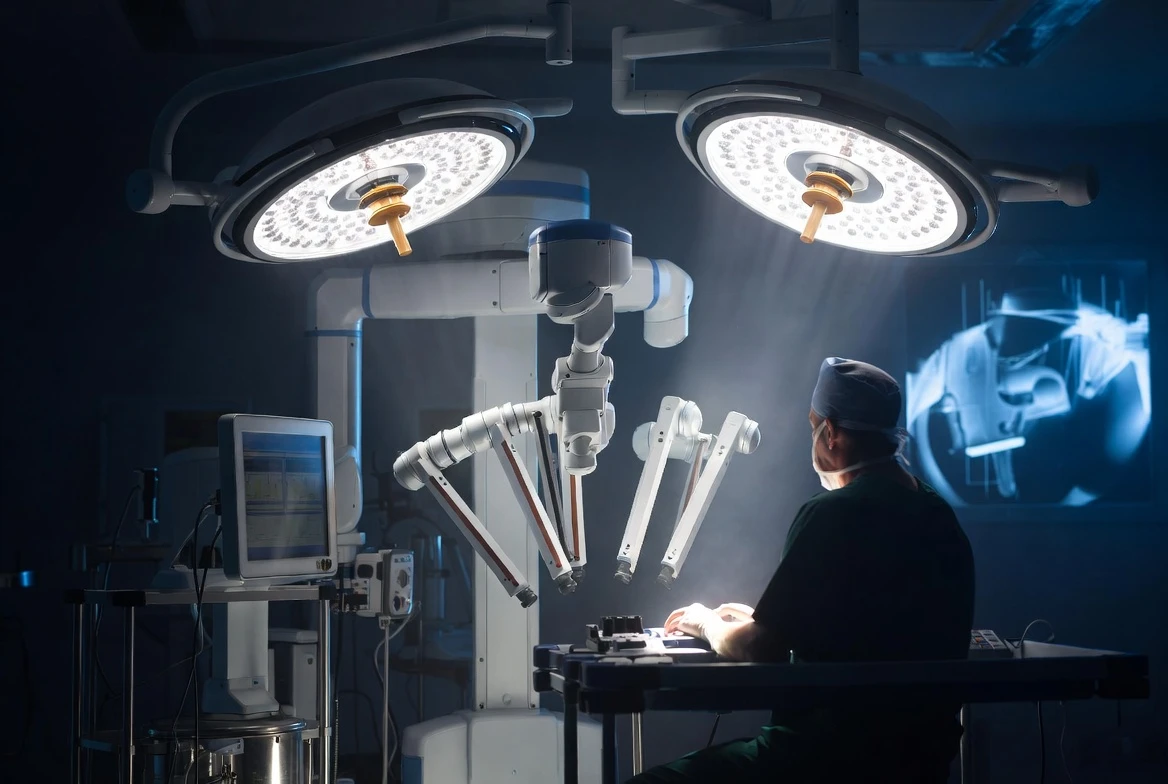
Two New Operating Rooms and a Surgical Robot
The surgical expansion adds two new operating rooms to the hospital’s surgical floor, a capacity boost that brings new specialties under one roof. The new operating rooms are paired with new robotic surgery technology, building on a robotic-assisted surgery program the hospital began in 2010. Together, the additions support a broad range of specialties, including cardiology, radiology, pulmonology, and urology. That is the same combination of services the hospital flagged in its 2024 community benefit report when it added two surgical suites and robotic surgery equipment.
Robotic-assisted surgery lets surgeons perform minimally invasive procedures with greater precision, often resulting in shorter recovery times for patients. The new surgical capacity arrives alongside the 2025 expansion of specialized urology and pulmonary services, with interventional urologists and pulmonologists joining the medical staff in 2025, according to the 2025 community benefit report.
New Patient Beds Across Four Units
Beyond the surgical floor, the capital project delivered new patient beds in medical surgical, telemetry, pediatric, and critical care units. The new beds replace older equipment across the inpatient side of the hospital. Telemetry, the unit that monitors cardiac patients continuously, also got new beds as part of the same project.
The critical care beds are the most specialized of the new equipment, with technology designed to support patient safety, recovery, and nursing workflow efficiency. Burdett called the new beds a workflow investment, with the new equipment letting staff spend more time at the bedside focusing on patient recovery.
Pediatric beds round out the unit-by-unit upgrade, addressing an area of the hospital that handles younger patients. The 150-bed hospital is the regional hub for an eight-county area, and the unit-by-unit refresh keeps its inpatient capacity modern. The new beds arrive alongside the new operating rooms, putting surgical and inpatient upgrades on roughly the same timeline.
The new beds standardize the equipment base. Nurses and other clinical staff get the same tools from room to room, with the critical care beds offering the most advanced features. The standardization is part of a broader efficiency push that includes the new monitoring system and the upgraded CT suite. The hospital’s nursing leadership framed the standardization as a way to spend less time on equipment and more time on direct patient care.
Bassinets and the Women’s Pavilion
The Women’s Pavilion, where more than 1,500 babies were delivered in 2025, has received new infant bassinets as part of the capital project. The bassinets are designed for safety, mobility, and caregiver convenience. They give families full visibility of their newborns from all angles at all times, with safety and noise-reduction features built in.
The bassinets support smooth, quiet transitions between rooms, reducing the disruption of moving a newborn from one part of the Pavilion to another. The hospital framed the upgrade as part of keeping maternal and newborn care local, with the new equipment also supporting clinical training for nursing and other healthcare students.
A 128-Slice CT Suite
Diagnostic imaging got a hardware refresh with the addition of a new 128-slice computed tomography, or CT, suite. The system provides highly detailed diagnostic imaging while supporting faster scan times for patients. The hospital already operates 64-slice and 128-slice CT systems at its main campus, and the new suite adds to that capacity. The new CT is the largest of the diagnostic imaging investments in the capital project.
On the imaging side, the new system means faster scans and lower radiation exposure, according to Gwinnett. The technology supports cardiac imaging, stroke and trauma diagnosis, and a broad range of other clinical applications. Faster scan times matter in emergency settings, where time to diagnosis drives treatment decisions.
Our new CT system allows physicians to obtain detailed imaging quickly while reducing radiation exposure for patients. The technology supports cardiac imaging, stroke and trauma diagnosis, and a wide range of other clinical applications.
Faith Gwinnett, director of imaging services at East Georgia Regional Medical Center, said in the hospital’s capital investment announcement. Cardiac imaging, stroke diagnosis, and trauma work are core emergency and inpatient services, and the new CT supports all three alongside the routine diagnostic studies that physicians order daily.
Real-Time Monitoring for Admitted Patients
The final piece of the capital project is a new patient monitoring system that tracks admitted patients throughout their stay. The system provides real time monitoring of respiratory and hemodynamic parameters. Clinicians can use the data to identify changes in patient conditions earlier than they might have caught them with older equipment.
Hemodynamic parameters include blood pressure, heart rate, and other measures of how well the cardiovascular system is working. Respiratory parameters track oxygen saturation, breathing rate, and related measures. Real time data on these parameters is the difference between catching a patient decline in minutes versus hours. The new monitoring system runs through every upgraded department, from the new beds to the imaging suite to the expanded surgical capacity.
A Regional Hub Under Pressure
From Statesboro, the hospital draws patients from other facilities 22, 40, or 75 miles away, according to the 2025 community benefit report. That same report counts more than 53,000 visits a year to its 24/7 emergency room. The hospital is a teaching site for over 20 higher education schools including Georgia Southern University and Ogeechee Technical College.
That regional role puts pressure on the hospital to keep pace with population growth. The 2025 community benefit report noted more than 316,000 patient encounters, a sign that demand is climbing alongside the expansion of Georgia Southern University and the surrounding service area.
- 2024: $12 million in capital projects
- 2025: capital tranche since September, with $22 million total in projects and investments
- Next two years: $27 million for Cardiovascular and Emergency Services
The capital tranche is the hospital’s response to that pressure, alongside a separate commitment to expand Cardiovascular and Emergency Services. The two investments together are part of a multi-year capital program that is reshaping the hospital’s clinical footprint. Pennington said the goal is to ensure that patients throughout Southeast Georgia have access to advanced healthcare services in their own region. As community growth continues, the hospital is positioning itself to keep up.
The Hospital as Economic Engine
Beyond the capital project, the hospital’s broader picture includes its economic and social footprint in Bulloch County. East Georgia Regional Medical Center’s 2025 community benefit report put its total regional impact, exceeding $273 million, including charity and uncompensated care, capital reinvestment, payroll, charitable projects, and tax payments. The 2024 community benefit report had put the figure at $214 million, with the 2025 report counting payroll of more than $105 million and tax payments of more than $9 million.
- Exceeding $273 million in total regional impact (2025)
- 316,000+ patient encounters (2025)
- 53,000+ emergency room visits (2025)
- 1,500+ babies delivered (2025)
- $130 million+ in charity and uncompensated care (2025)
The hospital trained over 400 healthcare students per semester through its partnerships with Georgia Southern University and Ogeechee Technical College, plus 20 other higher education schools. It’s one of the larger employers in the county, with the workforce required to staff a 24/7 emergency room, surgical suites, and inpatient units. Pennington said the team is passionate about delivering quality care to those who are counting on us. The capital project adds to the same regional footprint the hospital details in its 2025 community benefit report.