Georgia’s State Security Service says a Georgian citizen detained by Russian occupation forces near the village of Bershueti on June 22, 2026 is free. The SSSG announced the release on June 25 and said the man is now on territory controlled by the central government in Tbilisi. The agency did not name the citizen, following a pattern set in earlier 2026 cases. The man was detained near the Tskhinvali occupation line, where Russian forces have held other Georgian citizens this year.
Tbilisi secured the release through the ‘hotline’ operated by the European Union Monitoring Mission in Georgia, the SSSG said. The case is the fourth known release of a Georgian from Tskhinvali Region custody in 2026, following a similar announcement in early June. Each release has ended with the same line about the Hotline, with the SSSG noting that further cases remain. The SSSG does not say how many. The Tskhinvali-based RES news agency identified the detained man as 42-year-old Gela Berianidze.
A Man Detained Near Bershueti on June 22
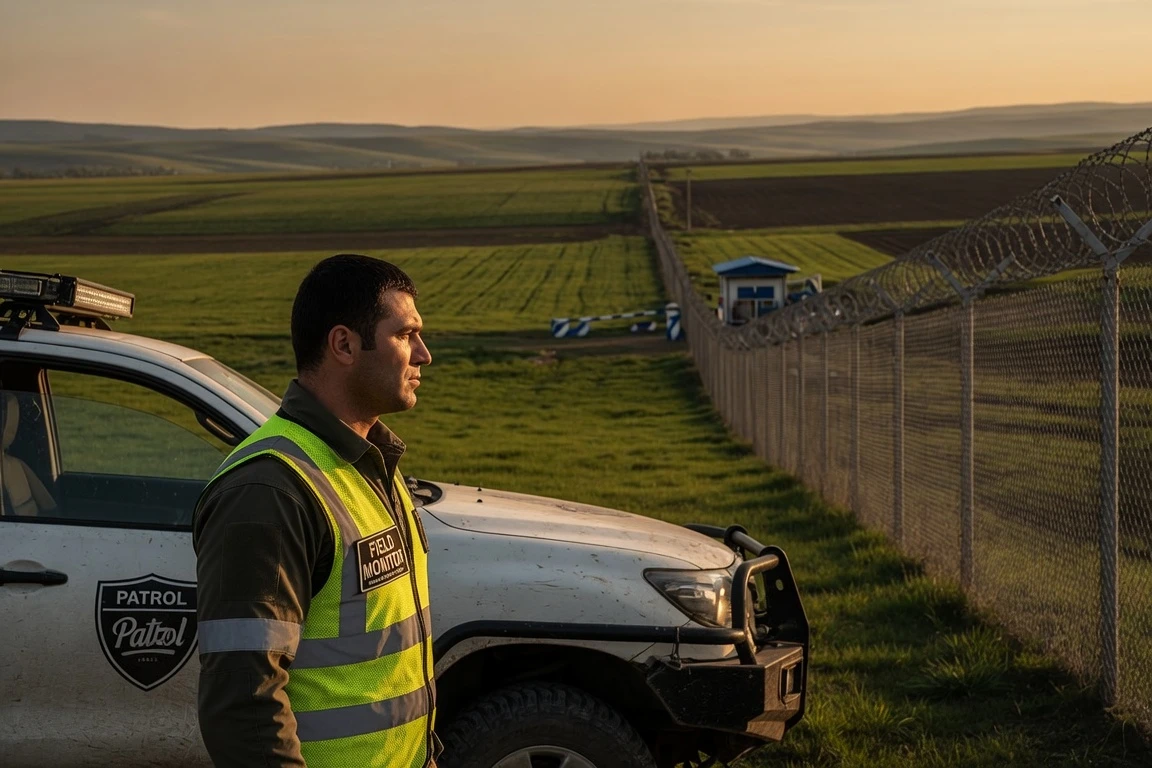
The arrest happened on June 22, 2026, near the village of Bershueti in Gori Municipality, on the edge of the Tskhinvali occupation line. A photograph published with the SSSG statement, captioned by the Democracy Research Institute, places the village within sight of the Russian-controlled border. Russian occupation forces carried out the detention, according to the Georgian State Security Service. Tbilisi classes such arrests as illegal, on grounds that the men and women taken are Georgian citizens picked up on or near their own land.
The SSSG’s English-language statement, dated June 25, said the citizen ‘is currently on territory controlled by the central government’ but did not give the man’s name. The Tskhinvali-based RES news agency identified him as 42-year-old Gela Berianidze, saying the Russian forces held him on a charge of ‘illegally crossing the state border.’ RES, which operates inside the occupied region, framed the arrest as an ‘illegal border crossing.’
The Tskhinvali-side framing treats South Ossetia as a state with its own border. The SSSG, in contrast, classes the arrest as an ‘illegal detention’ of a Georgian citizen. Each side’s wording marks the political gap the EUMM Hotline is built to work around. The Hotline operates inside that gap, not across it, which is why the same template keeps producing releases.
The June 25 statement is short by design. It gives the date of the arrest, the village name, the municipality, and the agency that carried out the release. It does not say how long the man was held, where he was held, or whether any charges were dropped as a precondition. Civil Georgia’s English reporting on the case repeats the SSSG wording almost word for word, and does not add operational detail. The terseness is itself part of the pattern.
Three Days Later, Tbilisi Confirms the Release
The release was announced three days after the arrest, on the afternoon of June 25. The English-language statement appeared at 13:19 on 25.06.2026, with Civil Georgia’s English account following later the same day at 14:17. The SSSG has kept to a similar rhythm in earlier 2026 cases: an arrest along the ABL, a few days of silence from Tbilisi, and a one-line release statement.
In the process of releasing the illegally detained Georgian citizen, all relevant instruments available to the central government were actively utilized, including the ‘hotline’ operated by the European Union Monitoring Mission in Georgia (EUMM).
The wording above is from the State Security Service of Georgia’s June 25 statement, as carried by Interpressnews and Civil Georgia. The SSSG did not name the citizen, did not release a photograph of his release, and did not say what the man had been doing near Bershueti on June 22. The same reporting notes that the no-name, no-photo approach is consistent with the agency’s recent practice in Tskhinvali cases. The boilerplate cuts both ways: it gives the man some privacy, but it also gives the public no operational detail.
The same June 25 statement closes with a forward-looking line that has become boilerplate. ‘The State Security Service continues to work actively to secure the release of all Georgian citizens currently in illegal detention in the occupied territories,’ the SSSG said. The agency has used essentially that sentence in its February, May, and June 2026 release notes. The Tbilisi wording treats every such case as part of a continuing file, not as an isolated incident. The repetition itself signals that the file does not close after a release.
How the EUMM Hotline Works
The EUMM Hotline is run by the EU Monitoring Mission in Georgia, the only permanent international presence on the ground between the two Russia-occupied regions of Georgia. The European Union’s foreign-policy arm describes the Hotline as an ‘adjunct’ of the Incident Prevention and Response Mechanism, the framework set up in 2009 to manage security and humanitarian issues along the Administrative Boundary Lines, per its write-up of the Hotline’s trust-building role. The Hotline ‘is used daily and has proven its worth in providing all sides the opportunity to communicate with one another, 24/7.’
The Hotline is operational. It routes calls between the Georgian side, the Russian side, and the de facto Tskhinvali and Sukhumi authorities. The activations climbed from 112 in 2011 to 1,648 in 2018, the EU’s own figures show, a roughly fourteenfold rise in seven years. The same channel handled the May 18 release of two Georgians held near Tsitelubani.
Detention cases are among the Hotline’s main uses. The Ergneti IPRM, the South Ossetia-side format, hears periodic updates on who is held and where, and the Hotline carries the day-to-day traffic between meetings. The 132nd IPRM meeting was held on 14 May 2026 in Ergneti, with the 131st on 31 March 2026. Civil Georgia reported that participants at recent IPRM sessions ‘commended the EUMM-managed Hotline as an effective tool for sharing reliable and timely information on security and humanitarian issues.’ Detentions do not always get resolved at the IPRM table, so the Hotline picks them up between meetings.
The Tskhinvali case the SSSG announced on June 25 follows the standard sequence: arrest by Russian forces, a period of silence, a hotline-mediated release, a brief statement in Tbilisi. Civil Georgia’s records show this sequence played out in February 2026, May 2026, and twice in June 2026. The EUMM does not announce each release; its role is to keep the channel open and the calls answered.
Four 2026 Releases Show the Cycle
The June 25 announcement is the fourth Tskhinvali-release statement the SSSG has issued in 2026. Civil Georgia’s archive of SSSG releases lists dates for each: 24 February 2026, 18 May 2026, 9 June 2026, and 25 June 2026. The wording across the four statements is nearly identical, with the EUMM Hotline credit and the ‘continues to work actively’ closer. None of the four statements names the citizen freed, and none has released a photograph of the return.
- 4 SSSG release statements on Tskhinvali detentions in 2026
- 2 Georgian citizens freed in the 18 May 2026 statement
- 14 May 2026 date of the 132nd IPRM meeting in Ergneti
- 112 to 1,648 EUMM Hotline activations between 2011 and 2018
- 2009 year the IPRM format was established
The May case came closest to the June pattern. Two Georgian citizens were detained on 15 May 2026 near the village of Tsitelubani in Gori Municipality, also along the Administrative Boundary Line. The SSSG announced their release on 18 May, three days later, in the detailed account of the May 18 Tskhinvali release. The language matched the June 25 release almost word for word, including the EUMM Hotline credit. The May case is the only 2026 release the SSSG has linked to more than one name.
- 24 February 2026: one citizen released from Tskhinvali custody, per SSSG
- 15-18 May 2026: two citizens detained near Tsitelubani, released three days later
- 9 June 2026: one citizen released from Tskhinvali custody, per SSSG
- 22-25 June 2026: one citizen detained near Bershueti, released three days later
The cycle is short and predictable. The longest 2026 stretch on record ran from mid-May to early June, when the SSSG went roughly three weeks between release announcements. The shortest stretches lasted three days, as in May and again in late June. The SSSG has kept to the same template for years, with the village name, municipality, and the date of arrest as the only specifics. The Tskhinvali-side authorities, by contrast, typically name the detainee while he is still held and assign an alleged offence before the release. The two streams of information meet, briefly, when the man crosses back.
Two structural facts keep the cycle running. The Administrative Boundary Line runs through populated farmland, so villagers on both sides cross it daily for work, family, and trade. The Tskhinvali-side authorities, backed by Russian forces, treat locals as their own citizens subject to their own border rules. The Hotline operates inside that gap, not across it.
The legal framing of the detentions has not shifted in 2026. The Tskhinvali-side framing of the June 22 arrest, via RES, was that Berianidze ‘illegally crossed the state border,’ wording that treats South Ossetia as a sovereign state. The SSSG, in its June 25 release, called the arrest an ‘illegal detention’ of a Georgian citizen. For one strand of the post-2008 legal record, see the ECHR’s 2008 ruling on Russia’s treatment of Georgian POWs. The 2026 detentions are not the same case, but they sit in the same unresolved file.
The Ergneti Track and Its Limits
The IPRM is the meeting format the Hotline serves. Set up in 2009, the Incident Prevention and Response Mechanism brings together the Georgian side, the Russian side, the de facto South Ossetia and Abkhaz authorities, and the EUMM and OSCE as co-chairs. Two formats exist: one for Abkhazia, held in Gali, and one for South Ossetia, held in no-man’s land near the village of Ergneti.
Two 2026 sessions have been documented: the 132nd IPRM on 14 May 2026 in Ergneti, per the official record of the 132nd IPRM in Ergneti, and the 131st on 31 March 2026. Civil Georgia reported that participants at recent sessions ‘commended the EUMM-managed Hotline as an effective tool for sharing reliable and timely information on security and humanitarian issues.’ The Ergneti format is the one relevant to the Bershueti case, since Bershueti sits on the South Ossetia-facing ABL. The meetings typically take place every two months.
The IPRM and the Hotline are two halves of the same mechanism. The IPRM is the forum; the Hotline is the day-to-day conduit. Detention cases often sit between meetings, so the Hotline picks them up in real time, with the IPRM raising them again at the next session. The EUMM does not publish a count of how many Hotline activations relate specifically to detentions, so the share of total activations going to cases like Berianidze’s is not on the public record. The June 25 release fits the pattern the IPRM has produced for years: a quick return once the Hotline engages.
Why Each Release Leaves the Line Open
The SSSG’s June 25 statement closes on a sentence that has not changed in 2026: ‘The State Security Service continues to work actively to secure the release of all Georgian citizens currently in illegal detention in the occupied territories.’ The agency has used that line in each of its four 2026 release statements. The repetition is itself the news: at least one Georgian was held each time the SSSG issued a release in 2026.
Each release is a temporary fix. The Tskhinvali-side authorities issue their own statements, the SSSG issues its own, and the EUMM keeps the channel open between them. Until the legal status of the ABL itself changes, the arrest-release cycle is what the Hotline produces. The June 25 case is the latest instance of that pattern.