Georgia’s Department of Agriculture has asked residents in five coastal counties to watch for invasive yellow-legged hornet nests as the colonies enter their largest nesting phase. The June 25 advisory names Bryan, Bulloch, Chatham, Effingham, and Liberty counties as the active watch zone, with Commissioner Tyler J Harper urging reports of any nest spotted. The agency asks Georgians not to remove nests themselves but to call or email a state specialist who can eliminate the queen.
The hornets’ target is the honeybee, not the homeowner. A single large yellow-legged hornet colony can consume nearly 25 pounds of prey in a year, according to Dr. Gard Otis, a professor emeritus at the University of Guelph tracking the species across continents. The advisory lands at the moment when state trappers are watching secondary nests build out in coastal oaks and pines, and the public call is for extra eyes in the trees before those nests reach full size. Georgia’s Department of Agriculture describes honeybees and native pollinators as vital to the state’s agriculture industry, which the agency calls the state’s main economic driver.
Five Coastal Counties Form the Active Watch Zone
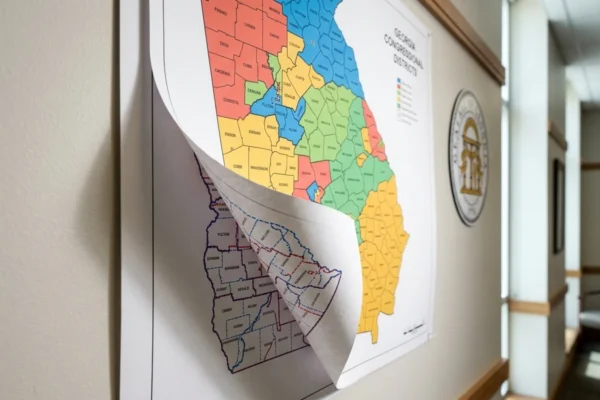
Bryan, Bulloch, Chatham, Effingham, and Liberty are the five counties named in the Department of Agriculture’s June 25 public advisory. They sit in a tight cluster along and just inland from the Georgia coast, anchored by the Port of Savannah. The Plant Protection Division has flagged them as the active watch zone because hornet colonies there are entering the secondary nesting phase. Hawking activity, the term the agency uses for hornets hovering at hive entrances and preying on returning foragers, has picked up around beehives in those counties.
The yellow-legged hornet first turned up near that same Savannah port in August 2023, the first live specimen detected in the open United States. Three years later, the species remains concentrated in coastal Georgia and the South Carolina Lowcountry. The June 25 alert is the state’s call for early eyes in the trees before secondary nests reach full size.
A Savannah-area beekeeper’s first hornet report to state officials in mid-2023 was confirmed as a yellow-legged hornet by August of that year. That confirmation marked the first sighting of a live Vespa velutina specimen in the open United States, and set off a trapping and eradication program that the state has run every summer since.
Why the Secondary Nest Is the Phase State Officials Fear
Yellow-legged hornets follow a predictable annual cycle, and June through September is when worker hornets expand secondary nests that can hold up to 6,000 hornets. The Department of Agriculture says those secondary nests are typically built high in trees and are often visible from late summer into winter. The shell-like, gray or brown structures are made of layered, paper-like material.
A single undetected primary nest the size of a ping-pong ball can produce a secondary nest ranging from a softball to a watermelon in size, according to WRDW’s reporting on the advisory. That secondary nest can hold thousands of hornets and multiple reproductive queens capable of founding new colonies. Each queen that escapes becomes next year’s expansion. The state’s view is that finding a primary nest early is the difference between one eradicated colony and a dozen. The cycle restarts every spring, when overwintered queens emerge from dormancy and begin building embryo nests.
| Phase | Timing | Nest type | Size |
|---|---|---|---|
| Spring emergence | March to May | Embryo nest | Tennis ball |
| Early summer | April to June | Primary nest | Softball to watermelon |
| Late summer to fall | June to November | Secondary nest | Up to 6,000 hornets |
The Real Target: Honeybees and the Crops Behind Them
The yellow-legged hornet is not a danger to humans first; it is a danger to honeybees first. Hornet larvae need protein, and a foraging honeybee returning to its hive is exactly that. A single large colony can consume nearly 25 pounds of prey in a year, according to Dr. Gard Otis, a professor emeritus at the University of Guelph whose update on the species in North America tracks its spread across continents. Otis writes that bees respond to repeated attacks by staying home, a pattern he calls foraging paralysis.
That paralysis leaves colonies weak in fall with little stored honey, and many of them starve through winter. The Department of Agriculture calls honeybees and native pollinators vital to the state’s agriculture industry, which the agency describes as the state’s main economic driver. If the hornet establishes itself, the threat extends past the hive.
In parts of Europe, Vespa velutina also damages late-season fruit crops, including wine grapes, Otis notes. The pattern gives a preview of what Georgia’s beekeepers could face if the secondary nesting phase keeps expanding.
Georgia’s commercial beekeepers already work around other pressures, from Varroa mites to habitat loss. A predator waiting at the hive entrance adds another load on already stressed colonies, and the public reporting line is the lever the department points to as the way to slow the spread before honey production and native pollination take a measurable hit. Other invasive arrivals have separately hit Georgia farms, including the cotton jassid that reached the state’s cotton fields in 2025.
How to Recognize Hawking and a Secondary Nest
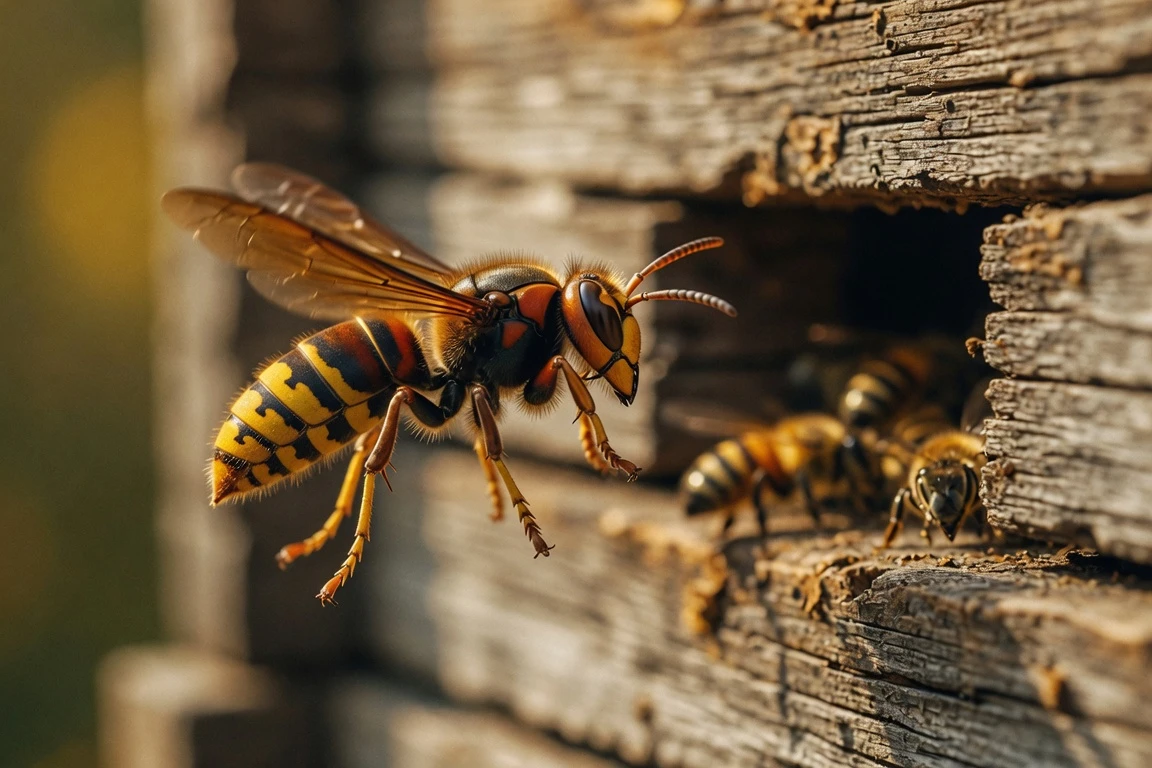
Hawking is the term state officials use for what the hornets do at a hive. A hornet hovers in front of the hive entrance and picks off foraging bees as they come and go. The Plant Protection Division says increased hawking is the early signal that colonies are entering the secondary nesting phase. Residents are asked to watch for hawking particularly before noon and after 5 p.m.
A secondary nest, by contrast, is what to look for in the trees: large, round or oval, gray or brown, layered and paper-like, often built high in an oak or pine. Depending on temperatures, secondary nests may stay visible from late summer through winter, long after the hornets inside have died. The Department of Agriculture cautions that several native wasps look similar to yellow-legged hornets, and accurate identification matters. The agency’s Yellow-Legged Hornet identification page asks for a photograph when one can be taken safely. That same page notes: “If you are unsure about your specimen, please send a picture anyway.”
How to Report, and Why the State Says Don’t Remove It Yourself
The state’s guidance on a suspected nest is to leave it alone and report it. Reports go to the Plant Protection Division at yellow.legged.hornet@agr.georgia.gov, or through the agency’s online sighting form. A licensed pest management professional is the other option the department lists. The reason is the queen. A nest that is destroyed without killing the queen simply relocates, and each surviving queen can found a new colony the following spring.
The state maintains a public eradication dashboard showing where trappers have already pulled nests out of the canopy. The June 25 advisory pushes for more reports to keep that map accurate. Harper framed the call to action in terms of speed in the department’s release.
The sooner a nest is identified and reported, the sooner our team can respond. We are asking every Georgian to remain vigilant and help us keep this invasive species from gaining a foothold in our state.
Harper is Georgia’s agriculture commissioner. The quote is from the department’s June 25 release.
How the Hornet Got Here, and Where It Could Go Next
The hornet arrived by ship. WRDW reports the first specimens came off a vessel that passed through the Port of Savannah. From there, Vespa velutina spread into the South Carolina Lowcountry and has been moving north in stops and starts. A nest discovered in McConnells, South Carolina, in December sat roughly 210 miles north of Savannah, and two overwintered queens were caught near Statesboro, Georgia, in March.
The current coastal range covers roughly 3,700 square miles, most of it straddling the Georgia-South Carolina line. Otis predicts that footprint will approximately double this year as overwintered queens disperse in spring and a few get trucked or trained far from the main population. 2025 also brought first reports from New Zealand, Algeria, Northern Ireland, Denmark, Sardinia, and the Azores islands, a reminder that the species is still expanding its global range.
- 6,000 hornets can fit in a single mature secondary nest, per the Georgia Department of Agriculture.
- 25 pounds of prey a single large colony consumes in a year, per Dr. Gard Otis.
- 3,700 square miles of current range in coastal Georgia and South Carolina, per Otis.
- 210 miles from Savannah to a December nest in McConnells, South Carolina, per Otis.
- August 2023, the first U.S. detection near the Port of Savannah, per the Georgia Department of Agriculture.
Frequently Asked Questions
What is the yellow-legged hornet?
Vespa velutina, also called the Asian hornet, is a social wasp native to tropical and subtropical Southeast Asia. It is smaller than the so-called “murder hornet” found in the Pacific Northwest but kills honeybees the same way, by hovering at the hive entrance and preying on returning foragers. Georgia’s Department of Agriculture says the species poses a threat to honey production and the state’s native pollinators if it establishes itself.
When did the yellow-legged hornet first reach Georgia?
The first live specimen in the open United States was confirmed near Savannah in August 2023. The detection was made by the Georgia Department of Agriculture in coordination with USDA APHIS and the University of Georgia. The hornet is believed to have arrived on a cargo ship that came through the Port of Savannah.
Which Georgia counties are under the advisory?
Bryan, Bulloch, Chatham, Effingham, and Liberty counties, the cluster named in the Georgia Department of Agriculture’s June 25 alert. The Plant Protection Division has flagged them as the active watch zone because hornet colonies there are entering their secondary nesting phase.
What does hawking mean?
Hawking is the behavior the Department of Agriculture uses to describe yellow-legged hornets hovering near a honeybee hive and preying on foraging bees. The agency says increased hawking is the signal that colonies are entering their secondary nesting phase. Residents are asked to watch for hawking particularly before noon and after 5 p.m.
What should I do if I find a suspected yellow-legged hornet nest?
Don’t try to remove it yourself, the Department of Agriculture says, since a nest destroyed without killing the queen will simply relocate. Email the Plant Protection Division at yellow.legged.hornet@agr.georgia.gov to report a sighting. Submissions also go through the agency’s online reporting form. The state accepts reports from licensed pest management professionals as well.