Apple opens its Worldwide Developers Conference (WWDC) 2026 at Apple Park on Monday with a task the company set for itself two years ago: delivering the AI-powered Siri it demoed in 2024, advertised on national television, failed to ship on time, and settled a $250 million class-action lawsuit over. The five-day event runs June 8 through 12 in Cupertino. Bloomberg’s Mark Gurman, who has tracked every delay in this saga, has called what Apple is revealing a “material revamp” of the assistant.
Getting there required Apple to accept that its own on-device AI models fell short, sign a deal with Google to supply a custom 1.2-trillion-parameter Gemini model for roughly $1 billion a year, and crack open the app-data barriers it spent a decade sealing in the name of privacy.
Two Years, $250 Million Later
The Architecture That Couldn’t Scale
The Apple Intelligence vision shown at WWDC 2024 was built around a Siri that could read incoming messages, scan a calendar, and book a restaurant reservation across three apps in a single spoken command. Apple demoed those capabilities. The iPhone 16 shipped in September 2024 without them. Ads showing the features stayed on television for months.
Craig Federighi, Apple’s senior vice president of software engineering, described the core problem in a subsequent interview with TechRadar. The internal Siri build Apple had ready at WWDC 2024, which Federighi called the “V1 architecture,” consistently failed to reach an acceptable quality floor regardless of engineering effort. “We could push and push and push and put in more time, but if we tried to push that out in the state it was going to be in, it would not meet our customer expectations or Apple standards,” Federighi said. Apple then rebuilt around a V2 architecture, and in March 2025 issued a formal statement: the personal-context Siri features would take “longer than we thought to deliver” and would roll out “in the coming year.”
- June 2024: Personal-context Siri announced at WWDC 2024; iPhone 16 later sold on the promise
- March 2025: Apple confirms delay; internal Siri team meeting described as “ugly” and “embarrassing”
- December 2025: Class-action lawsuit settled for $250 million; eligible buyers can claim $25 to $95 per device
- January 12, 2026: Apple and Google announce Gemini partnership, valued at roughly $1 billion a year
- June 8, 2026: WWDC keynote opens; iOS 27 developer beta launches today
The Restructuring That Followed
Bloomberg reported that Apple’s AI and machine-learning group had picked up an informal internal nickname: “AIMLess,” a play on the group’s initials, for a perceived lack of strategic direction. Senior director Robby Walker, addressing his team after the delay announcement, called the situation “ugly” and “embarrassing.” Tim Cook, who had largely delegated AI strategy to his chiefs, began inserting himself directly into roadmap decisions.
At an early 2025 executive meeting, Cook showed low confidence in then-AI chief John Giannandrea, per Apple Insider’s reporting. Mike Rockwell, who had overseen the Vision Pro headset project, volunteered to lead the rebuild. Rockwell, Federighi, and Eddy Cue later negotiated the Google deal. Amar Subramanya joined separately as a second AI leader focused on model development.
Apple was also losing senior researchers during this period. Ruoming Pang, who founded the Foundation Models team, accepted a package from Meta’s Superintelligence Labs reported by Bloomberg at over $200 million. Ke Yang, who led Siri’s Answers, Knowledge, and Information team, followed him to Meta in October 2025. The class-action that settled in December 2025 had alleged that Apple promoted “AI capabilities that did not exist at the time, do not exist now, and will not exist for two or more years.” Apple did not admit wrongdoing. Eligible buyers who purchased an iPhone 16, an iPhone 15 Pro, or an iPhone 15 Pro Max between June 10, 2024, and March 29, 2025, can claim between $25 and $95 per device.
The Data Apple Has Always Locked Away
iOS enforces strict isolation between apps. One application cannot read another’s data without explicit user permission, and even Apple’s own processes have no automatic access to personal information scattered across the system. The architecture has been Apple’s most prominent privacy claim for years, and it’s also why Siri consistently produced worse answers than competitors despite sitting on every iPhone sold.
When a user asks Siri “What time does my mom’s flight land?”, a useful answer requires reading Messages, checking Mail for a booking confirmation, and scanning Contacts to identify who “mom” refers to. Those apps have always sat in separate sandboxes Siri couldn’t enter without explicit per-query permission. Hundreds of millions of users adopted ChatGPT and Gemini’s own apps for queries Siri couldn’t handle, sidestepping Apple’s assistant entirely. Those services have no access to Apple-stored data either. What they offered was a conversational interface capable of handling complex requests without needing the user’s phone data.
They have to make Siri not suck, but Apple also has to put the framework together of how their developers can take advantage of AI themselves. AI is all about data, because data is what creates context and what creates better results.
Patrick Moorhead, founder of Moor Insights & Strategy, a technology consulting firm, made this observation ahead of the keynote.
In November 2025, Apple updated App Store guideline 5.1.2(i), requiring all developers to disclose when apps share user data with third-party AI and mandating explicit user consent before any such sharing. Apple positioned the move as a privacy enforcement action. At that point, Siri still couldn’t read a user’s own inbox.
Apple Pays Google $1 Billion a Year
On January 12, 2026, Apple and Google issued a joint statement: Google’s Gemini models would power Apple Intelligence, including the rebuilt Siri. The financial terms didn’t appear in the statement. Bloomberg’s Gurman reported Apple would pay approximately $1 billion annually. Google already collects an estimated $20 billion a year from Apple to remain the default search engine in Safari. Under the Gemini arrangement, Apple also pays Google for the intelligence layer running inside its own assistant.
The custom model at the center of the deal carries a 1.2-trillion-parameter architecture, about eight times larger than Apple’s own 150-billion-parameter cloud model, built on Gemini’s foundation but fine-tuned specifically for Apple Foundation Model tasks. TechTimes reported that queries requiring the full model will run on Nvidia B200 chips via Google Cloud, with Nvidia confidential computing encrypting each request during processing. Google has stated it won’t receive Apple user data through the arrangement. Apple’s Private Cloud Compute layer sits between users and Google’s infrastructure for any query that leaves the device.
What the partnership covers, per the joint statement and reporting from Bloomberg and CNBC:
- A custom 1.2-trillion-parameter Gemini model, fine-tuned for Apple Intelligence tasks
- On-device Apple Foundation Models handle simple requests; the Gemini model handles complex ones via Google Cloud
- Inference runs on Nvidia B200 chips with confidential computing encryption for each user request
- Apple’s Private Cloud Compute stays between users and Google’s infrastructure
- The existing OpenAI ChatGPT integration from iOS 18 continues alongside Gemini
There’s a legal question running alongside the partnership. The Department of Justice (DOJ) filed an antitrust appeal in February 2026 challenging the $20 billion search-default arrangement, and DOJ officials have raised separate concerns about whether routing queries from 2 billion Apple devices through a Gemini-based model conflicts with remedies from the 2024 Google search monopoly ruling, per Bloomberg Law. No action has been taken. The partnership is proceeding on schedule.
What the Keynote Shows Today
The Standalone Siri App
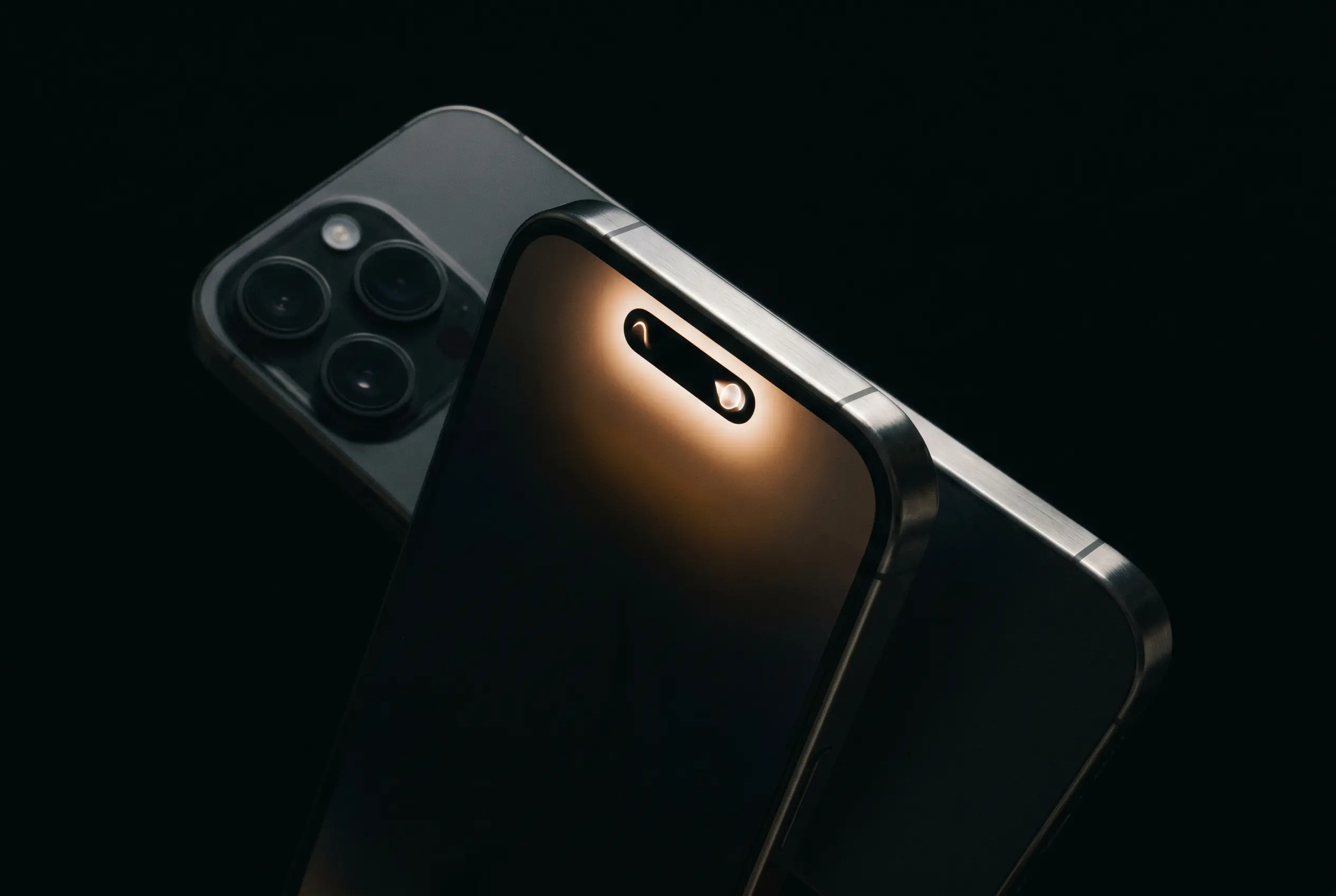
For the first time since Siri launched in 2011 as an iPhone 4S feature, the assistant gets a dedicated application. Per Bloomberg’s Gurman and MacRumors, the new app features a chatbot-style interface with full conversation history, support for uploading files and images, and a “Search or Ask” hub accessible system-wide. The animated Siri icon moves from the bottom of the screen into the Dynamic Island at the top. Apple has embedded an “Ask Siri” button in individual app menus, so users can send content directly to Siri from within any compatible app. The interface uses dark colors with no light mode available.
Apple is adding an AI agent tier to the App Store, per The Information. These agents can act on a user’s behalf without manual app navigation: booking reservations, editing and sending documents, controlling smart home devices, managing scheduling tasks. It’s the first formally structured agentic tier inside Apple’s primary distribution channel.
Personal Context on Opt-In
The personal context feature is the one Apple publicly promised at WWDC 2024 and could not ship. Users who opt in give Siri access to Mail, Messages, Photos, Notes, Calendar, Contacts, and Reminders across the entire system. A single spoken command can chain multiple app actions: finding a photo from a beach trip, cropping it to a square, and sending it to a named contact. Users can configure conversation history to delete automatically after 30 days, one year, or keep it indefinitely. Apple is expected to launch some advanced personal-context capabilities with a beta label at first.
| Capability | Before WWDC 2026 | After WWDC 2026 |
|---|---|---|
| Cross-app data access | No (app sandbox isolation) | Opt-in personal context: Mail, Messages, Calendar, Photos, Notes, Contacts |
| Conversation history | None; each session starts blank | Full history with 30-day, 1-year, or indefinite deletion controls |
| Dedicated application | No; system overlay only | Standalone app with chat interface and file or image uploads |
| Dynamic Island integration | Limited audio indicator | Full visual animation and primary interaction hub |
| Third-party AI models | ChatGPT only (iOS 18 integration) | ChatGPT, Gemini, Claude via new Extensions system |
| AI agents in App Store | No | Yes; agents act on user’s behalf across bookings, documents, smart home |
iOS 27, entering developer beta today, drops support for the iPhone 11 family and the second-generation iPhone SE. A public beta is expected in July. Full personal-context capabilities require an iPhone 15 Pro or newer with an A17 Pro chip and at least 8 GB of random-access memory (RAM).
Developers Get to Choose the Model
Extensions, a new iOS 27 framework, lets developers plug their apps into Siri and pick which AI model handles the interaction. Options are expected to include ChatGPT, Gemini, and Anthropic’s Claude, per Forrester Research’s Andrew Cornwall, a senior analyst who previewed the planned announcements. A legal-research app or a medical-records tool can route voice queries through a specialized model without pulling users out of Apple’s native interface. Apple’s App Intents framework, the code layer that lets Siri trigger functions inside third-party apps, continues alongside the new system.
Goldman Sachs, in a WWDC 2026 preview published June 2, said an AI-enhanced Siri has the potential to restart a new iPhone replacement cycle. The firm expected Apple to confirm the Siri rollout schedule at the keynote, with the full consumer version arriving alongside the iPhone 18 in September. A more capable Siri concentrates personal data, task history, and voice interactions inside Apple’s ecosystem, which deepens the switching cost for users and supports the services revenue growth that has driven most of Apple’s recent stock performance.
Apple’s shares have risen approximately 50% over the past year, per Reuters. Alphabet, which has been commercially deploying its Gemini products through that same period while Apple delayed, has gained roughly 120%. The two companies’ AI fortunes are now explicitly linked: Apple’s next chapter runs on Google’s model.
The developer beta opens today; the public beta follows in July. The full consumer release comes in September alongside the iPhone 18 and, per widespread reports, just ahead of Tim Cook’s expected handover of the chief executive role to John Ternus. That’s two years and $1 billion a year to Google after Apple first sold the iPhone 16 on the promise of it.