Xiaomi pushed its 17T series into Europe this week at about €100 more than the 15T line it replaces, with the standard Xiaomi 17T opening near €749 (roughly $878) and the 17T Pro near €999. Both phones earned real hardware for that bump, led by a 5x periscope camera that finally reaches the cheaper model and silicon-carbon batteries that grew between 1,000 and 1,500 milliamp-hours over last year’s cells.
Here is the part worth a pause before you tap buy. The most interesting value in this launch may not be either 17T at all. Xiaomi is pairing both phones with a heavily discounted tablet of your choice, and its own Poco F8 Ultra, priced below the vanilla 17T, runs a more powerful chip and a wider camera kit than the costlier Pro.
How the 17T and 17T Pro Line Up
The two phones share more than their predecessors did. Both now carry the same 50-megapixel 5x periscope telephoto, both use 12-bit OLED (organic light-emitting diode) panels, and both lean on the silicon-carbon chemistry that let Xiaomi stuff bigger batteries into thinner bodies. The split shows up in the chip, the main sensor, the screen speed and how fast each one refills.
The Pro keeps the larger 6.83-inch panel at a quicker 144Hz, runs MediaTek’s flagship Dimensity 9500, and pairs a bigger 1/1.31-inch main sensor with 100W wired plus 50W wireless charging. The standard model trims to a 6.59-inch 120Hz screen, a Dimensity 8500-Ultra, and 67W wired with no wireless option. Both numbers are laid out on the official 17T Pro specification sheet.
| Spec | Xiaomi 17T | Xiaomi 17T Pro |
|---|---|---|
| Display | 6.59″ 12-bit 120Hz OLED | 6.83″ 12-bit 144Hz OLED |
| Chipset | Dimensity 8500-Ultra | Dimensity 9500 |
| Main camera | 50MP (Light Fusion 800) | 50MP, 1/1.31″ sensor |
| Periscope | 50MP 5x/115mm | 50MP 5x/115mm |
| Battery | 6,500mAh | 7,000mAh |
| Wired charging | 67W | 100W |
| Wireless charging | None | 50W |
| Starting price | ~€749 | ~€999 |
For most buyers the periscope parity matters more than the chip gap. The cheaper phone can now shoot 30cm macro and pull 10x lossless zoom, jobs the old 2x/46mm lens simply could not do.
Where That Extra €100 Lands
So what does the price step actually buy versus the 15T? The upgrades are concrete rather than cosmetic, and they cluster around the camera and the battery.
- A 50MP 5x periscope on the standard model, replacing the old 2x/46mm tele lens, with 30cm macro and 10x lossless zoom
- A 6,500mAh cell on the 17T, up 1,000mAh, and a 7,000mAh cell on the Pro, up 1,500mAh, both via silicon-carbon packing
- A faster, brighter 12-bit OLED panel on each, with the Pro climbing to a 144Hz refresh rate
- The flagship Dimensity 9500 on the Pro, a clear step over the 8500-Ultra in the cheaper phone
The increase also arrives after a wider squeeze on component costs. Xiaomi’s earlier round of price rises tied to surging memory chip costs reset expectations across its 2026 catalogue, so a €100 move on a T-series refresh reads as part of a pattern, not a one-off.
That context cuts both ways. The hardware gains are easy to defend, yet the buyer who only wanted a clean 15T-style deal is now paying flagship-adjacent money, which is exactly where the bundle starts to look clever. Full pricing and configurations sit on Xiaomi’s 17T product listing.
The Tablet Bundle Math, Pad by Pad
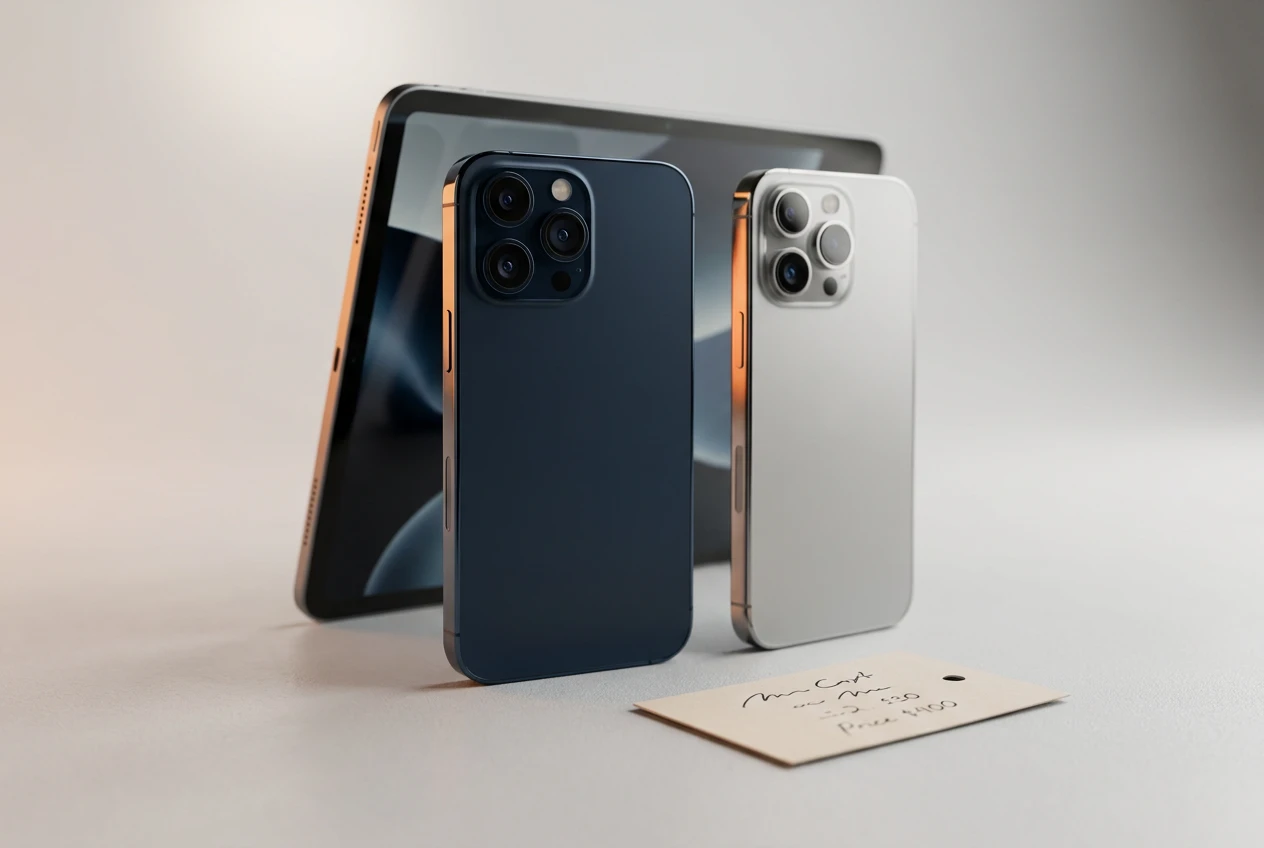
Because both phones launched only days ago, there are no straight discounts yet. The lever Xiaomi is pulling instead is a tablet bundle: buy either 17T and add a slate at a cut price, choosing between the budget Redmi Pad 2 9.7-inch and the premium Xiaomi Pad 8.
- €100 for the Redmi Pad 2 9.7″ inside the bundle, down from a standalone €200
- €300 for the Xiaomi Pad 8 11.2″ inside the bundle, down from a standalone €450
- €150 is the larger saving, and it lands on the better tablet of the two
The two slates are not close in capability. The Redmi runs a Snapdragon 6s 4G Gen 2 with just 4GB of RAM (random-access memory) and a 9.7-inch 120Hz IPS LCD (in-plane switching liquid-crystal display), though its 64GB of storage takes a microSD card and the 7,600mAh battery is decent. The Pad 8 steps up to a Snapdragon 8s Gen 4, a sharper 11.2-inch 144Hz panel, more memory and storage out of the box, and a 9,200mAh battery with 45W charging, though it drops the microSD slot. The full breakdown sits on the Xiaomi Pad 8 specifications page.
If you want a second screen for video and light browsing, the Redmi at €100 is close to free money. If you actually plan to work on the tablet, the Pad 8 pairing is the one that earns its keep.
Poco F8 Ultra Undercuts the Pricier 17T
Now the awkward question for Xiaomi’s own pricing. Sitting below the standard 17T is the Snapdragon 8 Elite Gen 5 powered Poco F8 Ultra, and on paper it reads like a better phone than the 17T Pro that costs hundreds more. It starts at €619.99, cheaper than the vanilla 17T, yet it brings a chip that rivals the Pro’s MediaTek silicon and a camera set the Pro cannot match. The specs live on the Poco F8 Ultra product page.
| Spec | Poco F8 Ultra | Xiaomi 17T Pro |
|---|---|---|
| Chipset | Snapdragon 8 Elite Gen 5 | Dimensity 9500 |
| Main sensor | 50MP, 1/1.31″ Light Fusion 950 | 50MP, 1/1.31″ |
| Ultra-wide | 50MP | 12MP |
| Periscope | 50MP 5x/115mm | 50MP 5x/115mm |
| Display | 6.9″ 12-bit 120Hz OLED | 6.83″ 12-bit 144Hz OLED |
| Battery | 6,500mAh | 7,000mAh |
| Starting price | €619.99 | ~€999 |
Where the Poco Pulls Ahead
The headline edge is the chip plus the cameras. Qualcomm’s flagship part and the 50MP ultra-wide, four times the resolution of the Pro’s 12MP unit, give the Poco a sharper, more flexible kit. It also shares the Pro’s 1/1.31-inch main sensor class and the same 5x periscope, so the Poco loses nothing important at the long end while gaining at the wide end, all for less cash.
Where the 17T Pro Earns Its Price
The Pro is not beaten everywhere. Its 7,000mAh battery is larger, its 144Hz panel is faster, and Xiaomi’s T-series typically ships with a longer software-update commitment and tighter Leica camera tuning than the Poco line. Buyers who value battery endurance, a snappier screen and that polish still have a case. They are simply paying a premium the spec sheet does not fully justify.
The Xiaomi Models Sitting Above the 17T
European shoppers reaching for something grander than the 17T have fewer options than the global lineup suggests. The Xiaomi 17 Max and 17 Pro Max never made it to the region, which leaves only the compact Xiaomi 17 and the expensive 17 Ultra as higher-end choices.
The gap between them is wide. The 17 Ultra is the camera halo, fronted by a 200MP Leica periscope built to chase the Galaxy S26 Ultra, while the absent 17 Max was the battery-first flagship with an 8,000mAh cell that Europe will not get. For anyone who wants Pro-class power without the Ultra outlay, the Poco F8 Ultra keeps pulling the eye back.
This week the cleanest decision is not really about which 17T to pick. It is about whether you want the phone, the tablet that comes nearly free with it, or the cheaper Poco that quietly does more.
Frequently Asked Questions
How Much Does the Xiaomi 17T Cost?
The Xiaomi 17T starts near €749 (about $878) for the 12GB/256GB version, while the 17T Pro opens around €999 for its 12GB/512GB configuration. Both sit roughly €100 above the 15T phones they replace.
What Tablet Comes With the Xiaomi 17T Bundle?
You choose one of two. The Redmi Pad 2 9.7-inch drops to €100 in the bundle from a standalone €200, and the premium Xiaomi Pad 8 11.2-inch drops to €300 from €450, making the Pad 8 the larger saving at €150 off.
Is the Poco F8 Ultra Better Than the Xiaomi 17T Pro?
On the spec sheet, mostly yes, and for less money. The Poco F8 Ultra runs the Snapdragon 8 Elite Gen 5, carries a 50MP ultra-wide versus the Pro’s 12MP, and starts at €619.99. The Pro counters with a bigger 7,000mAh battery and a faster 144Hz screen.
What Is the Difference Between the 17T and 17T Pro?
The Pro uses the Dimensity 9500, a 6.83-inch 144Hz screen, a larger 1/1.31-inch main sensor, a 7,000mAh battery and 100W wired plus 50W wireless charging. The standard 17T uses the Dimensity 8500-Ultra, a 6.59-inch 120Hz screen, a 6,500mAh battery and 67W wired charging with no wireless.
Are the Xiaomi 17 Max and 17 Pro Max Available in Europe?
No. Neither model launched in Europe, leaving the compact Xiaomi 17 and the high-end 17 Ultra as the only models positioned above the 17T series in the region.