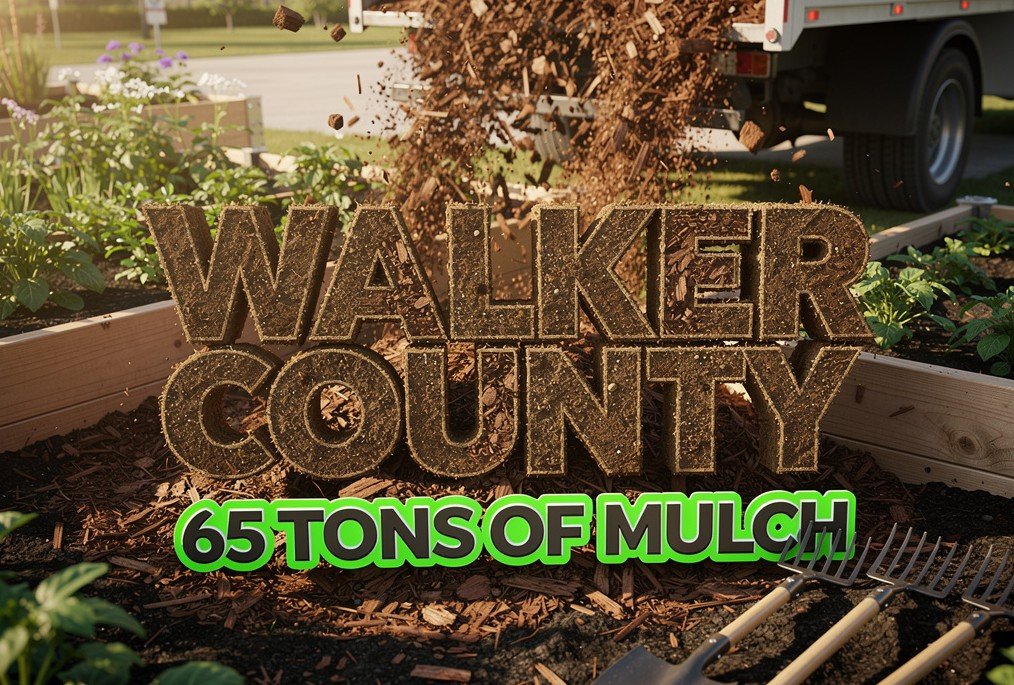
A landfill waste program in Georgia is turning into a classroom opportunity for students. Walker County officials have delivered about 65 tons of mulch to local schools, helping agriculture students learn sustainability through hands on projects.
The initiative not only supports school gardens but also helps a nonprofit farm that grows food for families in need. County leaders say the program shows how waste can become a valuable resource.
Walker County Landfill Mulch Program Supports Schools
Walker County’s Solid Waste and Public Works departments recently distributed around 65 tons of excess mulch from the county landfill’s mulch program to schools across the region.
The mulch is being used by agriculture students at several campuses, including:
-
Chattanooga Valley Middle School
-
Saddle Ridge Elementary School
-
Saddle Ridge Middle School
-
Rock Spring Elementary School
Students will use the material in agriculture classes, greenhouse activities, and outdoor learning projects.
The mulch will also support school planters and garden beds that allow students to grow crops and learn real life farming methods.
County officials say the project gives students a real world lesson in sustainability while reducing waste that would otherwise sit unused at the landfill.
The program is part of a broader effort to recycle storm debris, leaves, and limbs collected at the landfill into useful landscaping and farming materials.
Students Learn Farming Skills Through Hands On Projects
For many students, agriculture lessons move beyond textbooks when they step into a school garden.
The donated mulch helps create healthier soil by retaining moisture and reducing weed growth. It also protects plant roots from extreme temperatures.
Students will use the mulch for activities such as:
• Building raised garden beds
• Maintaining greenhouse crops
• Practicing soil health techniques
• Learning sustainable farming methods
These projects allow students to see how small environmental choices can influence crop growth and soil quality.
Agriculture teachers say hands on work helps students understand food production in a way that traditional classroom lessons cannot.
One teacher involved in the program described it simply.
“Students remember what they grow with their own hands.”
Nonprofit Farm Eden’s Harvest Also Receives Donation
The mulch program also benefits a local nonprofit organization focused on agricultural education.
Walker County officials donated mulch to Eden’s Harvest, a nonprofit demonstration farm that teaches regenerative agriculture techniques.
The farm provides free classes showing how people can grow food in spaces ranging from backyard gardens to farms as large as 200 acres.
According to county solid waste and environmental management director Paine Gily, the mulch will play a major role in maintaining crops at the site.
The material will support the planting and care of roughly:
| Crop Type | Estimated Quantity |
|---|---|
| Fruit trees | Hundreds |
| Nut trees | Dozens |
| Berry bushes | Several hundred |
| Total plants supported | Around 600 |
The farm uses these crops not for profit but for community support.
All produce grown at Eden’s Harvest is donated to food banks and communities facing shortages of fresh fruits and vegetables.
Agriculture Remains a Key Industry in Walker County
While the mulch donation helps students and nonprofits, it also reflects the deep agricultural roots of Walker County.
According to the latest University of Georgia Farm Gate Value Report:
-
Walker County ranks 48th in the state for agricultural production
-
Local farms generate more than $119 million annually
-
The county has 557 active farms
The main agricultural products include:
• Poultry
• Livestock
• Corn
• Cotton
• Hay
• Soybeans
These industries support hundreds of families and remain an important part of the local economy.
Programs like the landfill mulch initiative aim to ensure the next generation understands agriculture and environmental responsibility.
Turning Waste Into Opportunity
Landfills are often associated with environmental problems. But projects like this show how creative solutions can change that perception.
Instead of sending organic debris to waste piles, Walker County processes it into mulch that supports farms, gardens, and classrooms.
The approach creates a simple cycle.
Waste becomes mulch.
Mulch grows crops.
Crops feed communities.
For students in Walker County schools, that cycle now plays out in their own schoolyards.
And for many of them, it may be the first step toward careers in agriculture, environmental science, or sustainable farming.
As the gardens grow this year, the impact of those 65 tons of mulch will reach far beyond the soil.
What do you think about schools using sustainability projects like this to teach students? Share your thoughts in the comments and discuss it with your friends and family.