Samsung has stepped into new territory with the reveal of its first trifold smartphone — a device the company hopes will redefine premium mobile tech and grab attention before Apple makes its long-rumored folding iPhone move.
The Galaxy Z TriFold, arriving first in South Korea on December 12, reflects Samsung’s push to stay ahead in a market that’s still figuring out how far foldable phones can go.
A Bold Bet on a Category Still Finding Its Feet
Samsung’s announcement shows it clearly isn’t shying away from pushing boundaries in smartphone design.
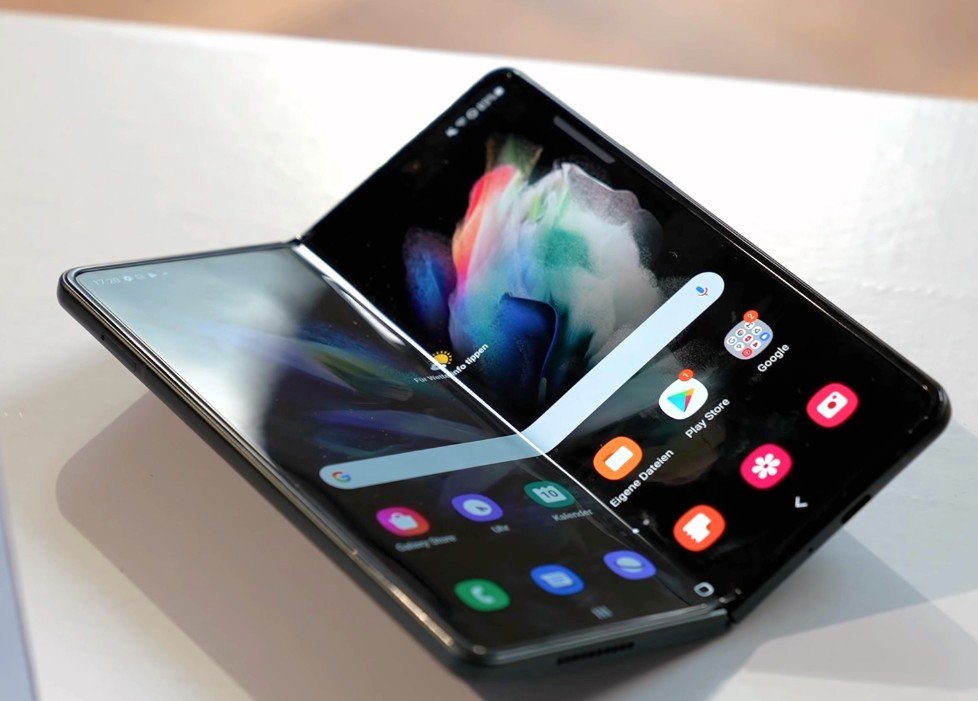
The TriFold uses two hinges, opening into a tablet-like screen that feels closer to a compact laptop than a phone.
One short line here: It’s flashy, expensive and meant to make a point.
Priced at 3.59 million won — roughly $2,450 — the device lands firmly in the ultra-premium tier. The company confirmed it will arrive later in the US, though pricing remains under wraps.
Samsung’s rollout includes China, Taiwan, Singapore and the UAE, hinting at a strategy to target markets where early adopters traditionally respond well to futuristic hardware.
How the TriFold Fits Into Samsung’s Larger Strategy
Samsung has spent years trying to make foldables go mainstream.
But despite strong marketing, the broader category still hasn’t hit mass appeal. Consumers often cite durability worries, high costs and unclear practical value.
Another one-liner: The TriFold is meant to address some of those doubts — or at least distract from them.
The company’s engineers have touted stronger hinge architecture and improved crease visibility. Samsung hopes this device tells the market that three-panel folding isn’t a gimmick but the next step forward.
Here’s a key bullet point that gives a bit more context on Samsung’s intent:
-
The TriFold expands into a larger screen than previous Z Fold models, targeting productivity-heavy users who want both portability and work-friendly space.
While Samsung didn’t attach deep technical specs during the unveiling, executives hinted that screen durability and multi-tasking will be key talking points during the retail push.
A Premium Price Tag in a Slower Smartphone Market
The timing is interesting.
Global smartphone sales have been sluggish for several years, with consumers holding onto devices longer. Foldables were expected to reinvigorate demand, but adoption hasn’t reached the levels analysts predicted back in 2020–21.
Yet Samsung continues to invest heavily in the segment, partly because it brings in high margins and keeps the company positioned as an innovation leader.
One short stand-alone sentence: And the company wants that advantage before Apple steps in.
Industry analysts widely expect Apple to enter the folding phone segment in late 2026 or 2027, and Samsung appears eager to stretch its lead before that moment arrives.
Prices like $2,450 may seem excessive, but Samsung believes early adopters will pay for novelty and versatility, especially in markets where foldables already enjoy niche popularity.
Early Launch Markets Point to Samsung’s Confidence
The decision to debut the device in South Korea makes sense — Samsung’s home market is often its testing ground for big hardware swings.
But adding China, Singapore and the UAE into the first wave shows Samsung is betting on regions with high luxury-tech penetration.
A quick one-line note: These are markets where people don’t blink as much at bold price tags.
Taiwan’s inclusion reflects rising interest among tech-heavy communities that value screen quality and customization more than average consumers.
Below is a quick table summarizing where Samsung plans to launch the TriFold first and why these destinations matter:
| Launch Market | Why It Matters |
|---|---|
| South Korea | Strong loyalty and high-end tech adoption |
| China | Large premium smartphone market |
| Taiwan | Early foldable interest and strong tech culture |
| Singapore | High per capita tech spending |
| UAE | Luxury market with demand for premium devices |
| USA | Major revenue driver (pricing to be announced) |
The US price — whenever Samsung decides to reveal it — will play a huge role in determining whether this model reaches beyond a niche audience.
What This Means for the Future of Large-Screen Phones
Three-hinge phones are still rare.
Most folding devices rely on a single hinge, making the TriFold one of the few double-fold designs actually heading to shelves.
One-sentence interruption: Samsung has wanted this moment for years.
The bigger question is practical: do people want a phone that folds twice? Some tech reviewers argue that three-panel foldables offer meaningful benefits — better multi-window setups, more reading space and smoother writing experiences.
Others compare them to novelty laptops from the 2010s: exciting to see, but tough to justify financially.
Consumers may land somewhere in between, intrigued but unsure.
Still, Samsung’s move sets a tone for the next phase of mobile design. Competitors like Huawei and Xiaomi have shown prototypes, but this release gives Samsung bragging rights as the first global player to mass-produce a trifold.
Demand will reveal whether that matters or whether users prefer smaller, lighter folding styles.
Another short line: The next few months could be telling.
Eyes Now Turn to Apple — Even Without an Announcement
Even though Apple hasn’t confirmed anything, rumors around a folding iPhone have swirled for years.
Insiders say the company is testing variations internally, likely watching the market carefully to avoid missteps.
If Samsung can lock in early loyalty among foldable-curious users, it gains a buffer before Apple’s ecosystem power inevitably shakes the category.
That’s why the TriFold isn’t just a product. It’s a signal — a loud one aimed directly at its fiercest rival.
Samsung has used design spectacle as a competitive weapon before, from curved screens to phablets to early 5G models. The TriFold fits neatly into that strategy.
And for now, Samsung gets to enjoy the spotlight as the only company shipping a phone that folds twice and stretches into tablet territory without feeling like a concept piece.
Whether consumers buy into the idea in meaningful numbers will determine if the TriFold becomes a milestone or a footnote.