Global oil markets are rattled as prices leap sharply amid an intensifying conflict in the Middle East, exposing vulnerabilities in energy supply routes and threatening economic pain worldwide. Brent crude and U.S. oil benchmarks climbed to levels not seen in over a year as fighting involving the United States, Israel, and Iran disrupted shipments from the region’s heart of oil production. Hundreds of tankers are stuck, insurers have withdrawn coverage, and major producers like Iraq are slashing output as the crisis spreads.
But the implications stretch far beyond energy markets, touching inflation, global growth, shipping logistics, and everyday costs for consumers from New York to New Delhi.
Conflict Drives Oil Prices to Multi‑Month Highs
Oil is rallying relentlessly as traders price in supply risks tied to escalating warfare between U.S. and Israeli forces against Iran. Brent crude futures settled up nearly five percent recently at over eighty‑one dollars per barrel, the highest closing price since January 2025. U.S. West Texas Intermediate crude followed suit, rising to its strongest level since mid‑last year according to market data. The surge reflects deep anxiety that energy flows from the Middle East could be throttled for weeks or months.
Prices have climbed even higher in some sessions, with benchmarks jumping eight percent in certain trading windows, pushing Brent toward levels last seen in July 2024. The consistent rise across multiple sessions shows that traders are not treating this as a short‑lived blip but a profound market shock.
Strait of Hormuz: The World’s Energy Chokepoint at a Standstill
At the heart of the disruption is the Strait of Hormuz, a narrow waterway essential to global energy supply. Roughly one‑fifth of the world’s crude oil and LNG shipments transit through this corridor on any given day. In response to U.S. and Israeli strikes, Iranian forces have attacked shipping vessels and regional infrastructure, prompting insurers to cancel war‑risk coverage for tankers. As a result, traffic through the strait has collapsed.
With few tankers willing to risk passage, global oil and gas shipping rates have spiked. Countries that depend on Middle East energy exports, including India, China, and Indonesia, are scrambling to find alternate routes or supplies, underscoring the strategic importance of this maritime passageway. Some oil firms and governments are attempting to reroute shipments around Africa’s Cape of Good Hope, adding logistical costs and weeks of transit time to each voyage.
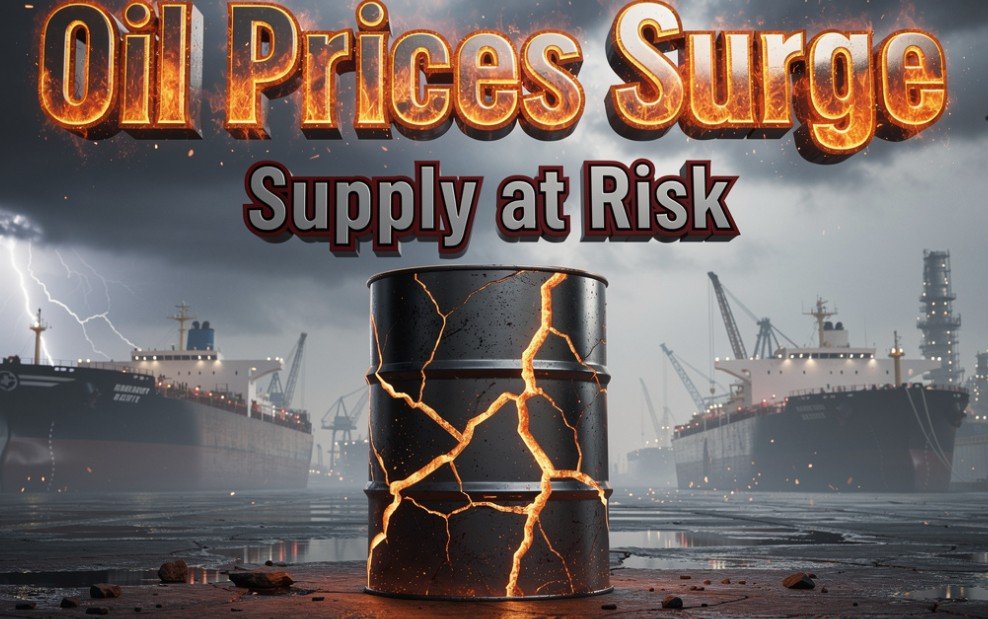
Output Cuts and Structural Supply Risks
OPEC’s second‑largest producer, Iraq, announced production cuts of nearly 1.5 million barrels per day due to export disruption, a figure that could double if storage fills and exports remain blocked. This reduction subtracts a significant chunk of global crude supply, and analysts warn that further cuts are likely if the crisis continues.
Meanwhile, some Middle Eastern producers face operational halts. Qatar’s liquefied natural gas facilities have shut production amid safety concerns, and Saudi Arabia is rerouting crude shipments to bypass the Gulf. These moves reflect a market that is not just responding to short‑term price swings but grappling with structural supply shifts that could linger.
Key Market Indicators
The following figures illustrate the scale of disruption:
-
20 percent of global oil and LNG trade typically passes through the Strait of Hormuz.
-
Brent crude is up over 12 percent since the conflict began.
-
Shipping traffic through the Hormuz corridor has fallen to near‑halt levels compared to normal.
These numbers show why markets are pricing in a sustained risk premium on crude and gas futures.
Economic Ripples Around the World
The fallout from spiking oil prices is not limited to energy traders. Central banks and economists are already warning of inflationary pressures. The European Central Bank’s chief economist cautioned that a prolonged conflict could stoke euro zone inflation and dampen growth, especially if energy costs remain elevated. Higher fuel prices often filter through to goods, services, transportation, and manufacturing, driving up consumer prices globally.
In markets from London to Mumbai, equities have reacted to oil volatility with heightened volatility. Stock indices weakened on fears that rising energy costs could erode corporate profits and consumer spending power. At the same time, safe‑haven assets like gold gained value, reflecting investor unease.
Global Supply Chains Under Strain
Shipping delays and increased freight costs ripple wider than just fuel prices. Industries relying on timely deliveries, from automotive manufacturing to food and fertilizer supply chains, are feeling the impact of costly rerouted routes and stalled tankers. Longer transit times and limited cargo space are contributing to logistical bottlenecks, with analysts cautioning that some effects could outlast the immediate geopolitical crisis.
Consumer pockets are also feeling the impact. In some regions, motorists are already seeing rising fuel pump prices. Analysts predict that if the crisis prolongs, household energy and transportation costs could climb further, affecting discretionary spending and inflation metrics in major economies.
What Happens Next
Market observers are watching whether military action expands further or whether diplomatic channels can bring a ceasefire. Analysts suggest that even partial restoration of the Strait of Hormuz shipping could ease prices, but any sustained closure would keep markets in price shock territory, with scenarios of oil hitting triple‑digit levels not entirely out of the question.
Energy security debates that have simmered for years are now front and center. Governments may accelerate diversification of energy supplies, and renewable energy pushes could intensify as countries seek to reduce vulnerability to geopolitical turmoil.
The conflict’s impact shows how tightly global economies are linked to the stability of far‑flung energy corridors, and how a regional war can reverberate through markets and households worldwide.
The recent surge in oil prices is a stark reminder that energy markets remain deeply sensitive to geopolitical shocks, with consequences that extend far beyond commodity traders and fuel stations. What do you think is the long term economic impact of this conflict on global oil supplies Write your views in the comments and share this article on social media to keep the conversation going.