
Michigan State University has announced that it has fired its head football coach Mel Tucker, following an investigation into sexual harassment allegations against him. Tucker, who was hired in 2020 and signed a 10-year contract extension worth $95 million in 2021, was accused of sexually harassing a rape survivor and sexual violence educator who was contracted to provide a training program to the Michigan State football team.
The Allegations Against Tucker
The accuser, Brenda Tracy, is a prominent national advocate for abuse survivors who has spoken to hundreds of college athletic programs across the country. She reported to the university that Tucker subjected her to unwanted phone sex in April 2022, after they had worked together multiple times. She said that Tucker called her late at night and masturbated on the phone without her consent, while making sexually explicit comments and asking her to send him nude photos. She also said that Tucker had previously flirted with her and commented on her body during their interactions.
Tracy said that she felt violated and traumatized by Tucker’s behavior, and that she decided to file a complaint under Title IX, the federal civil rights law that prohibits sex discrimination in education. She said that she wanted to hold Tucker accountable and prevent him from harming other women.
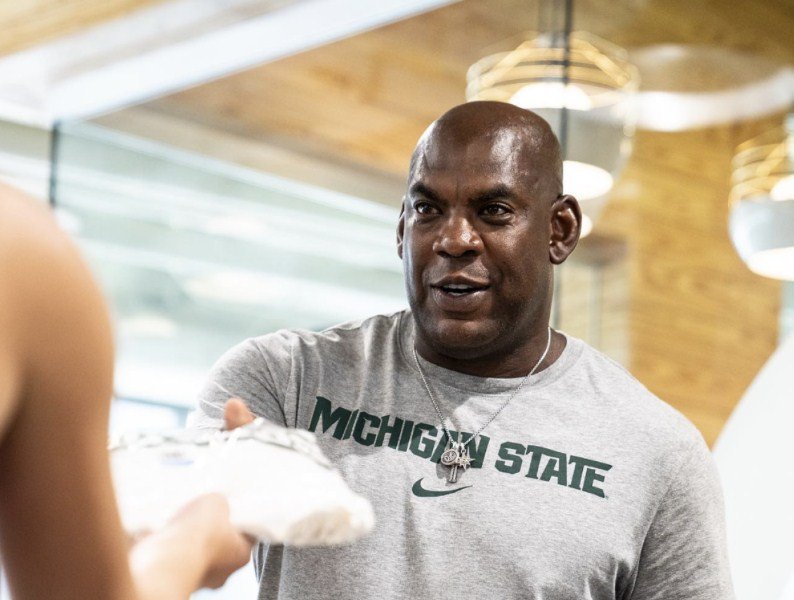
Tucker denied sexually harassing Tracy, saying that they had a consensual intimate relationship. He said that the phone call was mutual and that he did not force her to do anything. He also said that his actions were outside the scope of both Title IX and university policy, since they did not involve any students or employees.
The Investigation and Termination Process
Michigan State University hired an outside attorney to conduct an independent investigation into Tracy’s allegations. The university also launched a separate investigation by its Office for Civil Rights. Tucker was suspended without pay on Sept. 10, pending the outcome of the investigations.
On Monday, Sept. 18, Athletic Director Alan Haller sent a letter to Tucker’s sports management firm, stating the university’s intent to terminate his contract for cause. The letter cited multiple grounds for termination, including moral turpitude, breach of fiduciary duty, and violation of university policy. The letter also stated that Tucker admitted to some of the allegations during the investigation, such as masturbating and making sexually explicit comments on the phone.
According to Tucker’s contract, he had seven days to respond and present reasons why he should not be fired. However, Haller said that unless Tucker could provide sufficient reasons, his termination would be effective on Sept. 26. A hearing on the matter was scheduled for Oct. 5 and 6, where the outside attorney would decide whether Tucker violated university policy. An official sanction or punishment could then follow that determination.
The Reaction and Implications
The decision to fire Tucker has sparked mixed reactions from the Michigan State community and the public. Some praised the university for taking swift and decisive action against Tucker, saying that it showed a commitment to addressing sexual violence and supporting survivors. Others criticized the university for rushing to judgment and violating Tucker’s due process rights, saying that he deserved a fair hearing and a chance to defend himself.
The firing of Tucker also has significant implications for the Michigan State football program and the college sports landscape. Tucker was one of the highest-paid coaches in the country, and he had led the Spartans to a 10-2 record in 2021, including a win over rival Michigan. He had also recruited several top players for the 2022 class, which ranked among the best in the nation. His departure leaves a huge void in the leadership and direction of the team, which will have to find a new coach amid uncertainty and controversy.
Tucker’s case also raises questions about the role and responsibility of college coaches in preventing and addressing sexual violence on campus. Tracy said that she hoped that her experience would serve as a wake-up call for coaches to be more respectful and professional with women, especially those who work with them or their players. She also said that she hoped that other survivors would feel empowered to speak up and seek justice.
