Attorneys in Brunswick, Georgia, faced off in court Tuesday, with a jury now tasked to decide whether a former prosecutor used her position to protect the men responsible for killing Ahmaud Arbery. The case has sparked heated debate and raised questions about the role of law enforcement in protecting the perpetrators of such a tragic event.
The Chilling Sequence of Events
It’s been nearly five years since Ahmaud Arbery was shot dead while running through a quiet neighborhood in Glynn County, Georgia. The 25-year-old Black man had been spotted by Gregory McMichael and his son Travis, who, along with their neighbor William “Roddie” Bryan, mistakenly assumed Arbery was a thief. The three men pursued Arbery in their pickup trucks, with a confrontation that ultimately ended in a fatal shotgun blast.
Despite the brutal killing, the case languished for more than two months. No arrests were made, and the investigation seemed to stall. That is, until the footage of the killing, recorded by Bryan, surfaced online and went viral. It wasn’t until the Georgia Bureau of Investigation took over the case that any real action was taken, and the three men were charged with murder.
But the question that now looms large is: Could the prosecutors have intervened earlier?
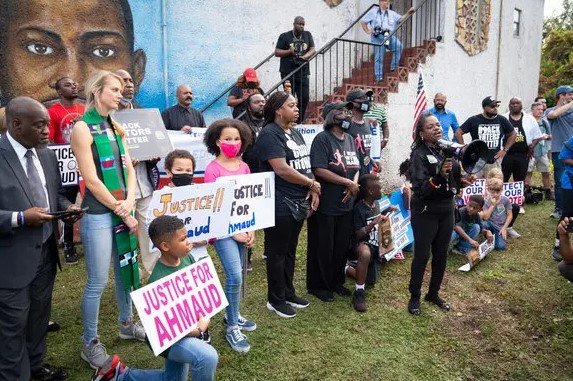
Jackie Johnson’s Alleged Missteps
Jackie Johnson, the former district attorney of Glynn County, is at the heart of this controversy. As prosecutor at the time of Arbery’s death, Johnson has been accused of improperly using her authority to protect the men involved in the shooting. Specifically, it is alleged that she interfered with the initial investigation, preventing the police from making an arrest and giving special treatment to the McMichaels.
Prosecutors argue that Johnson’s actions were motivated by her personal ties to Greg McMichael, who had previously worked as an investigator in her office. This alleged favoritism is a central point in the current trial. The defense for Johnson insists that there was no wrongdoing, claiming that her actions were consistent with the standard procedures followed in such cases.
Two Competing Narratives
The courtroom has been a battleground for two very different versions of events. On one side, the prosecution paints Johnson as someone who abused her position for personal reasons, failing to act in a timely manner and delaying justice. On the other side, Johnson’s defense lawyers argue that her decisions were not out of the ordinary and were based on her interpretation of the law at the time.
Witnesses in the case have given conflicting testimony, adding to the confusion. Some suggest that Johnson was simply trying to avoid overstepping by staying out of the initial investigation, while others claim that her actions were more nefarious, directly contributing to the delay in bringing charges against Arbery’s killers.
As the jury listens to these clashing accounts, the big question remains: Did Jackie Johnson act to protect the men who killed Arbery, or was her behavior simply an unfortunate consequence of bureaucratic procedures?
The Long Road to Justice
The controversy surrounding Johnson’s actions has raised broader questions about the justice system’s handling of cases involving people of color. Many argue that the delay in Arbery’s case is indicative of a systemic problem, where law enforcement and prosecutors fail to act swiftly in cases where Black victims are involved.
It took the public release of the video for justice to move forward, and the subsequent conviction of the three men in 2021 was seen as a victory. However, the legal battle surrounding Johnson’s alleged misconduct reveals the complexities of how the legal system sometimes operates behind closed doors, protecting those who may not deserve such protection.
What’s at Stake for Jackie Johnson?
For Jackie Johnson, the stakes are incredibly high. If convicted, she could face significant legal consequences, including potential prison time. But beyond her fate, the trial serves as a stark reminder of how prosecutors wield power in their communities. The outcome could send a message about accountability and transparency, particularly in high-profile cases involving racial injustice.
As the jury deliberates, both sides have made their case. The trial may soon come to an end, but the lingering questions about justice, race, and accountability will likely continue to resonate long after the verdict is delivered.