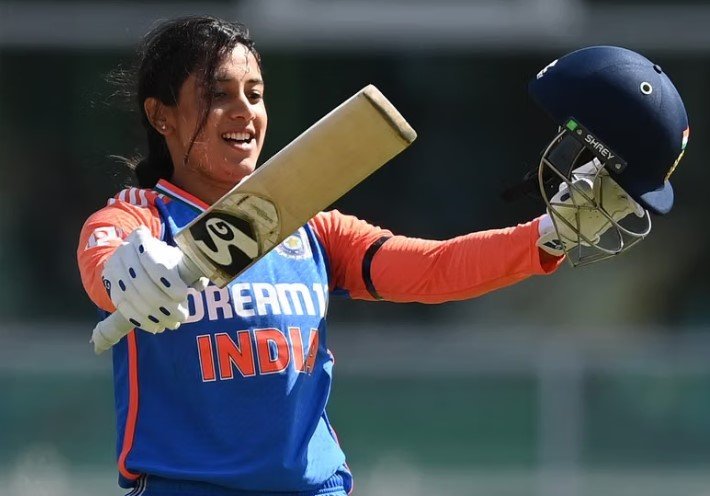
The euphoria from India’s Women’s World Cup victory hasn’t faded yet — and already, the nation’s champions are rewriting the rules of brand endorsement. Jemimah Rodrigues, Smriti Mandhana, and their teammates have become the faces every company wants.
From Stadium Glory to Studio Deals
It took one unforgettable night in Navi Mumbai for the numbers to start dancing. India’s women’s cricket team, after years of heartbreak, finally lifted their first-ever ODI World Cup trophy — defeating South Africa in a tense, emotional final that had an entire nation glued to their screens.
Within hours, endorsement inquiries began pouring in. Players’ agents describe their phones “ringing nonstop,” as marketers scrambled to link their brands to India’s newest icons.
Jemimah Rodrigues, whose 127 not out in the semi-final became part of cricket folklore, saw her brand value double overnight — from ₹75 lakh to nearly ₹1.5 crore per deal. That’s a 100% leap, and it’s shaking up India’s advertising ecosystem.
A Brand Boom Decades in the Making
For years, women’s cricket in India lived in the shadows — televised irregularly, underfunded, and ignored by most advertisers. But this win has flipped that narrative on its head.
Agencies like Baseline Ventures and JSW Sports say the growth is unlike anything they’ve ever seen. “Since the morning after the final, we’ve been flooded with calls — not just for new deals but also to renegotiate existing ones,” said Tuhin Mishra, Managing Director at Baseline. He says average endorsement fees have risen between 25% and 100%, depending on the player.
That’s not just a number — it’s a shift in perception. “For years, we were trying to convince brands that women’s cricket had mass appeal. Now, they’re calling us first,” a senior sports marketer joked.
How Jemimah and Smriti Became India’s New Power Duo
If the World Cup had a breakout star, it was Jemimah Rodrigues. Her calm composure, charm, and consistency made her an advertiser’s dream. Karan Yadav, CCO at JSW Sports, confirmed that brands from 10–12 different sectors have approached her, from FMCG to fintech.
Smriti Mandhana, on the other hand, is already an established name. She’s been the face of Nike, Hyundai, HUL’s Rexona, SBI, Herbalife, and Gulf Oil, among others. Post-World Cup, her price tag — ₹1.5 to ₹2 crore per endorsement — puts her in the same conversation as some of India’s male cricketers.
One brand executive described Mandhana as “the Virat Kohli of women’s cricket marketing.” Another, perhaps only half-joking, said, “We had to book her three months in advance — now it might take six.”
| Player | Pre-World Cup Fee (₹ lakh) | Post-World Cup Fee (₹ lakh) | Major Brands |
|---|---|---|---|
| Jemimah Rodrigues | 75 | 150 | JSW, Rexona, Surf Excel |
| Smriti Mandhana | 150–200 | 150–200 | Nike, SBI, Hyundai |
| Harmanpreet Kaur | 80–100 | 120–160 | Puma, CEAT |
| Shafali Verma | 50–75 | 100 | Boost, Pepsi |
| Deepti Sharma | 40 | 80 | Hero MotoCorp |
Corporate India Smells Opportunity
Big brands didn’t wait for the confetti to settle. Hindustan Unilever’s Priya Nair revealed that they had ad placements ready even before the trophy was lifted. Surf Excel’s new campaign — “The maidan belongs to every woman who plays her heart out” — went live the morning after the final.
That’s confidence, and planning, and maybe a touch of intuition.
Meanwhile, Swiggy Instamart jumped in with cheeky posts celebrating the team’s win: “Queen served so good, the entire stadium couldn’t sit still.”
Marketers know timing matters. Strike while emotions are high, and consumers remember your brand when the replay runs on every TV screen.
Social Media Turns Players Into Influencers Overnight
Beyond sponsorships, another metric tells the story: followers. In the week after the final, the Indian women’s team’s social media accounts exploded. Jemimah’s Instagram following doubled. Shafali Verma’s grew by 150%. Even team captain Harmanpreet Kaur saw a 70% jump.
That digital surge isn’t just for bragging rights — it drives serious marketing leverage. Every selfie, every reel, every thank-you post now has potential ad value.
One sports agency executive estimated that each player’s engagement rate is up 2.5x since the final. “They’re not just athletes anymore; they’re content creators with national reach,” he said.
The Business of Representation
Here’s the interesting part: the growth isn’t limited to the superstars. Mid-tier players — often overlooked by advertisers — are suddenly in play. Companies are looking beyond just the “faces of the team.”
A Delhi-based marketing executive put it bluntly:
-
“Earlier, it was Smriti and maybe one or two others.”
-
“Now, everyone from Deepti Sharma to Richa Ghosh is getting calls.”
-
“Brands are finally realizing that relatability matters as much as celebrity.”
It’s not hard to see why. These women represent modern India — confident, urban, multilingual, and relatable to both small-town fans and global audiences.
From Cricket Field to Cultural Icons
This transformation goes beyond economics. The Indian women’s team isn’t just winning trophies; they’re changing how the country looks at women in sport.
Endorsements aren’t just about selling a deodorant or a car anymore. They’re statements of cultural relevance — proof that women’s cricket has finally arrived in the mainstream.
The BCCI, too, is expected to capitalize. Officials are reportedly planning to expand the Women’s Premier League (WPL) with higher player salaries and more commercial tie-ups for the 2026 season.
And with India’s World Cup heroes now household names, those deals won’t be hard to sell.