When Brian Colin sat down to play Dungeons & Dragons in the fourth grade, the sessions were less about mechanics and more about the raw thrill of collective storytelling. Decades later, that same sense of play has transformed into a robust career spanning sculpture, graphic design, and the development of tabletop roleplaying games, or TTRPGs. Colin is currently preparing for his third year as a featured guest at MomoCon, Atlanta’s premier celebration of gaming, anime, and comics, which takes place from May 21 to May 24. While many attendees view these conventions as a temporary escape from reality, Colin represents a growing class of creators who have turned the architecture of make-believe into a viable, long-term business model.
His journey to becoming a professional developer did not follow a straight line. After moving to Atlanta in 1997 from Maryland, Colin spent years navigating the metro area as a graphic designer and sculptor. The shift toward a full-time career in the tabletop industry only crystalized in 2016 during GenCon, the largest tabletop show in the United States. There, he realized that the same creative impulses that drove his monster taxidermy and vector illustrations could be channeled into book publishing and product design. Today, his work on titles like Vast Grimm and Over the Troll Bridge serves as a case study in how independent creators can leverage community bonds and niche licensing to bypass the gatekeepers of traditional media.
The Professionalization Of Childlike Wonder
The transition from a fan to a professional creator often begins with the realization that a hobby has commercial legs. For Colin, the epiphany arrived when he noted that while people admired his high-end sculptures, the price point of $1,000 for a one-of-a-kind piece was a barrier for the average fan. He needed a bridge between high art and accessible merchandise. This led to the creation of enamel pins featuring cartoony versions of classic creatures, using the vector illustration skills he had honed during his years as a studio graphic designer. This move toward productization allowed him to maintain his creative voice while building a scalable revenue stream that could fund larger projects.
Working alongside figures like Drew Foulke of Norse Foundry, Colin began to see how disparate creative skills could coalesce into a single product. His first major professional venture involved designing a deck of cards that doubled as dungeon tiles, where he wrote the contents, designed the layout, and populated the world with creatures he had previously sculpted. This multi-disciplinary approach is a hallmark of the modern indie TTRPG scene, where the roles of writer, artist, and publisher often overlap. By the time he reached his third year as a guest at MomoCon, he had established a circuit of 12 conventions annually, using each event to strengthen professional bonds rather than just chasing immediate sales.
Vast Grimm And The Rules-Light Revolution
Breaking The Wall Of Text
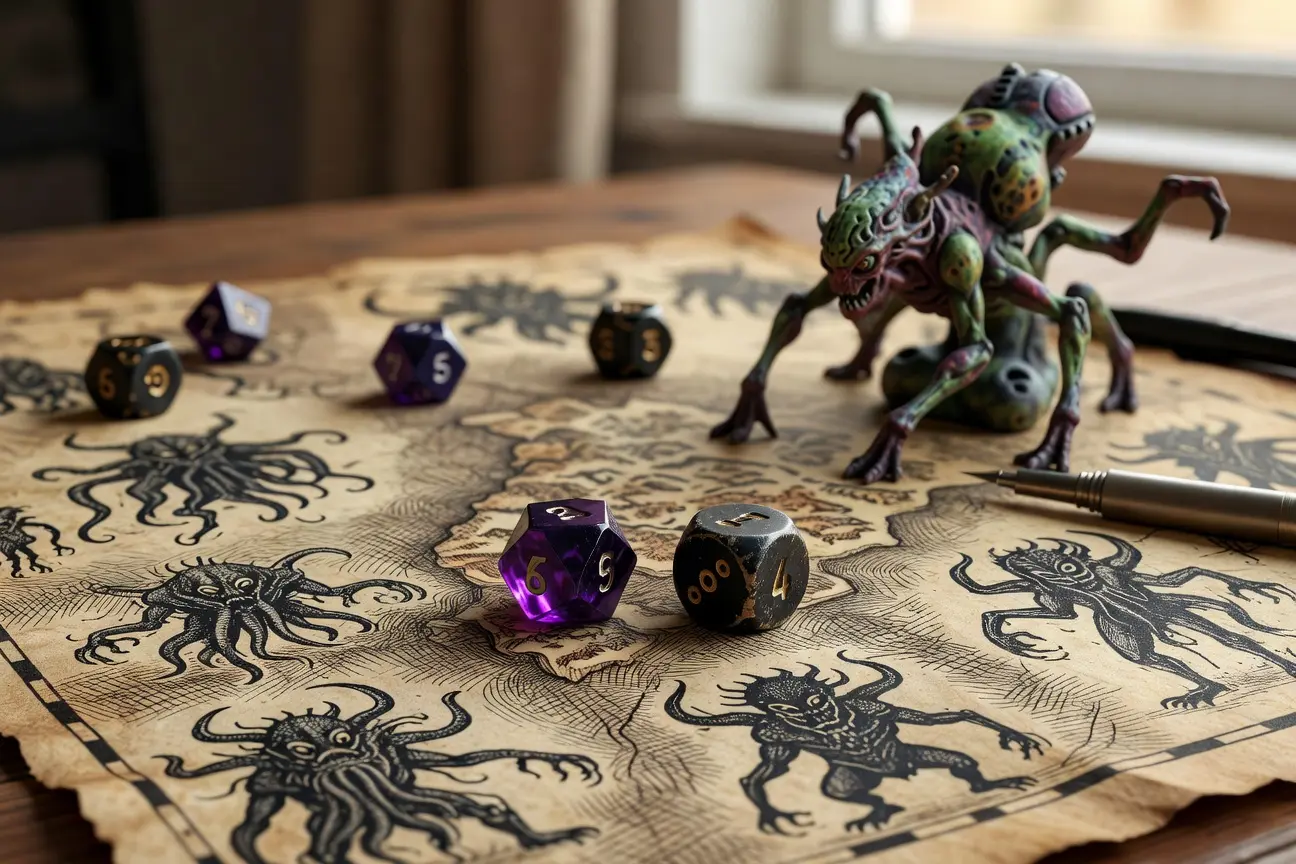
One of the most significant shifts in the tabletop industry is the move away from the dense, rule-heavy volumes that defined the late 20th century. Traditional games often relied on columns of technical text that could intimidate newcomers. Colin’s project, Vast Grimm, represents a radical departure from this aesthetic. Inspired by the Swedish game Mörk Borg, Vast Grimm embraces a rules-light philosophy where the art and the atmosphere carry as much weight as the mechanics. Each page spread is designed to feel like a rock poster, using high-contrast visuals and limited color palettes to convey a sense of sci-fi horror that words alone cannot capture.
The Legacy Of The Open Game License
Colin’s ability to publish Vast Grimm was facilitated by the Open Game License (OGL, a public copyright license that allows creators to use core game mechanics to build their own systems). By using the Mörk Borg license, Colin and his collaborator Ross Brandt were able to create a sci-fi hack that functioned as a standalone book. This legal framework has democratized game design, allowing smaller studios to stand on the shoulders of giants without the need for massive legal departments. It is a system that favors agility and creative risk over corporate consensus, a trend that is increasingly visible across the tabletop gaming landscape as more players seek out unique, indie experiences.
From Sculpture To Space Horror
The development of Vast Grimm also allowed Colin to pivot his sculpting style. Previously known for more whimsical creatures, he began creating monsters that were meaner and more visceral to fit the sci-fi horror theme. This evolution shows the symbiotic relationship between a creator’s physical art and their digital or printed output. The monsters he sculpted became the monsters in the storyline, creating a cohesive brand that resonates with fans who follow him from booth to booth on the convention circuit. This level of personal brand integration is what allows independent developers to compete for attention in a crowded market.
Table 1: Comparison of Tabletop Licensing Models
| License Type | Primary Benefit | Creative Freedom | Revenue Sharing |
|---|---|---|---|
| Standard OGL | Established Player Base | Moderate | None (usually) |
| Third-Party (Mörk Borg) | High Aesthetic Style | Very High | None |
| Proprietary/Closed | Brand Recognition | Low | High Royalties |
The Micro-Economics Of The Convention Circuit
While the digital world has made it easier to launch products through crowdfunding, the physical convention remains the heartbeat of the independent TTRPG industry. For Colin, conventions like MomoCon are less about direct competition and more about community building. In many other creative fields, knowledge is guarded as a competitive advantage; in the tabletop scene, creators frequently share data on everything from booth costs to which products are selling best. This transparency is a reaction to the cooperative nature of the games themselves, where players must work together to achieve a goal. This same ethos translates to the business side, where a rising tide is seen as lifting all boats.
The financial success of a convention is not always measured by the final tally at the cash register. Relationships built in the artist alleys of shows like MomoCon often lead to future collaborations, distribution deals, or insights into new manufacturing processes. Colin’s decision to live in West Georgia to keep his cost of living low is a strategic move that allows him to reinvest more capital back into his weird RPG stuff. This frugal, focused approach to business management is what enables an independent artist to sustain a career through 12 conventions a year, even when some events are not giant financial successes. The long-term growth of the brand is prioritized over short-term spikes.
Whether they know it or not, when you’re making up things on the fly and improvising, you are using something in your brain that hopefully will then encourage other parts of your being to be creative in other ways.
Brian Colin, TTRPG developer and MomoCon guest, discussed the cognitive benefits of roleplaying during a pre-convention interview in May 2026. He emphasizes that the act of play is a catalyst for broader creative development, a philosophy that informs both his game design and his parenting.
Cultivating The Next Generation Of Creators
The narrative of the solitary artist is increasingly being replaced by one of family-led creative ventures. Colin’s son and daughter have both contributed to his recent projects, including a rules-light game titled Over the Troll Bridge. In this game, players take on the roles of trolls living on a floating island called Magic City, collecting resources to keep their home from falling into a sea of lava. By involving his children in the booth at conventions and the design process at home, Colin is demonstrating that creative hobbies can be legitimate career paths. This hands-on education provides them with a front-row seat to the realities of entrepreneurship, from customer interaction to product development.
The local impact of this work is also significant. Colin hosts a local RPG night twice a month in Carrollton, Georgia, creating a space for the community to engage with the hobby outside of the major conventions. This grassroots level of engagement is crucial for the health of the industry, as it provides a low-pressure environment for new players to experiment with rules-light systems. As more people enter the hobby through mainstream cultural touchstones like Stranger Things, these local communities provide the necessary infrastructure to keep them engaged. The professionalization of play is not just about the creators; it is about building a sustainable ecosystem for everyone who enjoys rolling funny dice at a table.
Milestones in the Professionalization of Play:
- 1997: Colin moves to Atlanta, establishing his roots in the Georgia creative scene.
- 2016: A juried spot at the GenCon art show triggers the shift toward professional RPG development.
- 2021: The launch of Vast Grimm marks a significant entry into the rules-light, high-art RPG market.
- 2026: Entering his third year as a MomoCon guest with a circuit of 12 annual conventions.
- Ongoing: Hosting bi-monthly RPG nights in Carrollton to foster local community growth.
Frequently Asked Questions
What is a rules-light tabletop roleplaying game?
Rules-light games prioritize storytelling and atmosphere over complex mathematical mechanics and dense rulebooks. They are designed to be fast, easy to learn, and accessible to players who may find traditional systems like Dungeons & Dragons overwhelming.
How do creators use the Open Game License?
The OGL allows independent developers to use the core rules and mechanics of existing games to build their own unique projects. This reduces the legal and design burden on small creators, allowing them to focus on world-building and art.
What is the benefit of attending gaming conventions as a creator?
Conventions provide a platform for direct community engagement, product testing, and networking. For many indie developers, the relationships built at these events are more valuable than the immediate sales, as they lead to long-term professional collaborations.
Who is Brian Colin in the TTRPG community?
Brian Colin is a Georgia-based sculptor, graphic designer, and game developer known for his work on Vast Grimm and Over the Troll Bridge. He is a frequent guest at MomoCon and a prominent voice in the indie RPG scene.
How has the TTRPG industry changed since 2020?
The industry has seen a massive surge in popularity due to mainstream media exposure and the rise of crowdfunding. This has allowed more independent creators to find sustainable audiences and bypass traditional publishing routes.
Can children be involved in professional game design?
Yes, many independent creators involve their families in the design and convention process. This provides a hands-on education in creative entrepreneurship and helps build a family-run business model.
Where can I find Brian Colin at MomoCon 2026?
Colin will be participating in panels and hosting gaming sessions throughout the convention, which runs from May 21-24 in Atlanta. He is typically found in the guest or artist alley sections.
Disclaimer: This article is for informational purposes only and does not constitute professional career or financial advice. The TTRPG industry and convention circuit involve inherent market risks. Readers are encouraged to consult with qualified professionals before making significant career changes or business investments. All figures and dates are accurate as of publication.