
The first hijabi athlete in the US Olympic team
Ibtihaj Muhammad is a fencer who made history in 2016 by being the first US-team member to compete in the Olympics wearing a hijab. She won a bronze medal in the team sabre event, becoming the first Muslim American woman to earn an Olympic medal. She also became an inspiration for many young girls and women who face discrimination and stereotypes because of their faith and appearance.
Muhammad told Al Jazeera that she wanted to show the world what Muslim women can do in sport. She said, “I felt like this was my opportunity to dispel a lot of stereotypes that people have about the Muslim community, about where we’re from, what we look like”. She added that she hoped to encourage more diversity and inclusion in sports, especially fencing, which is often seen as a white and elitist sport.
A student athlete who pursued her passion and purpose
Muhammad graduated from Duke University where she was an active student athlete on the fencing team. She initially planned to study medicine, but later switched to International Relations and African American studies. She said, “I feel like I owed it to the people who came before me to learn about my own history, where I’m from, and these beautiful moments that have created, not just me, but the existence of my people”.
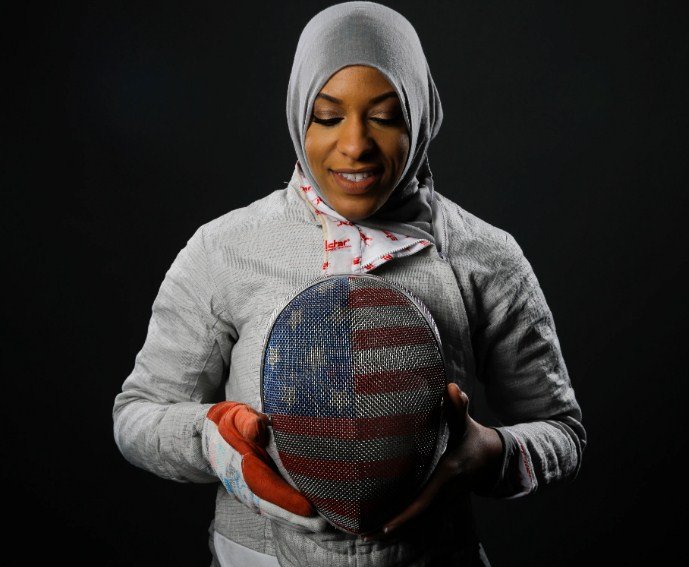
She also learned from the legacy of African American athletes who used their platform to create meaningful change, such as Jackie Robinson, Muhammad Ali and Althea Gibson. She said, “Through sport and learning about the history of people like Jackie Robinson or Muhammad Ali and Althea Gibson, I had the opportunity to understand that my journey is bigger than me and I can actually create meaningful change with my platform if I choose to do so”.
A champion who overcame external and internal challenges
Muhammad faced many challenges on her way to the Olympics, both external and internal. She had to deal with racism, Islamophobia and sexism from some opponents, spectators and even officials. She said, “I’ve had instances where I’ve had my hijab ripped off during competition. I’ve had people call me names. I’ve had death threats”.
She also struggled with depression and performance anxiety, which affected her mental health and self-confidence. She said, “I think as athletes we’re taught to be strong and not show weakness, but I think it’s important to talk about these things because they’re real”. She sought professional help and learned coping strategies to overcome her fears and doubts. She said, “I think it’s important to have a support system, whether it’s your family or your friends or a therapist or a coach”.
A role model who continues to make an impact
Muhammad retired from fencing in 2020, but she continues to make an impact in various ways. She has written two books: a memoir titled Proud: My Fight for an Unlikely American Dream and a children’s book titled The Proudest Blue: A Story of Hijab and Family. She has also launched a clothing line called Louella, which offers modest and fashionable clothing for women of all backgrounds.
She has also been involved in several initiatives and campaigns that promote social justice, education and empowerment. She is an ambassador for the US Department of State’s Empowering Women and Girls Through Sport Initiative, a member of the Leadership Council for Laureus Sport for Good USA, and a co-founder of Athletes for Impact, a network of athletes who advocate for human rights.
She has also received numerous awards and recognitions for her achievements and contributions. She was named one of Time magazine’s 100 Most Influential People in 2016, one of ESPN’s 100 Most Influential People in Sports in 2017, and one of Barbie’s Sheroes in 2018.
