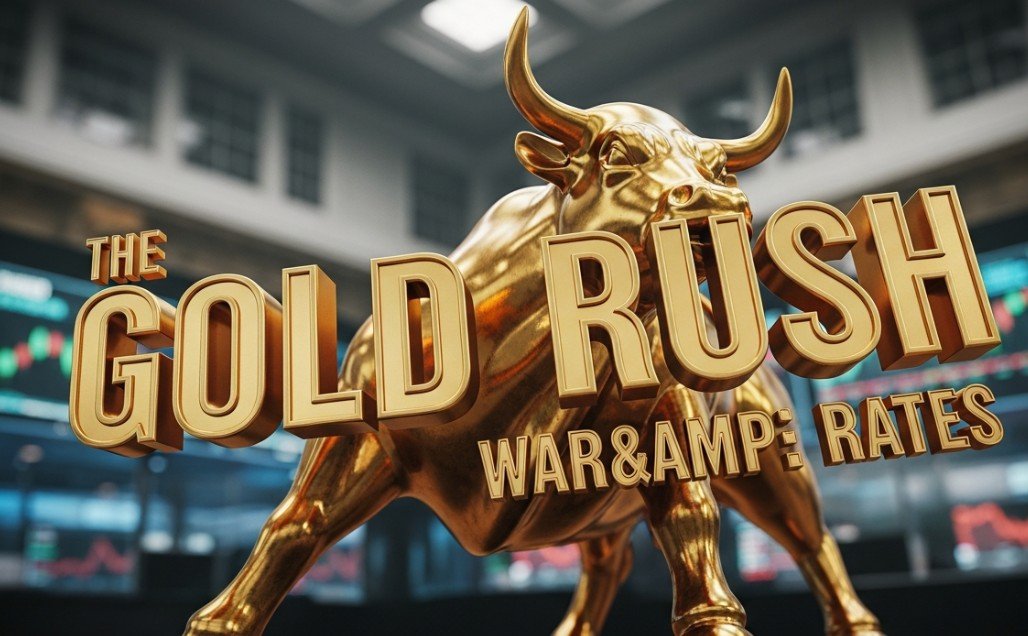
Gold prices staged a significant recovery on Wednesday, climbing back above the critical $2,640 per ounce level. The rebound comes as escalating geopolitical tensions drive investors toward traditional safe-haven assets, outweighing the pressure from a strengthening US dollar.
Markets are currently on edge. Traders are balancing the anxiety over intensifying conflicts in Eastern Europe and the Middle East against the high-stakes economic speculation surrounding President-elect Donald Trump’s cabinet picks. Specifically, the potential nomination of Kevin Warsh to a key economic post has sparked intense debate about the future of Federal Reserve policy, adding a new layer of complexity to the gold market.
Global Tensions Ignite Flight to Safety
The primary driver behind gold’s latest rally is fear. Fresh reports indicate a significant escalation in geopolitical instability, prompting capital to flee riskier assets like stocks in favor of bullion.
While recent headlines have focused heavily on the Russia-Ukraine conflict following the authorization of long-range missiles, renewed uncertainty in the Middle East is also playing a pivotal role. The presence of US naval assets in the region remains a flashpoint. Any aggressive maneuvering or incidents involving military assets—similar to past close encounters in the Arabian Sea—threatens to disrupt oil supply lines and drag global powers into a broader conflict.
Why Gold Reacts to War:
- Asset Protection: Investors view gold as a physical store of wealth that cannot be defaulted on by a government.
- Currency Hedge: During war, fiat currencies can become volatile; gold typically holds its value.
- Liquidity: In extreme crises, gold is one of the few assets that can be easily liquidated.
Market analysts warn that the situation remains fluid. If diplomatic channels fail to de-escalate these threats, gold could easily target the $2,700 resistance level in the coming days.
The “Warsh Effect” on Monetary Policy
Beyond the battlefield, the boardroom is moving markets. The nomination of Kevin Warsh, a former Federal Reserve Governor, as a top contender for Treasury Secretary—or potentially a future Fed Chair—is reshaping interest rate expectations.
Investors perceive Warsh as a “hawk” on inflation. His track record suggests he favors sound money principles and might support higher interest rates to curb price growth. Typically, higher interest rates are bad for gold, as the metal pays no interest. However, the market is interpreting his potential appointment differently this time.
There is speculation that Warsh could bridge the gap between fiscal policy and monetary policy. If his appointment signals a clash with current Fed leadership or a push for a stronger dollar, the resulting volatility could paradoxically support gold as a hedge against policy error.
Market Expectations for Federal Reserve Policy:
| Factor | Impact on Gold | Current Sentiment |
|---|---|---|
| Higher Interest Rates | Negative | Warsh is seen as hawkish, potentially capping gold’s upside. |
| Policy Uncertainty | Positive | A shake-up at the Fed or Treasury creates anxiety, boosting gold. |
| US Dollar Strength | Negative | A stronger dollar makes gold more expensive for foreign buyers. |
Treasury Yields and the Dollar Dynamic
The relationship between gold, US Treasury yields, and the dollar remains the technical engine driving daily price action.
Following the recent election results and economic data releases, the US Dollar Index (DXY) has paused its rally. This breather has allowed gold to regain footing. When the dollar weakens, gold becomes cheaper for holders of other currencies, increasing demand.
Simultaneously, the 10-year US Treasury yield has shown signs of stabilization. Real rates—interest rates adjusted for inflation—are the true nemesis of gold. If yields spike again due to strong US economic data or aggressive Fed commentary, the non-yielding metal could face renewed selling pressure.
Key Technical Levels to Watch:
- Support: $2,620 (Previous consolidation zone)
- Resistance: $2,665 (50-day moving average)
- Breakout Target: $2,700 (Psychological barrier)
Traders are now laser-focused on the upcoming Personal Consumption Expenditures (PCE) price index data. This inflation metric is the Fed’s preferred gauge. A hot reading could reinforce the “higher for longer” rate narrative, potentially stalling gold’s recovery.
Gold (XAU/USD) has managed a resilient recovery to the $2,640 zone, driven by a perfect storm of geopolitical fear and economic policy speculation. While the threat of escalated conflict in Ukraine and the Middle East provides a strong floor for prices, the upside may be limited by the hawkish shadow of Kevin Warsh’s potential influence on US monetary policy. As the world waits for clarity on both the war front and the cabinet front, volatility is guaranteed.