
Global markets ended the week on a steadier footing, lifted by a renewed appetite for technology shares and a burst of optimism around artificial intelligence. In currency markets, however, Japan’s yen moved in the opposite direction, weakening sharply after a widely expected rate hike from Tokyo.
Wall Street finds its footing again
Equities pushed higher on Friday, with the rally led by U.S. technology stocks that had spent much of the past week under pressure.
Traders on the floor of the New York Stock Exchange watched the Nasdaq regain momentum as investors rotated back into growth names.
The Dow Jones Industrial Average rose 183 points, or 0.38%, while the S&P 500 gained 0.88%. The Nasdaq Composite outperformed both, climbing 1.31% as chipmakers and AI-linked companies moved back into favor.
It was a familiar pattern. When confidence returns, tech tends to move first.
MSCI’s global equity index also advanced, up 0.71% on the day, even though it was still slightly lower on a weekly basis.
One sentence summed up the mood. Relief, not euphoria.
AI optimism puts chips back in demand
The shift in tone owed much to fresh enthusiasm around artificial intelligence spending.
Investors took encouragement from a strong outlook issued earlier in the week by Micron Technology, which sparked renewed interest across the semiconductor sector.
Rosenblatt Securities raised its price target on Micron sharply, a move that caught attention across trading desks.
Michael James, an equity sales trader at Rosenblatt, said the return of optimism around AI-linked trades was lifting sentiment broadly.
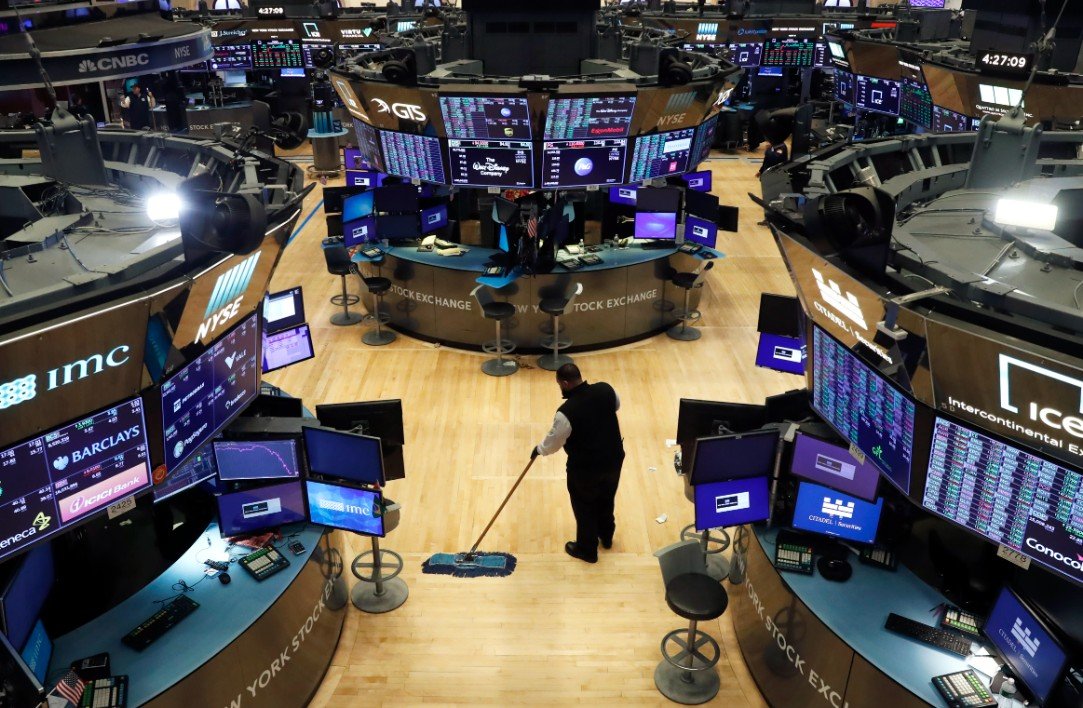
The Nasdaq, he noted, responded in a “meaningful way.”
Still, caution lingered.
James acknowledged that markets were “not out of the woods,” but added that conditions felt noticeably better than they had for most of the prior week.
That mix of confidence and hesitation has become a defining feature of late-2025 trading.
Japan hikes, and the yen takes a hit
Across the Pacific, markets reacted to a landmark decision from the Bank of Japan.
The central bank raised interest rates by 25 basis points, taking borrowing costs to their highest level in roughly three decades.
The move itself was no surprise. The reaction was.
Instead of strengthening, the yen weakened sharply as investors sold the currency following the announcement.
Some traders said the decision triggered profit-taking after weeks of positioning ahead of the hike.
Others pointed to guidance from the BOJ that suggested further tightening could come, but not at a pace aggressive enough to immediately support the currency.
Japan’s 10-year government bond yield jumped to a 26-year high, underscoring how far policy has shifted after years of ultra-loose settings.
Japanese equities took the news in stride. The Nikkei index closed up about 1%.
The yen, meanwhile, slid to levels where traders began openly discussing the risk of official intervention.
That sentence alone carried weight.
Europe joins the rally, oil firms up
European markets added to the global upswing.
The STOXX 600 index finished up 0.37%, marking a record closing high. For the week, it gained 1.6%, its strongest performance since late November.
Investors there echoed the same themes seen in the U.S. Less fear, more selective risk-taking.
Energy markets also moved higher.
Oil prices settled up as traders weighed the possibility of supply disruptions linked to Venezuela, after comments from U.S. President Donald Trump suggested military action remained on the table.
Geopolitics, once again, crept into pricing.
That uncertainty helped support crude, even as broader economic questions lingered.
Mixed signals from the U.S. economy
Economic data released Friday offered a nuanced picture.
U.S. existing home sales rose slightly in November, though high mortgage rates and lingering uncertainty continued to cap demand.
Consumer sentiment, measured by the University of Michigan survey, came in below expectations but improved compared with November.
Gary Schlossberg, a global strategist at Wells Fargo Investment Institute, said the data hinted the economy may be emerging from a mild soft patch.
He pointed to Thursday’s consumer price inflation reading of 2.7% as a potential turning point.
At the same time, Schlossberg urged caution.
The recent 43-day government shutdown, he said, may have distorted some inflation data.
“We’re a little skeptical just how much of an improvement in inflation we saw,” he noted, while adding that inflation may have peaked, at least for now.
That, he said, would be welcome news for the Federal Reserve and, by extension, financial markets.
A market balancing hope and hesitation
By the close of trade, the picture was clear but fragile.
Stocks were higher. Tech was back in charge. AI optimism had found fresh oxygen.
Yet currency markets told a different story, with the yen’s slide serving as a reminder that policy shifts do not always deliver the expected result.
Bond yields were rising in Japan. Oil prices were being shaped by politics as much as fundamentals.
And investors, once again, were trying to decide whether a better day really means better weeks ahead.
