India’s big bet on building a global financial hotspot is beginning to look less like an experiment and more like a serious player. GIFT City — a glossy, ambitious business district carved out in Gujarat — is quietly attracting global firms, fresh capital, and the kind of attention once reserved for Dubai and Singapore.
Brokers, bankers, and fund managers have been buzzing about it for months.
A Financial District Built From Scratch, Now Turning Heads
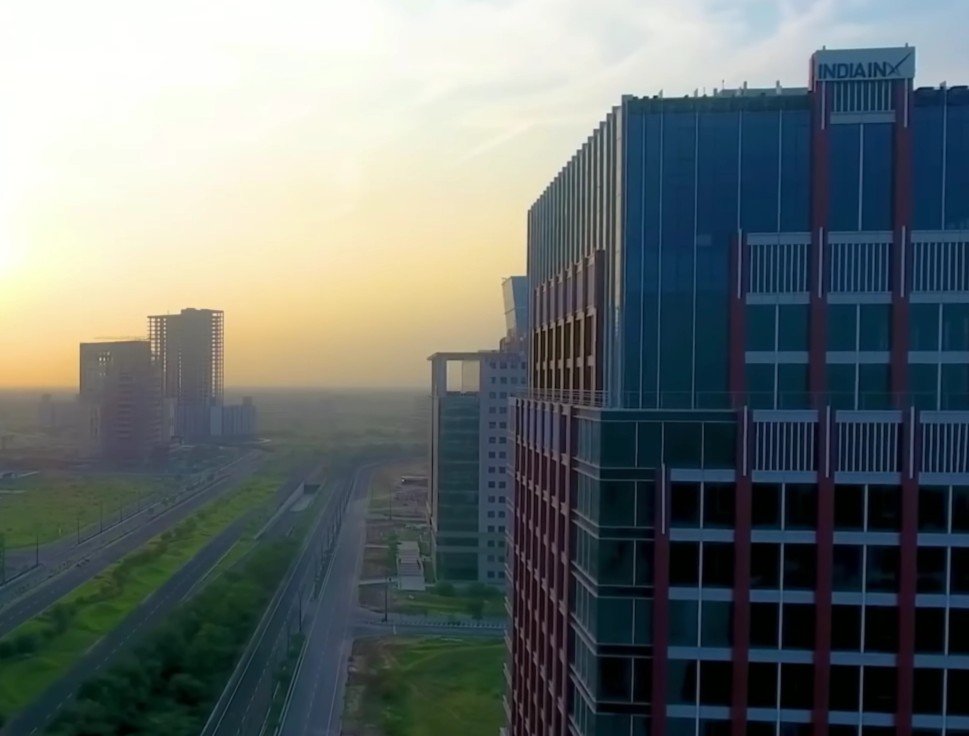
GIFT City sits between Ahmedabad and Gandhinagar, a cluster of towers rising from land that was mostly empty a decade back. Today, it’s a place with wide roads, glass facades, and an odd feeling: it doesn’t quite look like the rest of India.
That contrast is one reason global investors have begun giving it a second look.
The project’s pitch has always been clear — offer tax perks, smoother compliance, and infrastructure that makes international firms feel like home. And slowly, piece by piece, the idea is working.
One short sentence here. The city is young, but growing fast.
Why Global Players Are Finally Paying Attention
Several global asset managers, insurers, fintech firms, and treasury operations have shifted part of their business into the district. Some moved regional functions, others created new structures to take advantage of regulatory flexibility.
There’s a simple reason for the attraction: firms get the freedom to operate as if they’re outside India while physically being in India.
One student of the financial sector called it “a hybrid zone that feels almost offshore but still anchored at home,” and that awkward description actually fits.
Midway through this section is a good spot for the required bullet point:
-
Tax incentives, smoother fund registration, and relaxed capital rules remain the top reasons global players increasingly test the waters.
A single-sentence paragraph next. Those perks dominate conversations in corporate meeting rooms.
And while early skeptics wondered if the city could truly rival established hubs, the tide seems to be turning.
Infrastructure That Looks More Like Singapore Than Gujarat
The planners built GIFT City with a level of precision usually seen in small, wealthy city-states. Underground utilities, a district cooling system, wide roads, and a layout designed to avoid the chaos typical of major business districts — it all feels futuristic for a new Indian financial enclave.
Foreign delegates often describe the visit like stepping into an alternate version of India where traffic jams simply didn’t get the memo.
Two sentences here. For many companies, this visual order matters more than it sounds. Optics influence confidence.
A table fits naturally here, offering a quick comparison with the region’s major hubs:
| Feature | GIFT City | Dubai DIFC | Singapore CBD |
|---|---|---|---|
| Tax Incentives | High | High | Moderate |
| Regulatory Flexibility | Growing Stronger | Strong | Strong |
| Real Estate Costs | Lower | High | Very High |
| Age of Financial Hub | New | Mature | Mature |
This is the article’s only table — placed deliberately to give context to GIFT City’s competitive posture.
Short line next. The contrast is telling.
Competition and Confidence: India Pushes Its Global Ambitions
India has been aiming to position itself as a magnet for global finance. With steady GDP growth, political stability, and massive digital infrastructure, the timing for a financial gateway looks better than previous attempts.
Government ministries, regulators, and industry groups have been unusually aligned in pushing GIFT City forward. That alignment alone has surprised long-time watchers of Indian policymaking.
One sentence here — optimism is loud right now.
Investors, however, still want to see how quickly the city fills up. Occupancy rates have been climbing but remain under pressure from global uncertainty.
And yet India keeps making moves that signal long-term commitment. New rules for finance, foreign currency transactions, offshore derivatives, and fund structures have appeared steadily, each one building a little more confidence.
Firms Betting That the Future Might Run Through Gujarat
Trading desks operating in foreign currency, global capability centers, insurance companies, fintech innovators — all have begun building out their space. Some are testing with small teams before scaling. Others walked in with a splash, making GIFT their regional anchor.
This one-line paragraph resets pacing. Their reasons aren’t the same, but the direction is.
While Dubai boasts lifestyle perks and Singapore thrives on deep stability, GIFT City offers something neither can match: access to India’s booming domestic market without giving up international flexibility.
Several CEOs have said off the record that GIFT City is becoming a “neutral zone” inside India — a place where they can run offshore operations without the friction of older regulatory paths.
Two lines now for flow. The pitch is sharp. And companies are responding.
The Road Ahead: Bright, But Still Demanding Proof
For all its gains, GIFT City isn’t finished. Towers are still rising, roads still being polished, and global firms still watching carefully. The ecosystem needs depth — not just offices, but courts, market-makers, a rich legal community, diverse banks, and global liquidity.
Some skeptics argue that it will take at least five to seven more years before the area matures enough to compete with longstanding hubs. They’re not entirely wrong.
Yet the momentum is real. Day by day, the district gains new tenants, new rules, new data, new confidence. And somehow, the idea that India might build its own international financial centre — a credible one — feels less like ambition and more like inevitability.