Zourabichvili Denounces Georgia’s 2024 Elections and Urges U.S. to Rethink Its Support for the Current Administration
In a bold statement, Georgia’s former president Salome Zourabichvili has slammed the results of the country’s October 2024 parliamentary elections, asserting that the vote was rigged. She urges the United States to reconsider its backing of the current government, headed by Mikheil Kavelashvili, who replaced Zourabichvili after a parliamentary vote in December. Zourabichvili’s remarks come amidst increasing opposition claims and a political standoff between Georgia’s ruling party, Georgian Dream, and its opposition.
Zourabichvili, who served as Georgia’s fifth president until her replacement, was outspoken in her criticism during an interview in Washington, where she had attended the inauguration of President Donald Trump. The former president’s concerns reflect wider discontent over the legitimacy of both the parliamentary elections and the presidential replacement.
Allegations of Rigged Elections Stir Political Unrest
In the aftermath of the parliamentary elections in October 2024, opposition parties and Zourabichvili have maintained that the vote was manipulated. The ruling Georgian Dream party, led by Bidzina Ivanishvili, won 54.09% of the vote. However, opposition leaders have claimed that the electoral process was compromised, calling the victory illegitimate.
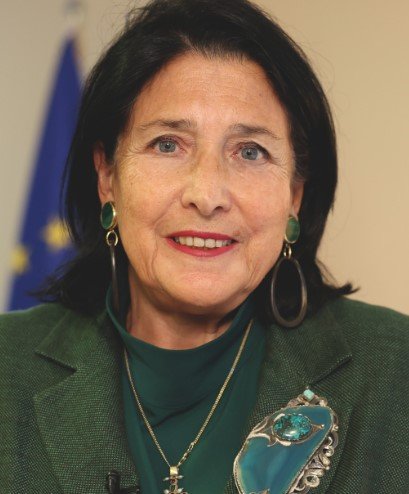
The outcome of the elections directly led to the ascension of Mikheil Kavelashvili as the new president, replacing Zourabichvili, who was initially elected in a popular vote in 2018. The political turmoil has sparked protests across the country, with opposition parties refusing to enter parliament and demanding new elections. The controversy surrounding the elections has raised questions about Georgia’s commitment to democratic principles and its political stability.
“Neither the elections nor the transfer of power were legitimate,” Zourabichvili told Voice of America in her interview. She emphasized that the opposition parties’ refusal to recognize the government is a direct response to what they believe to be a “rigged” electoral process. With widespread disillusionment growing, the call for new elections is gaining momentum.
Georgia’s Strategic Importance to U.S. Interests
During her time in Washington, Zourabichvili underscored Georgia’s strategic role in the Caucasus region, which she argues is crucial to U.S. interests. As tensions in Eastern Europe mount, particularly with Russia’s ongoing aggression in Ukraine, Georgia finds itself at the crossroads of global geopolitical dynamics.
The Black Sea region, in particular, has become a focal point in the power struggle between Russia and Western nations. Zourabichvili highlighted that controlling Tbilisi — the capital of Georgia — is essential for controlling the wider Caucasus and Black Sea area. Historically, Russia has been keenly aware of the importance of Georgia in regional security, which is why it has exerted influence over Georgia’s political landscape.
The former president’s message was clear: if the United States seeks to maintain its influence in the region, it must support Georgia as a stable and democratic ally. “The ports of the Black Sea are of immense value,” she said, pointing to Russia’s military aggression in Crimea as an example of Moscow’s long-term strategy to control the region. She argues that Georgia plays a pivotal role in counteracting Russian expansionism and safeguarding democratic values in the region.
The U.S. – Georgia Partnership: A Strategic Alliance
The relationship between the United States and Georgia has historically been one of cooperation, particularly in military and democratic development. Zourabichvili emphasized that the Georgian army owes its existence to American support, underlining the deep military and strategic ties between the two nations.
Georgia’s military forces are heavily supported by the U.S., and this partnership is crucial in bolstering the country’s defense capabilities against Russian aggression. The U.S. has long viewed Georgia as a cornerstone in its broader strategy to maintain stability in the Caucasus region.
Zourabichvili’s remarks suggest that Georgia’s geopolitical importance should not be overlooked, particularly in light of the increasing influence of Russia in the region. She strongly believes that the U.S. should continue to back Georgia’s democracy, even as internal political challenges persist.
While Zourabichvili’s tenure as president ended with her ouster, her message remains one of urgency: The U.S. must not support a government that is the product of a disputed electoral process. Her call for a reevaluation of American policy toward Georgia reflects broader concerns about the health of democracy in the country and the growing influence of authoritarianism.