Costa Rica has agreed to accept 200 migrants deported from the US, marking a significant shift in migration policy within Central America. This follows similar agreements made by neighboring Panama and Guatemala. The deportees, hailing from Central Asia and India, are set to arrive on Wednesday.
Costa Rica’s Role in US Deportation Plan
In a move that highlights Costa Rica’s growing involvement in international migration efforts, the country has announced that it will receive 200 migrants who have been deported from the United States. This decision comes after Panama and Guatemala agreed to similar plans to assist the US in handling migrants, particularly those from regions outside of Latin America.
Costa Rica’s government made the announcement on Monday, noting that the deportations would be funded by the US and overseen by the International Organization for Migration (IOM). The 200 individuals set to arrive on a commercial flight this week are primarily from Central Asia and India, and Costa Rica will assist in repatriating them to their home countries.
Temporary Housing and Plans for Repatriation
Upon their arrival in Costa Rica, the deportees will be temporarily housed in a migrant center near the Panama border. Costa Rica’s government said the facility would offer basic support while the repatriation process is arranged. From there, the migrants will be returned to their countries of origin, ensuring they are safely escorted back home.
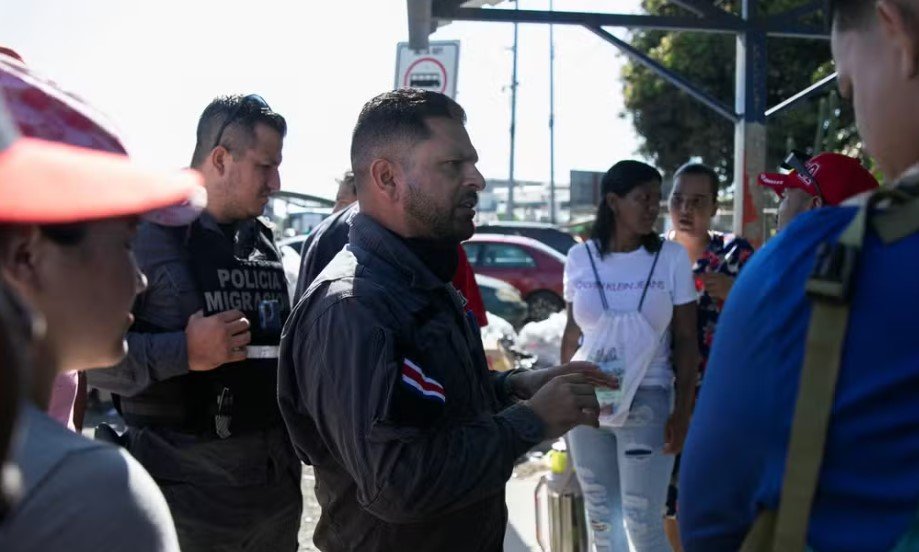
The arrangement with the US is part of a broader effort to manage migration more effectively in the region. While Costa Rica has previously been a destination for migrants, this new role as a temporary stopover for deportees signals a shift in how Central American nations are responding to US migration policies.
US-Mexico Migration Tensions Spark Regional Collaboration
The recent shift in US immigration policies, under President Trump’s administration, has placed increased pressure on neighboring countries like Costa Rica. With the US aiming to enforce stricter deportation measures, Costa Rica has stepped in to help manage the flow of migrants, particularly those from far-flung regions such as India and Central Asia.
This cooperation reflects a broader regional response to US demands for assistance in managing the migration crisis. Panama and Guatemala have already agreed to similar plans, with Panama recently receiving 119 migrants from countries like China, Pakistan, and Afghanistan. Although Guatemala has yet to receive any deportees, the coordination between these nations and the US is increasingly becoming a key aspect of managing migration flows in the region.
Migrant Crisis Under Trump’s Administration
Throughout his political career, US President Donald Trump has taken a hard stance on migration, particularly from countries outside Latin America. Since taking office, Trump has vowed to implement mass deportations, aiming to reduce the number of undocumented immigrants in the country. This move has caused significant concern, particularly among migrant communities, who fear that they will face harsh treatment and removal from the US.
The first set of deportees from India caused a stir earlier, when more than 300 individuals were sent back on military planes. The images of deported Indians in handcuffs led to widespread anger in India. However, Indian Prime Minister Narendra Modi, who recently met with Trump, expressed his support for Trump’s immigration policies. Modi agreed to take back thousands of undocumented Indian migrants from the US, further solidifying the partnership between the two countries on migration issues.
While Costa Rica’s involvement is seen as a step toward regional collaboration, the broader impact of such policies on migrants remains uncertain. Many fear that these measures could lead to a rise in the deportation of migrants from other regions, especially as the US continues to tighten its border enforcement.