
America might be looking at its next generation of scientific leaders, and they’re wearing white lab coats inside a public high school in suburban Atlanta. A group of teenagers from Lambert High School may have devised a new way to detect Lyme disease far earlier than existing tests allow — and even sketched out a potential treatment using CRISPR.
The students didn’t do it for extra credit. They were preparing for iGEM, a global synthetic biology competition in Paris that pulls in teams from more than 400 schools. And somehow, between homework and late-night coding sprints, these teens built something that stunned veteran researchers.
A High School Lab That Feels More Like a Biotech Demo Day
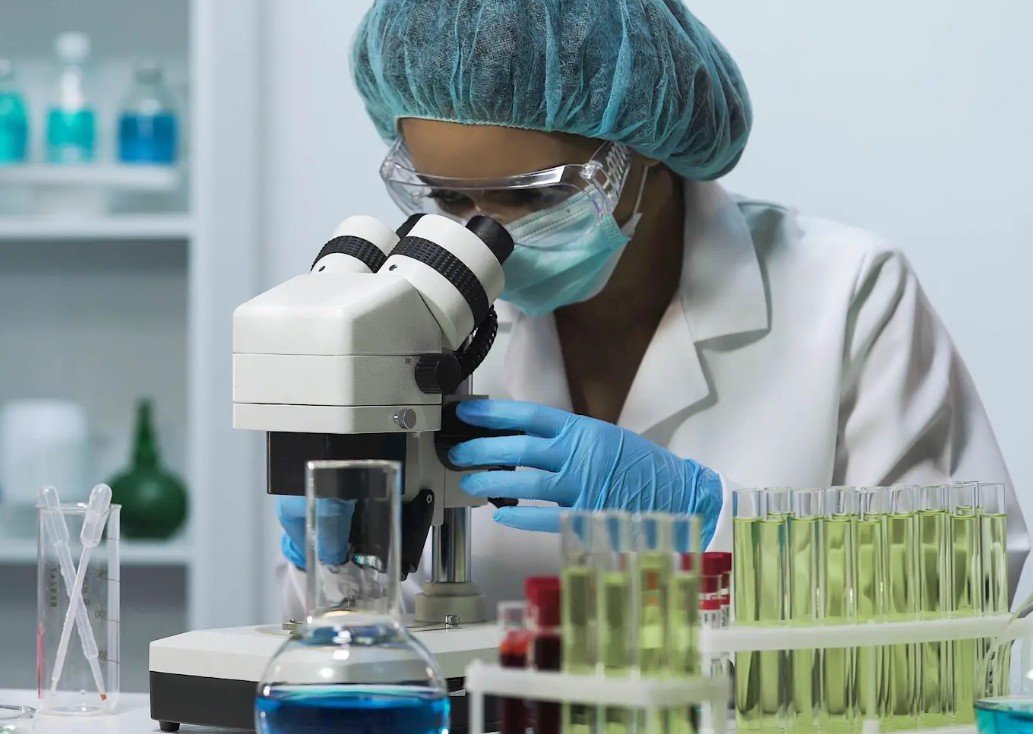
Their lab sits behind a regular hallway. But inside, it looks almost unreal for a public school: PCR machines, reagent stations, high-grade pipettes, and the hum of serious science.
Sean Lee, one of the team captains, walked through a workflow that would leave most adults blinking.
“We’re moving samples into mixes that let the DNA amplify,” he said, sounding casual even though the process is hours-long and seriously precise.
His teammate, senior Avani Karthik, explained their diagnostic design. She spoke fast, excited, with that tone of someone who knows exactly what she’s doing even if the rest of us get lost halfway through the sentence.
Her explanation of guide RNA and proteins slicing through surrounding genetic material made correspondent Bill Whitaker stare back in disbelief. Honestly, the reaction felt relatable.
This wasn’t a frog-dissection science class. It was synthetic biology at a level usually reserved for PhD candidates.
How a Teen Team Landed on a Fresh Lyme Disease Idea
The students chose Lyme disease because early detection remains a huge challenge. Nearly half a million Americans deal with infections each year, according to federal estimates. If caught in the first two weeks, antibiotics usually work quickly. The problem is that current tests don’t pick it up early enough.
That gap pushed the Lambert team to study a protein created during infection. Using CRISPR inside simulated blood serum, they aimed at tiny DNA sections where that protein hides. After trimming away the stray genetic bits around it, the teens built a way to make the protein detectable — turning it into a strip-test result, like the ones people used during COVID.
One student said it plainly: people shouldn’t have to wait years for a diagnosis. They’d even met someone who waited 15.
Their early detection strip showed positive readings as soon as two days after infection. That is extremely early.
And for teenagers to get that far? Wild.
Trying to Treat Lyme Too — and Building Software to Do It
The team didn’t stop at detection. They also wanted to target the bacteria itself with CRISPR. Standard antibiotics still dominate Lyme treatment, but the bacteria can linger, and in rare cases, complications hit the heart or nervous system.
To build a CRISPR-based treatment model, the students didn’t just tinker with test tubes. They wrote software to simulate how CRISPR would attack the bacteria, testing different sequences to see what might work best.
Their teacher, Kate Sharer, said the kids operate so far ahead of typical lessons that she sometimes feels like she’s trying to catch up.
And the kids never seemed intimidated. They simply asked professors questions, read papers, fixed mistakes, tried new things. Then tried again.
A District Where Biotech Became a Magnet for Families
Lambert High sits in one of Georgia’s wealthiest districts. That helps — the lab is built with public funding and donations, and the school prioritizes science programs the way some schools prioritize football.
Parents move there specifically for it. Literally from across the world.
The student body is majority Asian-American, and the iGEM team is entirely Asian-American — children of immigrants, many of whom push for academic excellence as intensely as sports families chase trophies.
Each year, roughly 100 students fight for just 10 open spots. Applicants must pitch a project, take a written exam, and pass an interview. Coding background helps. So does engineering. So does stamina, because the hours are rough.
Near the end of their prep, they were pulling all-nighters to finish data, polish their website, run tests again, and again, sometimes again after that.
One tiny paragraph comes next — because their progress jumped fast and dramatically.
They nailed early detection.
Then their treatment modeling showed promise. Claire Lee, another senior, said out loud what most teens might be shy to admit: this could help millions.
The Race to Paris — and the Global Competition Waiting There
By October, the team was flying to Paris. More than 400 teams filled the convention center, and around a third were high schoolers. Nerd pride everywhere, students wearing lab coats instead of jerseys, cheering each other on.
One team nearby, Great Bay from Shenzhen, worked on an enzyme to treat indoor mold. Others were designing crop genes to grow on Mars or testing eye-drop approaches for cataracts.
One small table in the middle of this chaos felt appropriate here. It shows how the high school representation looked across regions this year:
| Region | High School iGEM Teams (2025) |
|---|---|
| United States | 14 |
| Asia | 120 |
| Europe | 6 |
| Others | ~10 |
Seeing those numbers, it becomes obvious why some American scientists worry. China has made synthetic biology a strategic priority, and the momentum shows.
Janet Standeven, who used to run Lambert’s program and now oversees iGEM’s global high school division, said the lack of U.S. participation makes her uneasy. She’s right — 14 vs. 120 is not a small gap.
Her own efforts to expand synthetic biology across Georgia schools hit a wall when federal funding got cut after being labeled as DEI-related. A judge restored the money temporarily, but nobody knows what happens after 2026.
Judging Day, Tough Losses, and an Unexpected Win
Lambert presented their work on stage, then went behind closed doors to meet judges. Their project had earned attention from Drew Endy, one of iGEM’s original founders, who called their detection method the best he’d seen for Lyme.
He was especially struck by their plan to deliver treatment through lipid nanoparticles — a technique widely used in mRNA vaccines.
The competition was brutally close. Lambert was nominated in five categories but kept getting nudged out. You could feel the tension, the hope, the slight heartbreak.
Then the surprise: they won best software tool.
One sentence here for rhythm. It mattered.
They finished in the top 10 internationally for high schools. Only one team from the U.S. made that list — Lambert. The rest included groups from South Korea, Taiwan, and seven from China.
As they stood on stage, cheering, the students looked like a picture of where American science could go — if schools and policymakers put real support behind kids like them.
