Chinese astronauts aboard the Tiangong space station recently lit a matchstick, creating a stunning spherical flame that floats steadily without rising. This bold experiment, conducted in late October 2025, reveals how microgravity transforms everyday combustion and sparks fresh discussions on fire safety in orbit.
The Bold Experiment on Tiangong
Astronauts Gui Haichao and Zhu Yangzhu performed the test during a live broadcast to students back on Earth. They struck a match and ignited a candle, watching as the flame formed a perfect glowing orb instead of the usual teardrop shape.
This event builds on earlier tests but gained massive attention this month, with videos spreading across social media platforms. Viewers marveled at the slow, even burn, which lasted longer than expected. Experts say such demos help teach physics in real time.
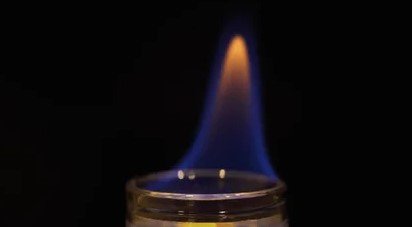
The setup involved a controlled chamber to contain the fire, ensuring no risk to the station. Crew members explained the science step by step, turning a simple act into an educational highlight.
Why Flames Look Different in Space
Gravity plays a big role in how fire behaves on Earth. Hot air rises, pulling in cooler oxygen from below, which shapes the flame into a pointy form. In microgravity, that pull vanishes, so flames spread out evenly in all directions.
The result is a round, bluish glow that burns cooler and slower. Without convection, soot particles linger inside the flame, changing its color and structure. This matches findings from past space studies, where fires diffuse like a gentle cloud.
Recent posts on social media show users reacting with awe, sharing clips of the orb like flame. Some compare it to sci fi effects, but scientists stress it is pure physics at work.
Here are key differences in flame behavior:
- On Earth: Flames stretch upward due to rising hot air.
- In space: Flames form spheres as heat spreads evenly.
- Burn rate: Slower in microgravity, reducing oxygen use.
- Color shift: Bluer tones from trapped soot particles.
Safety Challenges for Future Missions
Lighting an open flame in space raises eyebrows, especially since such acts are strictly banned on the International Space Station. The Tiangong team took precautions, but the test highlights potential dangers like uncontrolled fire spread in enclosed habitats.
Experts warn that microgravity fires could smolder undetected, posing risks to air quality and equipment. This experiment provides data to improve safety protocols for long term missions, like those planned for Mars.
In recent years, space agencies have ramped up fire research. For instance, NASA’s studies on the ISS focus on contained burns to avoid hazards. China’s approach shows a willingness to push boundaries for knowledge.
| Aspect | Earth Flames | Space Flames |
|---|---|---|
| Shape | Teardrop, pointed | Spherical, rounded |
| Movement | Rises quickly | Floats steadily |
| Burn Speed | Fast, oxygen fueled | Slow, diffusion based |
| Safety Risk | Controllable spread | Harder to detect and extinguish |
| Color | Yellow orange | Blue tinted |
Educational Reach and Public Reaction
The live session reached millions of students in China, inspiring curiosity about space science. Teachers used the footage to explain concepts like buoyancy and heat transfer, making abstract ideas tangible.
Online discussions exploded, with threads on forums debating the risks versus benefits. Some users praised the innovation, while others questioned if it sets a risky precedent. This ties into broader trends, like growing interest in space tourism and private missions.
Feedback from educators highlights how such demos boost STEM engagement. One recent survey showed a spike in student queries about microgravity after similar broadcasts.
Comparisons with Other Space Research
Past experiments on the ISS have explored combustion without open flames, using safer methods like gas jets. These studies confirm that space fires rely on molecular diffusion, not gravity driven flow.
China’s Tiangong, fully operational since 2022, allows more flexible research. This matchstick test adds to a growing body of data, including 2024 findings on droplet combustion in orbit.
Looking ahead, joint international efforts could merge insights from different stations. Recent talks between space agencies aim to share fire safety tech.
What This Means for Space Exploration
This experiment underscores the need for advanced materials that resist fire in low gravity. As missions extend, understanding combustion helps design better life support systems.
It also entertains, showing space is full of surprises. Viewers get a glimpse into astronaut life, blending danger with discovery.
Share your thoughts on this space flame demo in the comments below, and spread the word to fellow science fans.