The Android ecosystem had a busy week, full of ambition, second thoughts, and a quiet rethink of what people actually want from their phones. From bold hardware bets to overdue course corrections, the headlines told a clear story: not every idea ages well.
Foldables steal the spotlight again
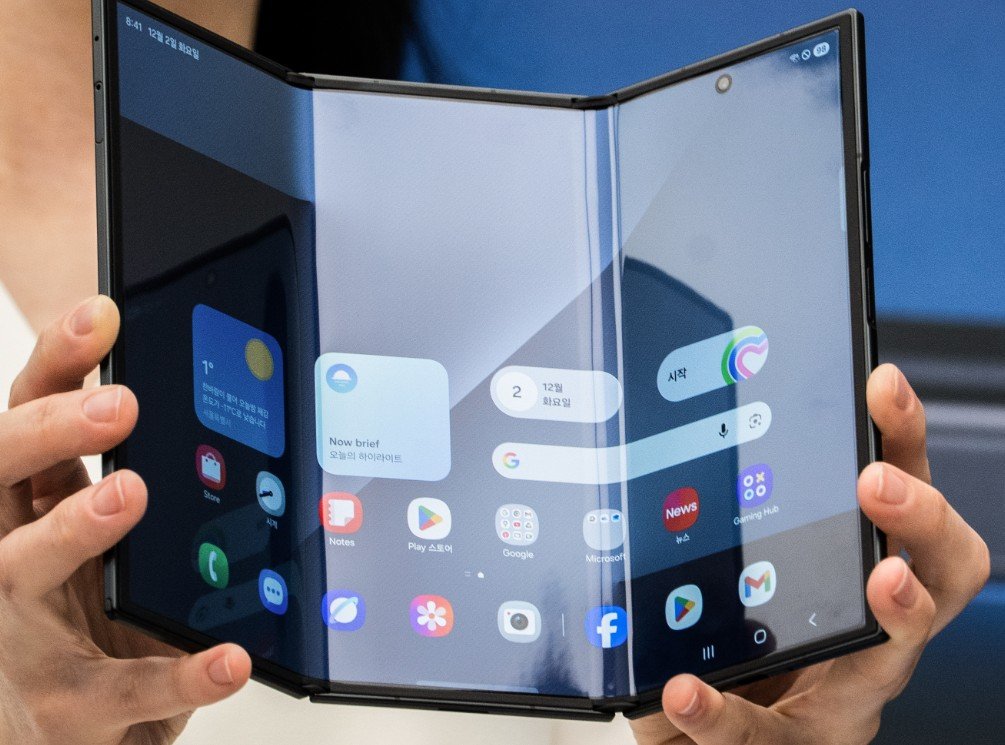
Samsung once again dominated conversation with its latest experiment, the Galaxy Z TriFold.
The device, unveiled in Seoul, stretches the idea of a foldable phone further by introducing two hinges and three connected screens. Fully opened, it turns into a small tablet. Folded, it behaves like a regular smartphone, at least in theory.
Early impressions suggest the concept mostly works.
Reviewers noted that once unfolded, the display feels natural in landscape mode, especially for multitasking. Running three apps side by side looks smooth, and resizing windows feels intuitive rather than gimmicky.
What surprised some testers was what the phone does not do. There is no Flex Mode, meaning half-folded usage remains awkward.
Still, Samsung’s willingness to push form factors stands in contrast to other trends that seem to be losing steam.
Foldables, for all their quirks, are finding buyers.
Thin phones, thick problems
The same cannot be said for ultra-thin smartphones.
Over the past year, several manufacturers chased the idea that slimmer automatically means better. Lighter frames, razor-thin profiles, and minimalist internals were pitched as premium design statements.
Sales told a different story.
Consumers complained about battery life first. Thin phones, almost by definition, sacrifice space for larger cells.
Heat management followed close behind. Packed components in tight shells made sustained performance harder to maintain.
And then there was durability. Thin devices flex more. They crack easier. People noticed.
By late 2025, the market’s verdict was clear. Thin phones look nice on a launch stage, but they struggle in daily life.
Even Samsung appears to have quietly shifted focus back to foldables and performance-driven designs, leaving thin phones as a short-lived fashion rather than a lasting category.
Pixel 10’s quiet but meaningful upgrade
Google, meanwhile, is preparing a very different kind of move.
Early reports around the upcoming Pixel 10 suggest the company is focusing less on radical design changes and more on core improvements that users have been asking for, repeatedly, sometimes loudly.
The biggest upgrade appears to be under the hood.
Sources point to a major leap in on-device processing, particularly around AI tasks handled locally rather than in the cloud. That could mean faster photo processing, better voice recognition, and smarter battery management without sending everything back to Google’s servers.
Privacy advocates have welcomed that direction.
There is also chatter about a brighter, more efficient display and improved thermal control, addressing long-standing complaints from Pixel users.
No flashy redesign. No unnecessary slimming.
Just refinement.
In a market full of noise, that approach feels almost radical.
OnePlus 15R arrives with familiar confidence
OnePlus also made news this week with the arrival of the OnePlus 15R.
The phone does not try to shock. Instead, it doubles down on what has worked for the brand: fast performance, clean software, and aggressive pricing relative to flagship rivals.
Early specs point to a high-refresh-rate display, a large battery, and a chipset tuned for sustained performance rather than benchmark bragging rights.
That last point matters.
As thin phones struggle and foldables mature, a sizable chunk of buyers still want something simple. A slab phone that lasts all day, runs smoothly, and does not cost a fortune.
The 15R appears aimed squarely at that crowd.
OnePlus executives have hinted that supply chain stability this year allowed them to focus on polish rather than compromise.
That confidence shows.
Memory shortages raise quiet alarms
Behind the scenes, the Android supply chain is dealing with another issue that has not yet hit consumers directly, but could.
Memory shortages are beginning to ripple through the industry.
Rising demand from AI servers, automotive systems, and industrial hardware is squeezing availability of certain memory components used in smartphones.
Manufacturers with long-term contracts are relatively insulated.
Smaller brands, or those relying on spot pricing, are not.
Industry analysts say this could lead to uneven pricing in 2026, with mid-range devices feeling the pressure first.
For now, it remains a background concern.
But it is one more reason why chasing extreme designs, thin shells with custom parts, looks increasingly risky.
Software fixes over flashy features
There was also a quieter, more human story buried in the week’s Android news.
Several manufacturers acknowledged and patched awkward software behaviors that had frustrated users for months. Notification glitches. Background app kills. Inconsistent gesture responses.
None of it was headline material.
All of it mattered.
One Android engineer, speaking off the record, summed it up bluntly. “People don’t ask for magic. They ask for things to stop breaking.”
That mindset feels like it is spreading.
After years of experimental hardware and attention-grabbing concepts, parts of the Android world seem to be settling into a more grounded phase.
A market correcting itself
Taken together, the week’s developments sketch a clear arc.
Foldables are no longer novelties. They are viable, if still niche.
Thin phones had their moment, and it passed faster than many expected.
Pixel is choosing depth over drama. OnePlus is choosing reliability over reinvention.
And the supply chain is quietly reminding everyone that physics and economics still matter.