
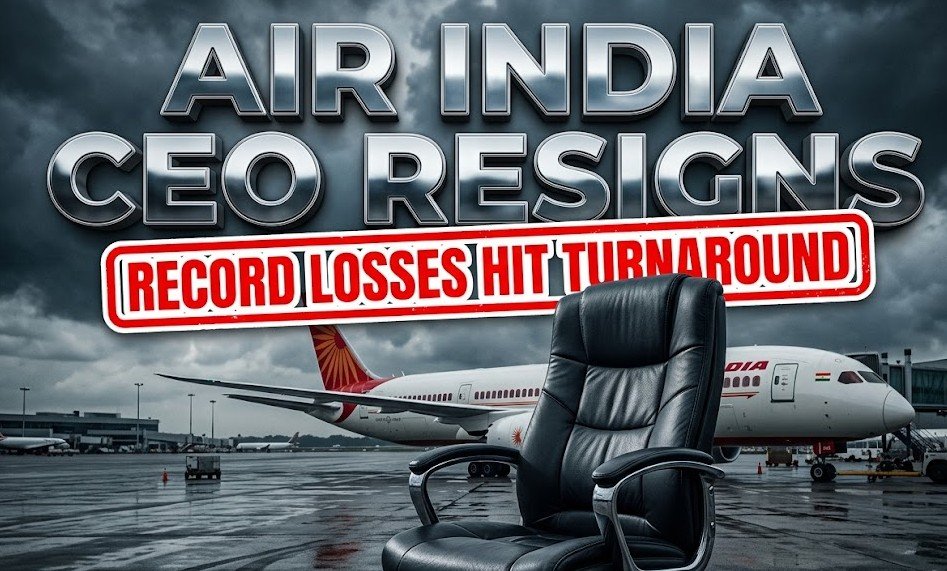
Air India CEO Campbell Wilson has resigned. The move comes as the Tata Group-owned airline battles record losses and the fallout from last year’s deadly crash that killed 260 people. Sources say the board accepted his resignation last week, but he will stay on until a successor is named to ensure a smooth handover.
This leadership shakeup marks a critical moment for India’s second-largest carrier. Wilson, who joined in 2022 to lead the revival after decades under government control, leaves midway through his contract as challenges mount.
Board Accepts Resignation for Smooth Transition
Wilson tendered his resignation recently. People familiar with the matter confirm the board meeting last week formally accepted it. He will continue serving during the notice period, likely until September or until the new CEO takes over.
The Tata Group has been quietly scouting for a replacement since earlier this year. Wilson, a New Zealand-born aviation veteran with over 26 years at Singapore Airlines and its low-cost arm Scoot, was brought in to fix deep-rooted problems. His departure highlights the tough road ahead even as the airline pushes forward with major changes.
Industry watchers note the timing reflects pressure for faster results. Air India has poured billions into fleet renewal and service upgrades, yet external shocks have slowed progress.
Mounting Losses and Operational Hurdles
Air India is staring at heavy losses this fiscal year. Reports point to a projected shortfall of around Rs 15,000 crore to Rs 20,000 crore for the year ended March 2026. This nearly doubles the previous year’s deficit and comes despite steady revenue growth.
High fuel costs, route disruptions from geopolitical tensions in West Asia, and the Pakistan airspace closure have hurt operations badly. The airline has faced delays in aircraft deliveries and cabin refits due to global supply chain issues. These problems have kept costs high while affecting punctuality and passenger experience on key routes.
The airline posted a loss of about Rs 16,000 crore in the first nine months of the fiscal year. This financial strain tests the patience of Tata leadership as they aim to build a world-class global carrier.
Operational setbacks have compounded the issues. Fleet reliability has improved in some areas, but broader challenges like crew shortages and maintenance backlogs persist in parts of the network. The merger with Vistara was completed smoothly, yet integrating systems and cultures takes time.
Lingering Impact of the Tragic 2025 Crash
The June 2025 crash of Air India Flight 171 remains a dark chapter. The Boeing 787 Dreamliner bound for London crashed shortly after takeoff from Ahmedabad, killing 241 people on board and 19 on the ground. Only one passenger survived the disaster that shook the industry.
Preliminary findings pointed to fuel cutoff switches moving to the off position soon after takeoff. The tragedy triggered intense regulatory scrutiny, compensation payouts, and lawsuits against aircraft makers. Families of victims continue to seek answers and justice.
The crash severely damaged public confidence. It added massive costs through grounded planes, extra safety checks, and lost revenue as some travelers chose other carriers. Rebuilding trust has become a top priority for the airline’s leadership team.
Progress Made Under Wilson’s Leadership
Despite the setbacks, Wilson oversaw important steps in the Vihaan.AI turnaround plan. The airline placed one of the largest aircraft orders in history, committing to hundreds of new Airbus and Boeing planes. Deliveries have started arriving, with new widebody jets enhancing long-haul services.
Cabin upgrades are rolling out gradually. Passengers on some routes now enjoy refreshed interiors and improved in-flight experiences. The domestic fleet refit is largely complete, and international product enhancements are gaining traction.
Wilson focused on building a premium full-service airline that connects India better to the world. Market share saw modest gains, and the integration of Vistara strengthened the group’s position in key markets. He often described the transformation as moving from revolution to refinement, with the heavy structural work mostly done.
Key initiatives during his tenure include:
- Massive fleet expansion with over 470 aircraft on order
- Smooth merger of Vistara into Air India
- Introduction of new business and first class products
- Improved operational reliability metrics in recent months
These foundations position the airline for stronger performance once external pressures ease.
What the Future Holds for Air India
The search for a new CEO will be crucial. Tata Sons needs someone who can accelerate profitability while maintaining the momentum on fleet modernization and service quality. Industry experts expect the next leader to focus heavily on cost control, network optimization, and restoring passenger faith.
Profitability remains several years away. Yet the long-term vision stays intact. Air India aims to reclaim its place as a proud flag carrier with global standards. New aircraft deliveries will ramp up, offering modern planes and better experiences.
For millions of Indian travelers and the aviation sector, this transition carries high stakes. Air India employs thousands and serves as a vital link for business and leisure travel. Its success matters for national pride and economic growth.
Employees and frequent flyers hope the change brings fresh energy. The airline has shown resilience before. With continued investment from the Tata Group and strong execution, it can overcome current hurdles.
As Air India turns the page on this chapter, the focus shifts to rebuilding stronger than ever. The skies ahead may still hold turbulence, but the commitment to excellence endures. Passengers deserve reliable, safe, and comfortable journeys that make them proud to fly the Indian flag.
What are your thoughts on this leadership change at Air India? Do you believe a new CEO can speed up the turnaround? Share your views in the comments below. Join the conversation on social media and use #AirIndia to discuss the future of the airline with fellow travelers and industry followers.
