Flock Safety’s new AI audit tool has flagged unusual license plate searches across Georgia agencies, producing a string of firings, suspensions and criminal charges against officers accused of personal misuse. At least 20 cases surfaced in the past year, many after the free feature rolled out in April.
The same cameras praised for solving crimes now supply the evidence of their own improper use.
How the Audit Tool Flags Unusual Searches
Flock built the feature into its platform at no extra cost. It continuously monitors activity and surfaces search patterns that fall outside an agency’s typical usage so administrators can review them quickly.
Every search already logged who ran it, when, and the stated reason. The new layer automates the slog of manual log review. Agencies that adopted it early, including Savannah, credit the tool with spotting the recent clusters.
- AI comparison against normal agency patterns
- Direct alerts to supervisors or command staff
- Documented workflow for review and response
- Paired with mandatory offense-type logging and filters
Major Hudson Bull of Fairfax County, Virginia, an early tester, said the tool keeps every LPR search accountable and aligned with policy. Dunwoody’s Major Patrick Krieg called Flock the only vendor whose algorithm has ever notified his department of potential bias.
The Audit Assistance Tool surfaces atypical activity as part of a broader Trust & Compliance suite that also includes transparency portals, encrypted data and 30-day default retention.
Georgia Cases Pile Up After the Rollout
Atlanta News First tallied at least 20 Georgia cases of alleged personal searches in the past year, including stalking accusations. Many agencies triggered probes after internal audits using the new software.
| Agency / Location | Outcome | Key Detail |
|---|---|---|
| Savannah PD | 6 fired (4 sworn, 2 civilian) | Audit Assist flagged; GBI criminal probe open |
| Albany PD | 5 former officers arrested | Multiple misuse counts + oath violations |
| Polk County / NW GA Drug Task Force | 1 former officer arrested | Accessed system 2024-2025 for non-LE purposes |
| Conyers PD | 1 employee arrested | Misuse of LPR system |
| Richmond County SO | Deputy arrested and fired | Routine audit trigger |
| DeKalb County SO | Sgt. arrested and fired | Felony oath + misdemeanor misuse |
Savannah’s Office of Professional Standards now runs weekly audits. The city has not named the six because of the ongoing GBI case and appeals. Investigators found searches on personal acquaintances and family; one officer allegedly gave unauthorized outside access.
GBI press releases detail the Albany group: Tytianna Davis faced five misuse counts, Nicholas Richardson eleven. All five lost their jobs after the department’s June internal audit. A more recent case involves former Polk County officer Tracey Royston, charged with four misdemeanor counts after accesses between 2024 and 2025 while assigned to a GBI-managed task force.
The DeKalb deputy arrest that lifted the Georgia tally followed the same pattern of audit-flagged personal use.
Flock Calls the Cases Proof Its Tools Work
Flock’s audit tools have proven effective at enabling accountability, in many of the rare documented cases of misuse of our platform, it was our own audit logs that surfaced the issue.
Paris Lewbel, a Flock spokesperson, made that point to Atlanta News First. The company frames the firings and arrests as evidence the system is self-policing rather than a failure.
Paige Todd, Flock’s CPO and co-founder, said public safety tech should carry the same built-in accountability standards expected of other tools officers use. The April launch of free Audit Assistance was positioned as the centerpiece of that effort.
Flock also notes that searches remain fully logged with the originating agency even after some public-facing details were anonymized. The company says nearly 200 law enforcement leaders asked for the change to protect undercover officers and active cases after activists used open records to identify them.
The Network Behind the Searches
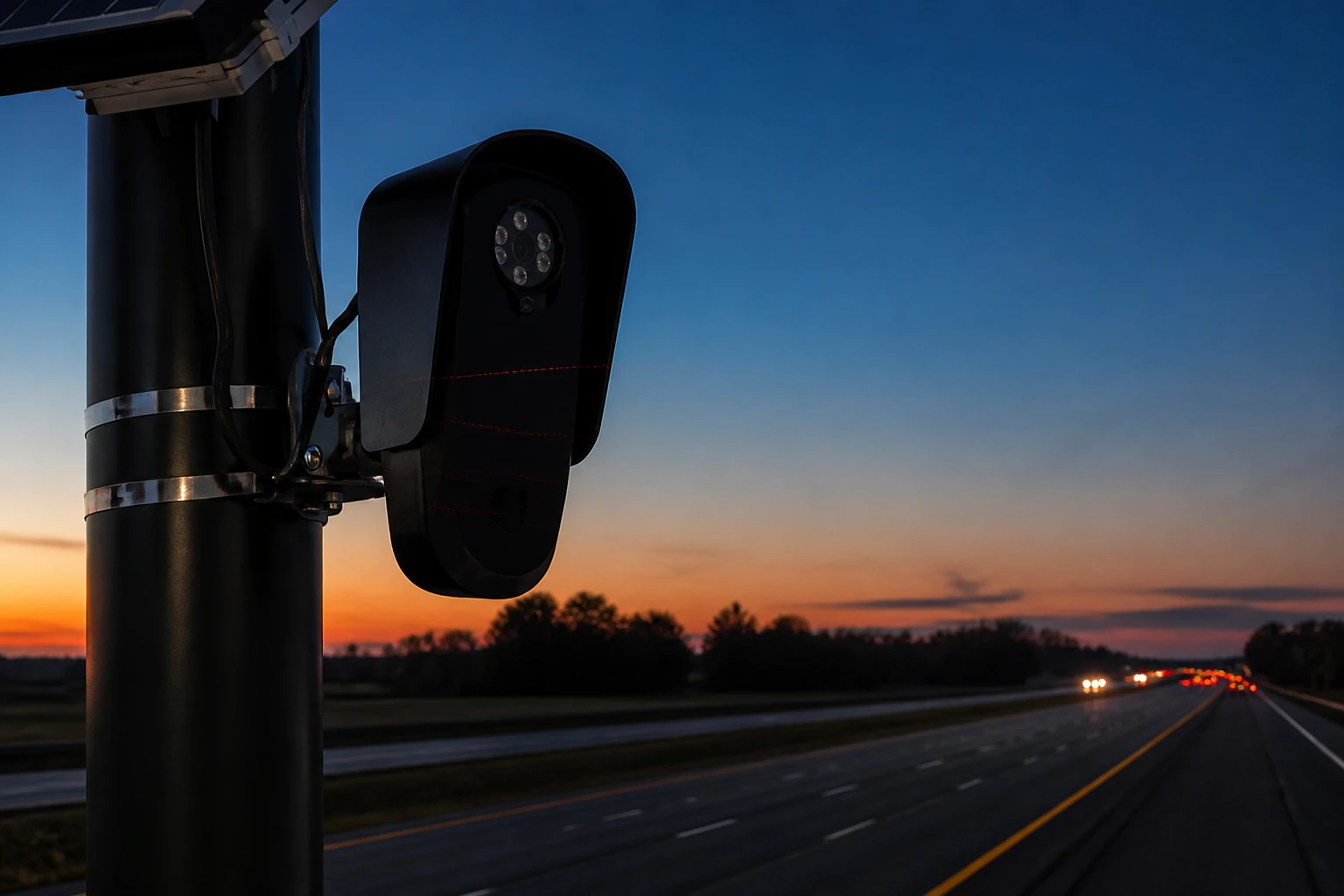
Flock’s fixed cameras now sit in more than 5,000 to 12,000 communities across dozens of states, logging roughly 20 billion plate scans a month. Law enforcement agencies form the bulk of the customer base; HOAs and businesses fill the rest. The company says the tech supported about 1 million investigations in 2025 and helped locate more than 10,000 missing people.
Georgia agencies share data widely. One Dunwoody records request showed more than 11.7 million external searches against its cameras in a single year. That volume makes manual oversight impractical without automated flags.
Built-in controls include:
- Agency-controlled sharing that requires explicit approval for outside access
- Mandatory reason logging and automatic blocks on restricted use cases
- Role-based access and training requirements at the department level
- Default 30-day data deletion
Critics counter that the sheer scale still enables quiet personal tracking until an audit or a victim’s open-records request surfaces it.
Public Meetings and the Counter-Tools
Local government meetings across metro Atlanta and beyond have filled with residents objecting to new camera contracts or renewals. Mayors and chiefs have described feeling betrayed when internal reviews catch their own people. Some cities have paused expansions or tightened rules while investigations continue.
Outside agencies and individuals have turned to sites that compile publicly released audit logs. One such resource lets anyone searchable public Flock audit logs for a plate and see which agencies queried it. In at least two cases, including one in Georgia, alleged victims first learned of the tracking that way.
Flock’s decision to strip officer names and plate numbers from some external logs has drawn the opposite complaint: that the public can no longer easily audit the auditors. The company insists the full records stay available to authorized oversight bodies and the originating agency.
On X and in comment threads, the dominant reaction treats each new arrest as confirmation rather than reassurance. Users note that the tool only reveals what was already possible; the prior years of lower detection rates do not prove lower rates of personal use.
From Manual Logs to Automated Flags
- Pre-2026: Agencies relied on manual review of full audit logs after complaints or random checks.
- April 14, 2026: Flock announces general availability of Audit Assistance as part of Trust & Compliance.
- June-July 2026: Albany internal audit leads to five arrests; Richmond, Cherokee, Greene and other Georgia cases follow.
- Late July: Savannah places six on leave after proactive Audit Assist review; GBI takes the criminal side.
- August 2026: Savannah terminations confirmed; additional GBI arrests including Polk and Conyers; public outcry continues at council meetings.
Institute for Justice tracking has logged dozens of romantic-stalking ALPR cases nationwide since 2024, with Georgia forming a visible cluster once automated detection arrived. Nearly all charged officers lost their jobs.
The pattern leaves agencies in a bind. Tighter internal weekly audits and GBI referrals demonstrate response. Yet every new charge supplies material for the next public hearing and the next FOIA for logs. Flock gains a concrete example that its safeguards surface problems. The same examples keep the technology’s warrantless location data under a brighter light than before the tool existed.
Georgia’s recent wave shows both sides of the ledger in real time: officers who treated government cameras as personal trackers are losing badges and facing charges, while the network that made those searches possible faces its sharpest accountability test yet.