Samsung has started selling its Music Studio Wi-Fi speakers in India, pricing the two-model lineup from ₹27,900 (about $290) as it chases a market still dominated by cheap Bluetooth boxes. The Music Studio 5 (LS50H) and Music Studio 7 (LS70H) went on sale this week through Samsung’s online store, e-commerce platforms and authorised retail outlets. Both wear a circular dot design by French designer Erwan Bouroullec and plug directly into Samsung’s SmartThings smart home platform and its wider lineup of connected TVs and soundbars.
Samsung first showed both speakers in January at CES 2026 in Las Vegas. The six-month wait for an India release lands them in a market where wireless audio is growing quickly, but Bluetooth speakers under ₹5,000 still set the pace of sales.
Two Speakers Arrive Six Months After Their Debut
The Music Studio 5 lists at ₹27,900, though launch-week listings briefly cut that to ₹24,900. Samsung India’s own release confirms ₹27,900 as the series’ starting price without naming a number for the flagship Music Studio 7.
Retailers filled that gap on their own. Gizbot listed the Music Studio 7 at ₹49,900 on launch day. Republic World put it at ₹49,990. SamMobile, citing Samsung’s own site a day earlier, had it at ₹39,990. The spread suggests pricing was still settling as stock reached stores.
Design carries as much of the pitch as the spec sheet. Both speakers use Bouroullec’s circular dot motif and, for now, ship in India only in black, even though Samsung sells a white finish in other markets.
Samsung has been transforming home audio in India with advanced audio technology and smart features.
Viplesh Dang, vice president of Samsung India’s visual display business, said in the launch statement that the company intends to keep building on that legacy with the new range.
The Designer Behind the Dot
Erwan Bouroullec is an unusual name to find on a speaker box. Born in 1976, he studied contemporary art in Paris, then founded a design studio with his brother Ronan in 1999, working with furniture houses including Vitra, Alessi, Kartell, Magis and Hay.
His Samsung relationship predates Music Studio. Bouroullec designed The Serif television, which won an iF Design Gold Award in 2016 and pushed Samsung to sell TVs as furniture rather than hardware.
Samsung first showed both Music Studio speakers in January at CES 2026 in Las Vegas, alongside four new Q-Series soundbars detailed in its 2026 CES audio lineup reveal.
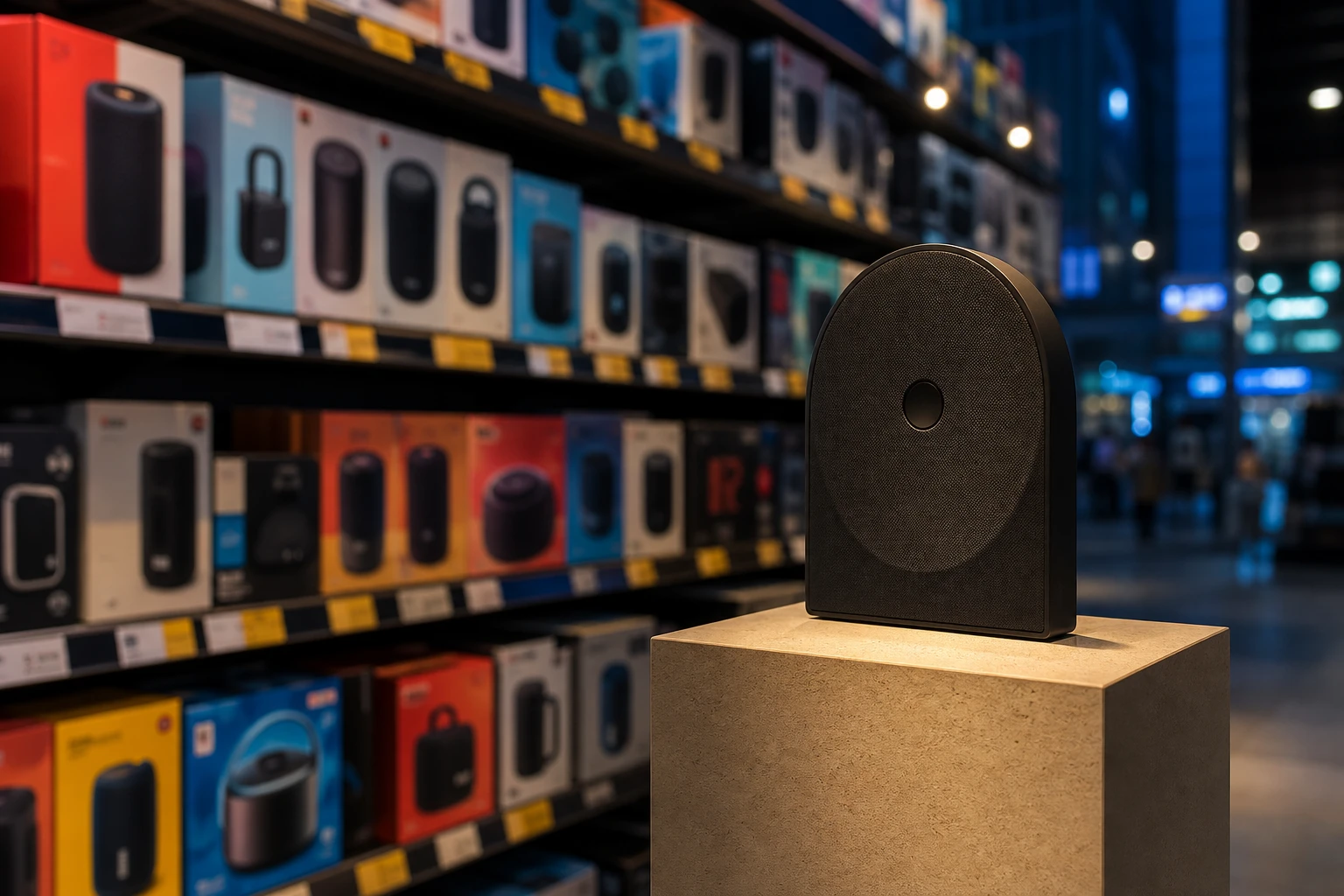
“I see music and sound as air and light: they’re an essential part of a room’s atmosphere,” Bouroullec said in an interview Samsung published about the design process. The result is a circular orb with one raised dot at its center, its electronics hidden behind a metal mesh grille.
Samsung tried the furniture-speaker idea once already, in 2024, with a picture-frame-shaped speaker called Music Frame that tested the concept on a smaller scale before Music Studio expanded it into two dedicated products.
Music Studio 7 Outguns Its Smaller Sibling on Paper
The gap between the two models runs deeper than money. Music Studio 5 keeps things simple, a 2.0-channel setup built around a woofer, dual tweeters and Samsung’s waveguide technology, aimed at everyday listening rather than home theater duty.
Music Studio 7 steps up to 3.1.1-channel spatial audio. A UK review counted five drivers feeding 150 watts of Class D power, including side-firing tweeters backed by passive radiators, enough hardware to stand in for a soundbar and subwoofer in one cabinet.
| Spec | Music Studio 5 (LS50H) | Music Studio 7 (LS70H) |
|---|---|---|
| India price | ₹27,900 | ~₹49,900 (varies by retailer) |
| US listing price | $299 | $499.99 |
| Weight | 2.4 kg | 5.6 kg |
| Power consumption | 15W | 20W |
| Physical ports | Optical audio in | Optical audio in, HDMI eARC out |
| Hi-res audio | Standard streaming codecs | 24-bit/96kHz, Super Tweeter to 35kHz |
Software carries the rest of the pitch. AI Dynamic Bass Control tunes low frequencies on both models. Audio Lab Pattern Control Technology, reserved for the Music Studio 7, is built to stop its five drivers from smearing into each other. The flagship also adds wireless Dolby Atmos and the newer Eclipsa Audio format, features few standalone speakers bundle at this price.
Streaming support does not change between the two models:
- Wi-Fi casting with Samsung SmartThings multi-room grouping
- Bluetooth 6.0 through Samsung’s Seamless Codec
- AirPlay, Google Cast, Spotify Connect, Tidal Connect and Roon Ready
- Built-in voice control for supported streaming services
Neither model needs a Samsung phone or television to work as a standalone speaker. The deeper features, covered next, do.
Q-Symphony Rewards Buyers Who Already Own a Samsung TV
Q-Symphony is the feature Samsung leans on hardest. It lets a compatible Samsung television split audio channels across as many as five paired devices, so dialogue, effects and music each get dedicated output instead of one box doing everything at once.
Samsung detailed the wider push at a global unveiling in December, when its 2026 sound device lineup, spanning the Music Studio speakers and four new Q-Series soundbars, was announced ahead of CES.
None of it works without the right television already in the room. Q-Symphony needs a compatible Samsung Smart TV from 2022 or later, and SmartThings ties the whole system into one app for multi-room playback groups and volume control.
That is the trade buyers are making. A standalone speaker from Sonos or JBL performs the same regardless of which television sits nearby. Music Studio’s most distinctive features stay dormant until a compatible Samsung TV joins the setup.
Why Is Samsung Betting on Premium Audio in a Budget Market?
Samsung is wagering that design credibility and device lock-in can win premium share as India’s wireless speaker category expands, even though cheaper Bluetooth speakers still account for most units sold. The bet pairs a five-figure rupee price tag against a market where cost, more than sound quality, still decides most purchases.
The category itself is growing fast.
- $0.40 billion – India’s wireless speaker market size in 2025, according to a report from Mordor Intelligence projecting growth to $1.04 billion by 2030.
- 21.2% – the compound annual growth rate behind that forecast.
- 20.9% – the share of Indian households that already own a smart speaker, per adoption tracking that puts India near US levels.
Bluetooth speakers remain the default for a simple reason. They need no home network and pair with any phone regardless of brand. Wi-Fi models depend on a stable connection and, in Music Studio’s case, reward buyers who already own compatible Samsung hardware.
Major players span both ends of the price scale. Industry trackers list Bose, Sony, JBL, boAt, Philips and Samsung itself among the brands competing for Indian shelf space, running from sub-₹2,000 Bluetooth boxes to Wi-Fi systems priced well past Music Studio’s range.
Samsung has not disclosed a sales target for the launch, and the Music Studio 7’s exact India price was still shifting between retailers a day after release.
Frequently Asked Questions
How Much Do the Samsung Music Studio Speakers Cost in India?
The Music Studio 5 costs ₹27,900, though it briefly sold for ₹24,900 during launch-week promotions. The Music Studio 7 is priced close to ₹49,900, though the exact figure varied by retailer on launch day. Both speakers are available through Samsung’s online store, major e-commerce platforms and authorised retail outlets.
What Is the Difference Between Music Studio 5 and Music Studio 7?
Music Studio 7 costs roughly ₹22,000 more than Music Studio 5 and adds extra drivers, HDMI eARC and Hi-Res Audio support up to 24-bit/96kHz. Music Studio 5 is the lighter, simpler option at 2.4 kg, built for everyday listening rather than home theater duty.
Do the Speakers Work Without a Samsung TV?
Yes. Both speakers stream independently over Wi-Fi or Bluetooth and connect to any television through the Music Studio 7’s HDMI eARC or optical input. They also include built-in Amazon Alexa support, so voice control works without other Samsung devices nearby. Q-Symphony’s channel-splitting feature, though, only activates with a compatible Samsung Smart TV from 2022 or later.
What Is Q-Symphony?
Q-Symphony links a compatible Samsung Smart TV with paired sound devices so each one carries a different part of the mix instead of duplicating the same audio. The newest devices support up to five paired units together, while older 2022 and 2023 Samsung TVs are limited to three.
How Does India Pricing Compare With Other Markets?
Samsung prices the Music Studio 7 at $499.99 in the United States. In the United Kingdom, retailer Richer Sounds has offered it for £439 with a promotional code. India’s reported price of roughly ₹49,900 sits in a broadly similar band once currency differences are considered, though Samsung India has not confirmed an official figure for the flagship model.
Can Music Studio Speakers Be Paired With Each Other?
Yes. Samsung’s Group Play feature links up to ten compatible speakers into one synchronized system for whole-home audio. A separate Stereo Play mode pairs two Music Studio 7 units as dedicated left and right channels for a wider soundstage, based on Samsung’s product listings.