Meta said on Tuesday, July 7, 2026, that its AI glasses will disable the camera when the front-facing capture LED is physically tampered with or destroyed. The rule begins with second-generation Ray-Ban Meta, Oakley Meta HSTN, and Meta Ray-Ban Display devices already on sale, and Meta’s official answers on the capture-LED safeguard describe the change as an extension of a safeguard the second generation already shipped with.
The privacy light is no longer just a user-facing signal. When firmware decides the LED has been drilled, coated, or pulled out, the camera path is shut down at the device level, not the app level. That shift moves a privacy affordance into infrastructure, and it changes who controls capture: not the wearer, not the developer, but the integrity check on a single white light.
Meta’s July 7 Q&A and How the LED Becomes a Gate
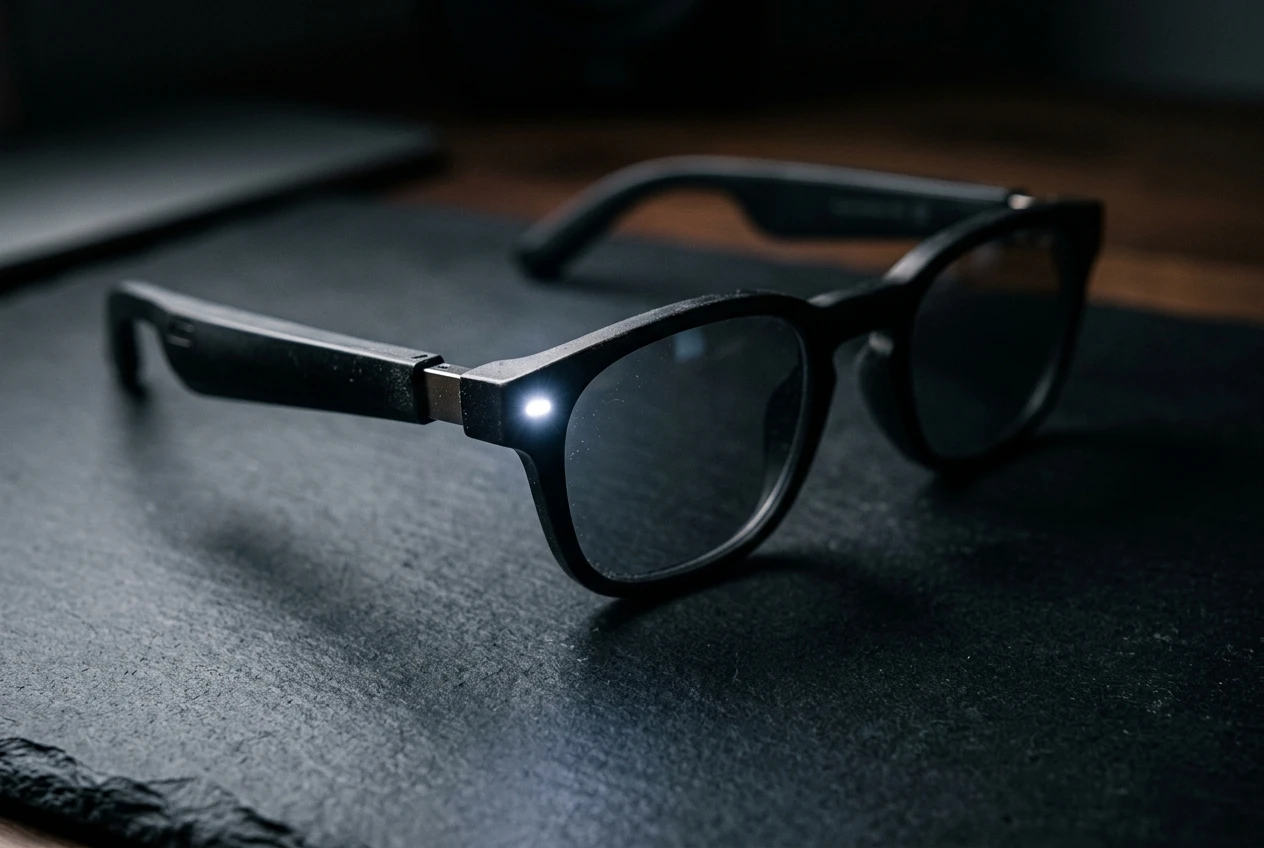
Meta’s Q&A published Tuesday lays out the new rule in one passage: tampering or destruction of the LED now disables the camera, with no photos or videos possible until the device is serviced. The capture LED sits on the front of every pair of Meta’s AI glasses. It blinks briefly for a photo and continues blinking for the duration of a video. Meta says it has no off switch.
The new behavior builds on the rule that already shipped with the second generation. Blocking the LED with tape or another object at the moment of capture triggers a soft prompt asking the wearer to uncover it. Himel, Meta’s vice president of wearables, told the report on Himel’s earlier remarks about misuse a few weeks ago that the company was aware of increasing misuse alongside wider adoption of the devices. The July 7 update is Meta’s answer to users who got around that soft prompt by destroying the indicator rather than covering it.
We are continuously improving our ability to detect tampering, and now we’re updating the glasses to disable the camera if they detect the LED was physically tampered with or destroyed. No other kind of camera has done this and we’re proud to lead the industry forward.
That passage comes from Meta’s AI Glasses Q&A, published July 7, 2026. Meta’s stated counter-strategy goes beyond firmware. The company says it works across Meta to remove ads, posts, and Marketplace listings for tampering services, will ban accounts that advertise them, and has pursued legal action against people or businesses that sell LED-removal services both on and off Meta’s own platforms. Modifying the glasses already violates Meta’s terms of service and voids the warranty.
From Tape to Resin: Why Modders Forced the Update
The new behavior is the second escalation in an arms race with the modding community. Tech journalist Joanna Stern paid $100 for an in-person LED-removal service she found on Facebook Marketplace. The man performed the modification multiple times a week, told Stern, and similar services advertise in at least 30 states. The drilling workflow is consistent across accounts: break the LED’s glass front, clean the pieces out, use a Dremel to drill out the LED without damaging the underlying electronics, fill the hole with resin so the frames look untouched, and the covert mode holds. A faint shutter snap still sounds, but in direct sunlight or a darkened room the device gives no visible signal that capture is active.
Even cheaper workarounds sit in the pipeline. Vinyl stickers engineered to fool the LED-coverage sensor have sold for around $60, the same investigation found, and Amazon lists glasses fitted with a pinhole camera that carry no indicator light at all. The Electronic Frontier Foundation’s March 2026 buyer advisory on Ray-Ban Meta flagged this exact gap, noting that the indicator is small, designed to resemble a normal glasses component, and open to cheap hacks. The Texas Attorney General’s office made the same argument in May 2026 when it opened an investigation into Meta’s smart glasses, citing the indicator that can be hidden and the always-enabled mode where the LED is not active at all.
| Trigger | What second-gen firmware did | What the July 7 update changes |
|---|---|---|
| LED covered at capture start | Soft prompt asks the wearer to uncover | Same |
| LED physically destroyed | Camera continues, no prompt | Camera disabled until service |
| LED drilled out and refilled | Camera continues, no prompt | Camera disabled until service |
| Successful covert capture | Possible | No: firmware cuts the camera |
The Consequential Cost for Builders and Buyers
The camera is no longer a guaranteed system resource. From the moment the firmware decides that the indicator has been drilled, coated, or pulled, the camera path closes at the device level rather than the app level. App developers who built hands-free capture flows around continuous availability now have a new failure mode, and QA teams have a new test surface.
Hands-free capture is a documented legitimate use case, too. The same EFF advisory catalogs assistive uses for visually impaired users, artists, woodworkers, chefs, and physical therapists who need both hands free. A dirty goggle lens, a fogged-up frame after running between temperatures, or rain pooling on the rim could trip the integrity check. False positives become a product bug rather than a corner case. App developers and field support teams now have to triage whether a customer who swears they never tampered with the device has hit a hardware defect or a firmware false positive, and that distinction lives in firmware Meta has not disclosed.
- $50-$100 for an in-person LED-removal service across 30 states, per the BetaNews report on the Stern investigation
- $60 for a vinyl sticker that fools the coverage sensor, per the same investigation
- A typical drilling workflow takes roughly 10 to 20 minutes per pair, per modder accounts cited by PCMag
- The capture LED has shipped on every Meta AI glasses frame since the 2021 Ray-Ban Stories launch
The Verge’s piece on the rollout notes that the company framed cheaper, no-brand Meta’s $299 entry-level glasses as a way to widen adoption, which widens the population of wearers and the surface for misuse. Himel’s earlier remarks about a misuse curve going up as volume goes up read, in the same light, as the precursor to this firmware move.
Courtrooms, Cruise Ships, and the Texas AG Are Already Moving
The legal and venue response is in motion. The Verge’s report notes that New York State will begin banning camera glasses from all courtrooms later this month, with similar restrictions already in place at Philadelphia courts and on cruise lines moving through common areas. Syracuse.com reported the New York rule on the same day as Meta’s Q&A.
State-level enforcement is broader than venues. Texas Attorney General Ken Paxton opened an investigation in May 2026, citing Meta’s privacy representations and the device’s ability to expose recordings and facial geometry. The probe issued a Civil Investigative Demand seeking information from Meta about how the glasses operate in real-world conditions.
Pennsylvania state Representative Joe Ciresi, a Democrat from Montgomery County, introduced House Bill 2603 to require every pair of smart glasses manufactured, sold, or used in the state to display a visual indicator whenever recording is active, and to prohibit disabling that indicator; the bill does not outline what penalty would apply for violations. More than 70 advocacy organizations, including the American Civil Liberties Union and the Electronic Privacy Information Center, already warned Meta that adding facial recognition to the lineup would compound existing risks. The Texas AG’s office specifically flagged that automatic face-blurring on the device had not always worked as intended. The July 7 update sits in the middle of these parallel pressures.
What Stays Unresolved
Meta’s Q&A does not disclose how it distinguishes tampering from a defect. Detection thresholds, false-positive handling, and the affected device list are not in the announcement. The Q&A commits to one behavior: disable the camera when tampering is detected. For app developers shipping capture flows that depend on the camera, that is a constraint to design around rather than a bug to report. Builders should plan a fallback path for devices that enter restricted state mid-session. Himel said the update was on the way after the cheaper Meta Glasses line launched, and the public materials do not itemize the rollout calendar for second-generation Ray-Ban Meta, Oakley Meta HSTN, or Meta Ray-Ban Display.
Frequently Asked Questions
What does Meta’s July 7 AI-glasses update actually do?
The update disables the onboard camera when Meta’s firmware detects that the front-facing capture LED has been blocked, tampered with, or destroyed. Meta ships the change to second-generation Ray-Ban Meta, Oakley Meta HSTN, and Meta Ray-Ban Display devices through a firmware rollout.
Does this change anything about my existing Meta glasses?
Yes, if your device is a second-generation model. The new rule extends the existing second-gen safeguard, where covering the LED at capture triggered a soft prompt. Tampering or destruction now cuts the camera at the device level rather than warning the wearer.
Will a stray piece of tape trigger the new disable?
The existing behavior remains for plain coverage: a soft prompt asks the wearer to uncover the LED. Meta’s published materials describe the new disable as targeting physical tampering or destruction of the LED, not a temporary cover.
Could the LED-disable break a real accessibility workflow?
It could in edge cases. Hands-free capture is a recognized accessibility use case, and a dirty, fogged, or damaged lens could trigger the integrity check. Meta has not disclosed how it handles false positives, and users who depend on the camera for assistive workflows should plan for occasional restricted-state sessions.
What is Meta doing about people paying to remove the LED?
Meta says it removes ads, posts, and Marketplace listings that advertise tampering services, bans accounts that offer them, and has taken legal action against people or businesses that sell LED-removal services on and off its platforms.