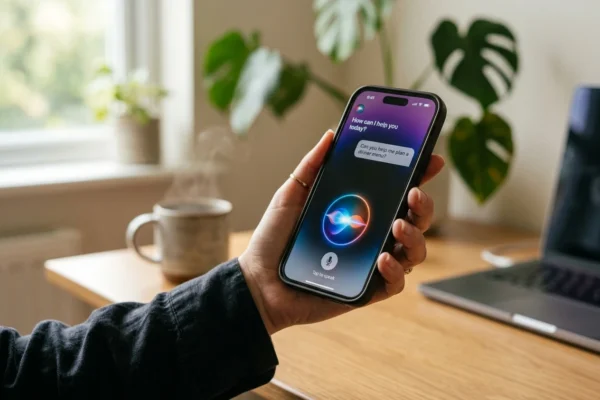
A social media break can sharpen focus faster than most people expect, but the strongest new evidence points to a narrower fix: blocking smartphone internet while keeping calls and texts. In a randomized trial, adults who cut mobile web access improved attention, mood, mental health and sleep within about two weeks.
That matters because the study did not ask people to vanish from society. It tested whether the pocket-sized route to feeds, video, news and shopping was doing more damage than people could feel in real time.
The Study Took Away Mobile Internet While Keeping Calls
The clearest finding comes from a PNAS Nexus smartphone internet trial published in February 2025. Researchers recruited 467 adult participants and used the Freedom app to block mobile internet access on smartphones, including Wi-Fi and mobile data, while calls and texts remained available.
That design matters. A full phone fast is hard to square with child care, work shifts, medical appointments and safety. This trial tested mobile internet, not the whole phone, so the intervention looked closer to a strict but livable reset than a retreat.
Participants were randomly assigned to block access in the first half of the month or in the second half. The crossover setup gave researchers a comparison group first, then let the delayed group try the same intervention later.
The Numbers Favor Friction Over Willpower
The results were broad enough to be useful, but the compliance data keeps the story honest. Of the 467 people who agreed to take part, 266 set up the blocking app and 119 met the preregistered compliance mark. In plain English, the method worked best for people who could keep the block active.
- 467 adults agreed to install a blocking app for the trial.
- 314 to 161 minutes was the screen time drop in the first intervention group after the mobile block.
- 10 years of age-linked attention decline was the researchers’ benchmark for the size of the sustained attention improvement.
- 119 compliant participants kept the block active often enough to meet the study’s stricter standard.
The attention result is the number most likely to travel online. Researchers compared the improvement on a sustained attention task with about a decade of normal age-linked decline. That comparison is striking, but it should be read as scale, not as proof that a phone break rewinds the brain.
Why Phone Friction Matters
Smartphones are not just small computers. They sit on the nightstand, move from room to room, light up during meals and fill the empty seconds between tasks. That is why the study’s most useful lesson may be the friction is the treatment.
The scale is huge. Pew Research Center’s latest mobile ownership fact sheet says 91% of U.S. adults owned a smartphone in its 2025 survey, up from 35% in its first smartphone ownership survey in 2011. A separate Pew report on U.S. social media use found YouTube and Facebook at the top among adults, with Instagram used by half of adults and TikTok by 37%.
That mix creates a habit loop. The phone becomes the fastest answer to boredom, tension, curiosity and fatigue. Blocking mobile access breaks that loop at the point of action, before the thumb lands on the app.
The One Week Detox Adds a Younger Test
A second paper, published in JAMA Network Open in November 2025, gives the phone-internet trial a useful companion. The social media detox study followed young adults aged 18 to 24 and looked at Facebook, Instagram, Snapchat, TikTok and X after a two week baseline period.
Among 295 people who opted into the one week intervention, symptoms of anxiety fell 16.1%, depression fell 24.8% and insomnia fell 14.5%. Loneliness did not show a significant change, which is a reminder that removing feeds can calm some symptoms without solving social isolation.
| Evidence | People Studied | Intervention | Main Finding | Best Read |
|---|---|---|---|---|
| Smartphone internet trial | 467 adults recruited online | Blocked mobile internet while calls and texts stayed open | Attention, mental health and well-being improved | Strongest case for a strict reset |
| Young adult social detox | 373 completed baseline, 295 opted in | Reduced five major social apps for one week | Anxiety, depression and insomnia symptoms declined | One week is a stress test for heavy app users |
| Built-in phone controls | Everyday users, not a trial group | App limits, focus mode, downtime or scheduled blocks | Creates friction without quitting the device | Best for maintenance after a reset |
A Practical Reset That Still Lets Life Function
The research does not require a dramatic digital exile. A workable reset starts with the same principle the strongest trial used: keep essential contact open, then block the mobile routes that pull attention away.
For iPhone users, Apple’s Screen Time app limits guide covers app categories, downtime and communication limits. Android users can use Google’s Digital Wellbeing focus tools for app timers, Focus mode and notification controls. People who need stricter blocks can look at Freedom’s Locked Mode settings, the kind of commitment feature used in the smartphone trial.
- Keep the phone boring by leaving calls, texts, maps and calendar alerts available while blocking browsers, social apps, short video, shopping and news apps.
- Move social apps off the home screen before the reset starts, so muscle memory has to work harder.
- Turn off nonessential notifications, especially shopping, social, breaking news and promotional alerts.
- Charge the phone outside the bedroom or across the room if overnight safety calls still matter.
- Replace micro-scrolling with a physical fallback, such as walking, stretching, reading, cooking or calling someone.
- Write down sleep, focus and mood once a day, because the change is easier to judge with notes than with vibes.
Seven days is a reasonable first test for people who feel anxious about access. Fourteen days better matches the stricter trial and gives the habit loop more time to cool down.
Limits Before the Habit Becomes Health Advice
The studies point in the same direction, but they do not settle every question. The smartphone trial had a motivated sample, and only about a quarter of the enrolled participants met the strict compliance rule. The young adult study also used an optional intervention, which makes it less clean than a randomized experiment.
Work is another limit. Some people need mobile web access for jobs, caregiving, transportation, translation, banking or medical portals. For them, the cleanest version may be a block schedule rather than a full waking-hours cutoff.
Mental health needs the most care. A calmer week can matter, especially if sleep improves, but depression, anxiety and insomnia can have medical, financial, family or workplace causes that a phone setting will not fix. Anyone with severe symptoms, panic, self-harm thoughts or unsafe sleep deprivation should treat a digital reset as support, not care.
The phrase brain rot is catchy, but the better takeaway is more practical: when the fastest path to the feed stops being automatic, attention has a chance to come back.
Frequently Asked Questions
Does a Social Media Break Help Focus?
Yes. A social media break can help some people improve focus, mood and sleep, with the strongest evidence coming from a trial that blocked smartphone internet while keeping calls and texts available.
Do I Need to Stop Using My Phone Completely?
No. The main smartphone trial kept calls and texts open, so the practical goal is to block mobile internet access to distracting apps and websites rather than remove every phone function.
How Long Should I Try a Social Media Break?
Start with seven days if you are worried about work or family access, then extend to fourteen days if the setup is manageable and your blocked apps are not essential.
Which Apps Should I Block First?
Block the apps you open automatically, usually social feeds, short video, shopping, news, mobile browsers and games, while keeping tools you need for safety, work and family logistics.
Is a Phone Reset a Treatment for Anxiety or Depression?
No. A phone reset may support better sleep, mood and attention, but anxiety, depression and insomnia should be discussed with a qualified health professional when symptoms are severe, persistent or unsafe.
Disclaimer: This article is for informational purposes only and is not medical or mental health advice. Smartphone and social media changes can affect anxiety, depression, sleep and access to support. Consult a qualified health professional for personal guidance. Figures are accurate as of publication on May 23, 2026.