The bricklayer who chased down the Modena attacker on May 16 has lived in Italy for 30 years, raised his son there, and still does not hold an Italian passport. On Saturday afternoon, Osama Mohamed Shalaby, 56, and his 20-year-old son Mohamed sprinted after a man who had just driven a grey Citroën C3 at roughly 100 kilometres per hour into a stretch of pedestrians on Via Emilia, then jumped out swinging a kitchen knife. Eight people were hospitalised. Two women, tourists aged 69 and 53, lost both legs at the scene.
By Monday, Italy’s prime minister had personally thanked the pair, the mayor of Modena had invited them to a city vigil, and Egypt’s ambassador in Rome had summoned them for an embassy honour. The same week, the deputy premier was on television demanding stricter expulsion rules for foreign-born offenders. Both sentences are about the same incident.
What Happened on Via Emilia
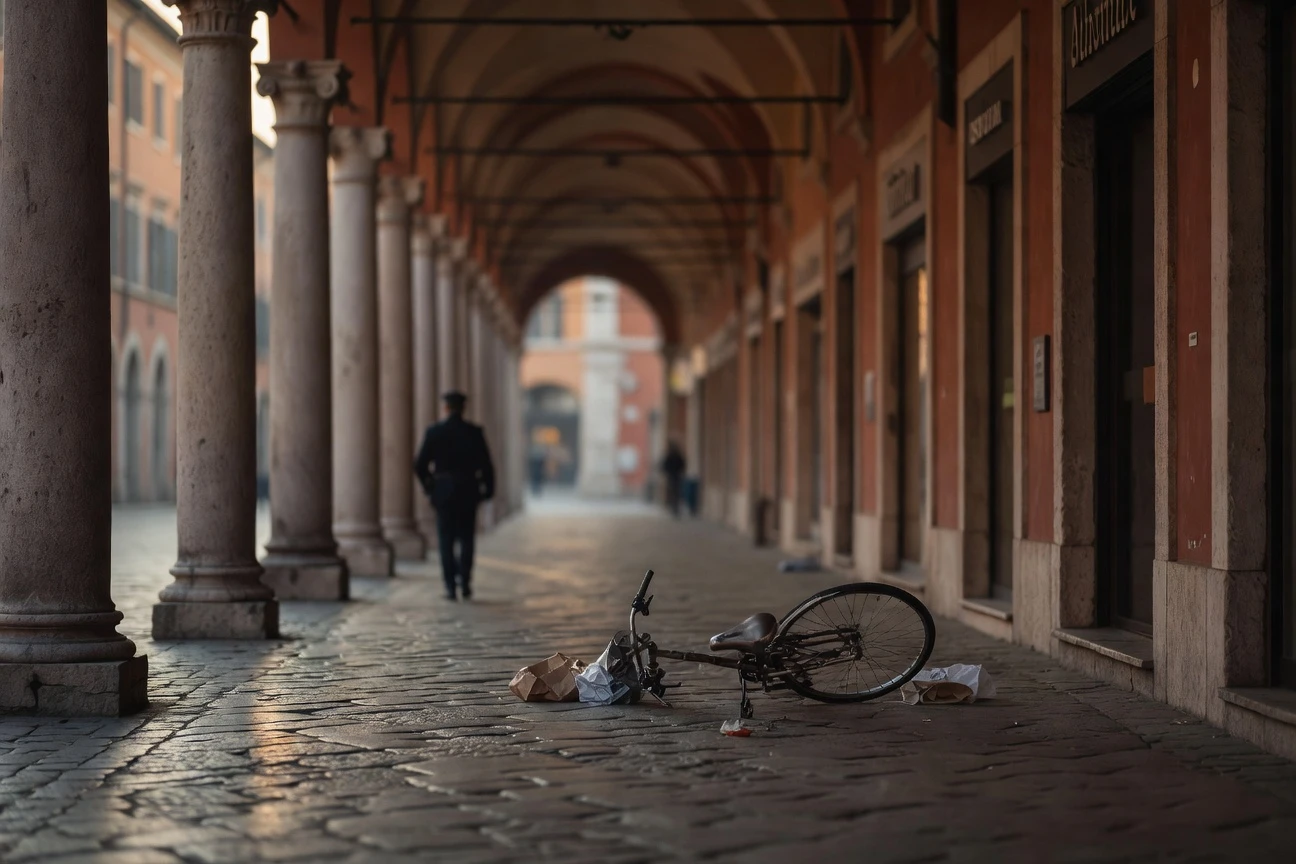
At about 4:30 p.m. local time, witnesses on Modena’s main shopping street saw a grey hatchback accelerate through pedestrian flow, clip a cyclist, mount the pavement, and ram a group standing outside a row of shops near the city’s medieval arcades. The car came to a stop only when it hit a shop window, pinning a woman against the frame. A detailed reconstruction of the attack lists eight injured, four critically.
The driver, later named by police as Salim El Koudri, a 31-year-old Italian citizen born in Bergamo to Moroccan parents, climbed out of the wreck holding a kitchen knife. He attacked Luca Signorelli, a passer-by, stabbing him in the head and chest, then ran.
Shalaby and his son were a short distance away. According to the father’s account to Italian wire service ANSA, he told Mohamed in Arabic to run after the attacker. “I told him: grab him, grab him,” Osama said. “He went, he blocked him, and he took the knife away from him.” Two other passers-by, one of Pakistani origin, helped pin the suspect to the cobblestones until carabinieri arrived minutes later.
Italian investigators ruled out terrorism on May 17, citing what Interior Minister Matteo Piantedosi described as a “situation of psychiatric distress.” El Koudri had been treated for what officials called serious schizoid disorders between 2022 and 2024.
The Bricklayer and His Son
Osama Shalaby came from Zenara, a village in the Tala district of Egypt’s Menoufia governorate, almost three decades ago. He works construction. He lives in Milan. His son was born and schooled in Italy and is fluent in the local Emilian-inflected Italian that Modenese shoppers use on Saturday afternoons.
In the interview that Italian newspapers reprinted across Sunday’s front pages, the father gave the line that has since echoed through both countries:
We weren’t afraid. We are Egyptians, we fear only God.
Osama said the line plainly to ANSA reporters, not as a slogan. Egyptian state media and Cairo television networks looped the quote through the weekend. Italian outlets put it on their morning print covers. The Arab News English-language wire, which carried the fullest record of his remarks, noted that he immediately played the moment down: there are “good people and bad people,” he said, and he hoped the attention would help him find more stable housing for his family.
The family did not receive the call from Cairo first. Sources from Zenara village told Egyptian outlets that neighbours phoned the Shalaby relatives after the videos went viral on Egyptian Facebook on Sunday morning, and the village then phoned the embassy in Rome.
How the Recognition Stacked Up
By Monday evening, three separate layers of state had moved.
| Authority | Action | Stated reason |
|---|---|---|
| Prime Minister Giorgia Meloni | Personal thanks to the Shalabys on May 17 | Praised residents who “courageously intervened” |
| Modena Mayor Massimo Mezzetti | Invited father and son to civic solidarity vigil | Called the rescuers “the symbol of a community that knows how to react, unite and intervene” |
| Interior Minister Matteo Piantedosi | Pledged formal national honours | Cited bravery in protecting citizens during an active attack |
| Governor of Modena province | Public commendation | Specifically named both Shalabys as a deterrent to further casualties |
| Egypt’s Ambassador to Italy Bassam Rady | Embassy reception in Rome | Honoured both as Egyptian nationals abroad |
Egyptian Independent, which carried the initial Cairo-side report, said the families in Menoufia were fielding congratulatory calls through the weekend. Egyptian state television sent crews to Zenara on Monday.
That layer of recognition is unusual in tempo. Italian honours for civilian bravery, normally routed through the presidential Quirinale process, can take months. Piantedosi’s pledge came inside 48 hours. The mayor’s vigil invitation came inside 24.
A Country Arguing About the People Who Saved It
The political reaction split almost immediately. Deputy Premier Matteo Salvini, head of the anti-migrant League party that sits inside Meloni’s coalition, called El Koudri a “second-generation criminal” and demanded automatic revocation of residency for foreign-born offenders, with what he described as immediate expulsion.
Piantedosi, also of the governing right, took a different tone. He argued the attack “cannot lead us to dismiss” the perpetrator as an isolated madman, and that investigators had to examine social marginalisation and perceived discrimination as factors. He also noted that citizenship alone, which El Koudri held by birth, does not guarantee belonging.
The opposition pushed back. Action party leader Carlo Calenda accused the government of exploiting a tragedy to harden migration rules before the facts were in. Mayor Mezzetti, a centre-left politician, leaned on the Shalaby intervention as the rebuttal. “Two Egyptian migrants,” he said, “were among those who helped stop the attacker.”
The contradiction sits in the open. The attacker held the passport. The men who stopped him did not.
What Salvini Asked For
Salvini’s policy demand, repeated across Italian television on Monday, was concrete: automatic residency-permit revocation for any foreign national convicted of a violent crime, paired with expulsion. The measure would not have applied to El Koudri, who is a citizen by birth. It would apply to the Shalabys if they were ever charged with anything.
What Piantedosi Flagged
The interior minister’s intervention complicated the line his coalition partner was pushing. By flagging social marginalisation and perceived discrimination as live factors in the investigation, Piantedosi narrowed the political space for a clean migration-rules pitch. He also disclosed that El Koudri had sent an email containing what authorities described as insulting language against Christians, and had later apologised for it, a detail that points toward mental-health crisis as much as ideology.
Thirty Years, No Passport
The smaller fact buried under the headlines is the harder one. Osama Shalaby has lived in Italy for three decades. He has worked, paid taxes, and raised a son who is fluent in Italian, in a country whose citizenship process for non-EU adults requires a continuous 10-year residency, documented income, language certification, and a multi-year administrative review that frequently runs past its statutory limits.
Italian naturalisation rates remain among the lowest in Western Europe relative to long-resident foreign populations. Reform of the law, including a proposed “ius scholae” path tied to school attendance for the children of foreign residents, has been blocked repeatedly by the parties currently in government.
That is the system Osama Shalaby has lived inside for 30 years. On Saturday afternoon, it produced a man who, when he saw a knife and a bleeding stranger, sent his son after the attacker without hesitating. Asked what he wanted out of the attention afterward, he did not ask for a medal. He asked for help finding a stable apartment.
The Naturalisation Bottleneck
Italian citizenship by residency, the standard non-marriage route for adult foreigners, requires 10 continuous years of legal residence plus income proof. The administrative review afterward routinely runs two to three years beyond the statutory window. Backlogs are heaviest in northern industrial provinces, the same regions where most North African and Egyptian construction workers live.
The Ius Scholae Stall
A reform that would shorten the path for foreign-born children educated through Italian schools, marketed as “ius scholae,” has been introduced and shelved repeatedly since 2015. Mohamed Shalaby, 20, born or raised in Italy and schooled there, would have qualified under most versions of the proposal. None has passed.
The Victims, the Investigation, and What Sits Open
The injured remain the gravity of the story. Two of the women, a 69-year-old Polish tourist and a 53-year-old German visitor, underwent double amputations at Modena’s Policlinico hospital. Luca Signorelli, the stabbing victim, was reported stable after surgery for head and chest wounds. Four of the eight hospitalised were listed in serious condition on Sunday; updates through Monday indicated improvement but no clear discharge timeline.
El Koudri is in custody, charged on a preliminary basis with multiple counts including attempted massacre. Italian prosecutors have ruled out a terrorism charge, citing the mental-health record. A psychiatric evaluation has been ordered. The exact charging frame, whether the attack is tried as a mass-violence offence with mitigating mental-health findings or as a competency case, will shape sentencing range and timing.
President Sergio Mattarella and Meloni visited the hospitals together on May 17 but issued no joint statement. The prime minister has called the attack “extremely serious.” The Quirinale honours process for the Shalabys is expected to move on a fast track, though no date has been announced.
Osama Shalaby is back on a construction job this week. His son is back at home. The video of the moment they tackled the attacker is still circulating on Egyptian and Italian feeds. The honours will arrive. The passport, for now, will not.