Oil prices crashed below $100 a barrel on Wednesday after President Trump announced a conditional two-week ceasefire with Iran. The deal hinges on Tehran restoring safe passage through the Strait of Hormuz. Traders welcomed the news as a major step back from the brink of wider conflict.
Trump Announces Two-Week Ceasefire With Iran
President Trump shared the breakthrough on social media late Tuesday. He called it a “double sided CEASEFIRE” and stressed that Iran must immediately allow oil tankers to move freely through the vital waterway. This marks a sharp turnaround from his earlier warning that failure to comply could bring devastating consequences.
Iran’s Foreign Minister Abbas Araqchi confirmed Tehran would stop attacks if the United States halts strikes. Iranian forces would coordinate transit through the strait during the pause. The agreement came after weeks of escalating tensions that began with strikes in late February.
Pakistan’s Prime Minister invited both sides to Islamabad on Friday for face-to-face talks. Officials there hope to turn the temporary truce into a lasting deal based on Iran’s 10-point proposal, which Trump described as a workable basis for peace.
Oil Markets React With Sharp Selloff
West Texas Intermediate crude dropped 13.96 percent to $97.18 in early Asian trading. Brent crude fell 13.01 percent to $95.05. These moves wiped out much of the record surge seen in March when fears over the strait disruption sent prices skyrocketing.
Oil prices have now fallen below the key $100 mark that had gripped markets for weeks.
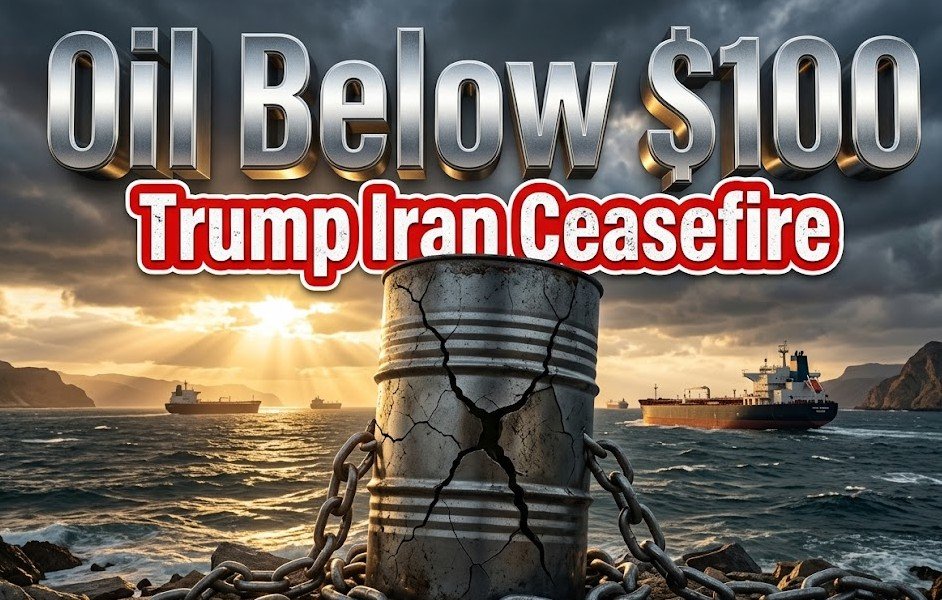
The relief spread quickly. Stock futures jumped as investors bet on lower energy costs. Asian markets rose sharply with gains in energy-sensitive sectors. Yet analysts caution that prices remain well above pre-conflict levels and could swing again if the truce falters.
The selloff reflects how quickly sentiment can shift in energy markets. Just days earlier, oil traded above $110 amid threats to Iranian infrastructure. The conditional pause removed the immediate risk of total strait closure.
Why the Strait of Hormuz Matters So Much
The narrow waterway between Iran and Oman handles about 20 percent of global oil supply in normal times. Roughly 21 million barrels flow through it daily under peacetime conditions. Disruptions since the conflict intensified cut that flow to a fraction, creating the biggest supply shock in recent memory.
Gulf states reported heightened alerts with some missile and drone activity even as the deal emerged. Shipping companies had already rerouted vessels or paused sailings, driving up insurance costs and delays worldwide.
This chokepoint remains under Iranian influence, which keeps geopolitical risk alive. Full restoration of safe transit could take time to verify. Markets will watch closely for actual tanker movements in the coming days.
Tensions Ease But Uncertainty Lingers
Despite the ceasefire, the region stays on edge. Several Gulf nations kept civil defense warnings in place. The truce does not cover all related conflicts, including those involving other groups.
Trump indicated negotiations could build toward something more permanent. Both sides claim progress, yet trust remains low after months of threats and strikes. Pakistan’s mediation role adds a new diplomatic channel that could prove helpful.
Energy experts note that even a successful two-week pause offers only short-term relief. Long-term stability depends on verifiable reopenings and reduced threats to shipping lanes.
Consumers may soon see lower gas prices at the pump as the risk premium fades. Airlines and manufacturers could also benefit from easing fuel costs. Still, the memory of March’s spike reminds everyone how fragile global energy supplies can be.
Path Forward for Global Energy Markets
Traders now focus on whether Iran follows through on safe passage. Confirmation of tankers moving freely would likely push prices lower. Any violation could trigger a rapid rebound.
The event highlights the world’s dependence on key chokepoints. Nations are accelerating efforts to diversify supplies and build reserves. For now, the market breathes easier knowing immediate catastrophe has been avoided.
This development brings a moment of hope amid ongoing challenges in the Middle East. Families worried about rising costs and businesses hit by volatility can take some comfort in the pause. Yet lasting peace would deliver the real prize of stable energy prices for everyone.
What do you think about this sudden shift in oil markets and the ceasefire? Share your views in the comments below. If you’re following the story online, join the conversation using #OilPrices and let your friends know.