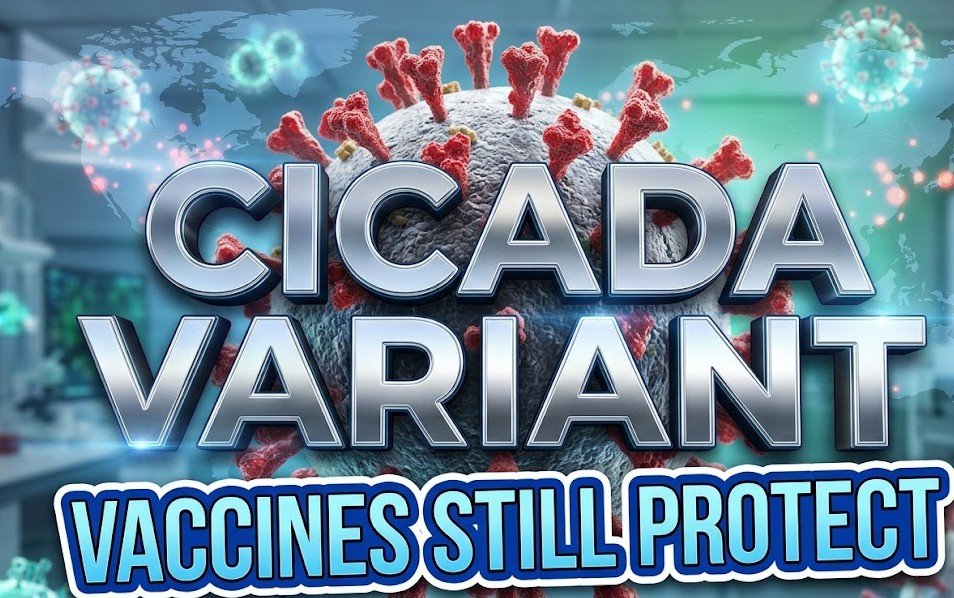
A new COVID subvariant nicknamed Cicada is quietly gaining ground across the United States and at least 23 other countries. Despite its heavy mutations, health experts confirm that current vaccines still deliver strong protection against severe illness, hospitalization, and death.
This development comes as global surveillance ramps up, offering reassurance amid ongoing viral evolution.
What Makes the Cicada Variant Different
The BA.3.2 subvariant, dubbed Cicada for its sudden re-emergence after lying low like the insect, belongs to the Omicron family. It traces back to the BA.3 lineage that circulated briefly in early 2022 before fading from view.
Scientists first spotted it in a sample from South Africa on November 22, 2024. The variant stands out for its roughly 70 to 75 spike protein mutations compared to the JN.1 and LP.8.1 strains targeted by the 2025-26 vaccines.
This high mutation count raises questions about immune escape. Lab studies show reduced neutralization from antibodies gained through prior infection or vaccination. Yet real-world data so far shows no clear increase in severe disease or hospitalizations.
The World Health Organization placed BA.3.2 on its Variant Under Monitoring list in December 2025. This signals careful watching without elevating it to a higher threat level. Experts note the virus continues to evolve, but current evidence points to mild outcomes in most cases.
Where the Cicada Variant Has Spread
Detections of BA.3.2 picked up speed starting in September 2025. By mid-February 2026, it had appeared in at least 23 countries across Africa, Europe, Asia, North America, and Oceania.
In the United States, the variant showed up in wastewater samples from 25 states plus clinical cases and traveler screenings. Recent updates indicate detections across 29 states and Puerto Rico. It reached up to 30 percent of sequenced samples in parts of Europe, including Denmark, Germany, and the Netherlands, yet without sparking major case surges.
The first U.S. detection came through a traveler in June 2025. Domestic cases began appearing in clinical samples by early 2026. Overall COVID activity remains low nationally, which helps keep the variant’s impact in check.
Health authorities use multiple tools like wastewater monitoring and genomic sequencing to track its movement. This early warning system proves valuable as travel and daily routines resume.
Common Symptoms and Groups at Higher Risk
Most people infected with the Cicada variant experience mild symptoms similar to other recent Omicron subvariants.
Common signs include:
- Cough
- Fever or chills
- Sore throat
- Congestion or runny nose
- Fatigue
- Shortness of breath in some cases
- Loss of taste or smell
Reports suggest children may face higher chances of infection, though illness tends to stay mild.
High-risk groups should pay extra attention. Elderly individuals, people with underlying conditions like diabetes or heart disease, pregnant women, and those with weakened immune systems fall into this category. Frequent travelers also benefit from heightened awareness.
In India, authorities report no significant rise in cases linked to BA.3.2. Surveillance systems remain active, and experts advise against panic while encouraging standard precautions.
Why Experts Say Vaccines Still Work
The big question on many minds is whether the current shots hold up.
Health officials from the CDC and WHO stress that 2025-26 vaccines, designed around JN.1 lineage strains, continue to protect well against severe outcomes. While mutations may lower prevention of mild infection, the shots still cut the risk of hospitalization and death effectively.
Boosters can strengthen immunity further, especially for vulnerable populations.
Pulmonologists and infectious disease specialists echo this message. They point out that vaccines train the immune system to recognize key parts of the virus even as it changes.
Real-world experience with previous variants supports this view. Protection against severe disease has held steady across multiple Omicron waves. Ongoing studies will refine our understanding, but the consensus remains clear: staying up to date on vaccination offers the best defense.
How to Stay Protected as the Variant Circulates
Simple steps make a real difference in limiting spread and protecting health.
Keep vaccinations current, particularly if you belong to a high-risk group. Talk to your doctor about timing for boosters.
Practice good hygiene by washing hands regularly and covering coughs. Improve ventilation in indoor spaces when possible. Consider wearing a mask in crowded or poorly ventilated areas, especially during peak respiratory seasons.
Test promptly if symptoms appear and isolate if positive. Early care helps prevent complications.
For India and other regions with low current activity, awareness and readiness matter most. Global connectivity means variants can travel, but strong public health systems help contain impact.
The emergence of the Cicada variant reminds us that COVID-19 continues to evolve, yet our tools to fight it have grown stronger too. Vaccines, surveillance, and basic precautions have kept serious outcomes low even as new subvariants appear. This balance brings hope in an uncertain world. Staying informed without fear helps everyone navigate these changes wisely.