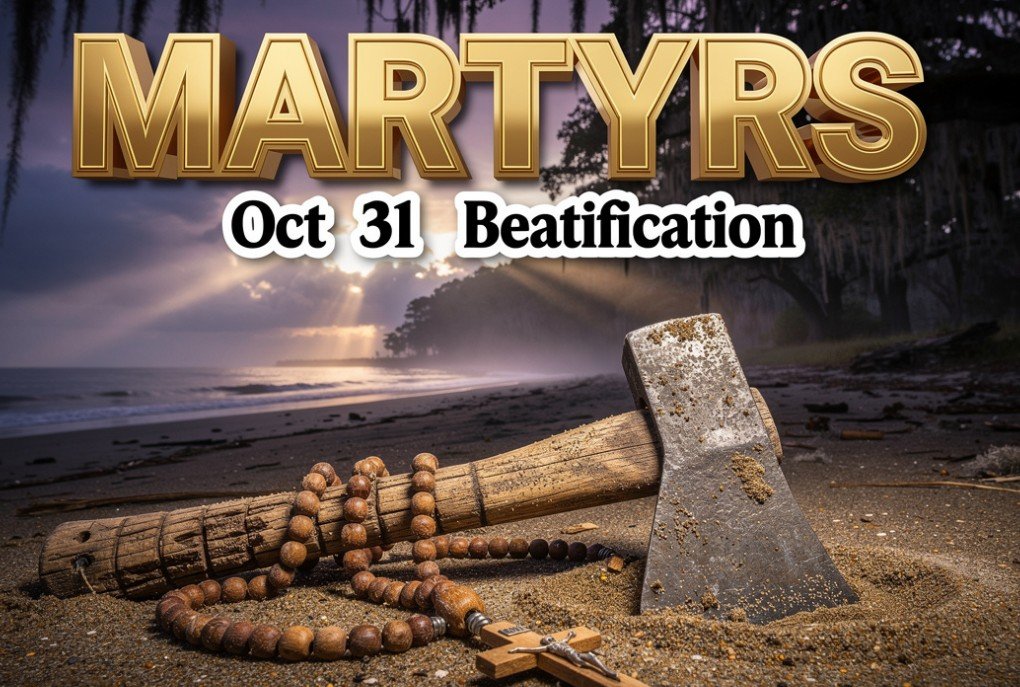
The Vatican has officially announced a historic date for the Catholic Church in the United States. Five Spanish friars known collectively as the Georgia Martyrs will be beatified in Savannah on October 31. This solemn ceremony recognizes their ultimate sacrifice while defending the sanctity of marriage more than four centuries ago.
This long awaited event marks a significant milestone for American Catholics and historians alike. The beatification brings a centuries old story of faith and conviction to the global stage. It highlights a chapter of American history that predates the arrival of the Pilgrims by decades.
Savannah Prepares for Major Religious Event
Cardinal Francis Leo of the Archdiocese of Toronto will preside over the beatification Mass. The choice of Savannah as the host city is historically significant. The modern city sits near the coastal missions where these friars lived and died.
Local officials and church leaders are preparing for an influx of pilgrims. Faithful attendees from across the United States and Spain are expected to travel to Georgia for the event. The ceremony formally declares the five men “Blessed” which is the final step before sainthood.
Beatification is a recognition that these individuals are in heaven and can intercede for the faithful.
The announcement comes after Pope Francis officially recognized the martyrdom of the friars in January. This decree confirmed that they were killed out of hatred for the faith. This specific classification waives the requirement for a miracle usually needed for beatification.
A Conflict Over Faith and Tradition
The events leading to this beatification took place in September 1597. The five Franciscan missionaries had traveled from Spain to minister to the Guale people. They established missions along the coast of present day Georgia to evangelize and provide sacraments.
Tensions rose when a young leader named Juanillo sought to inherit the position of chief. Juanillo wished to take a second wife which was a common custom among the Guale leadership at the time. Father Pedro de Corpa intervened in this situation.
Father de Corpa stood firm on the Christian teaching regarding the sanctity of monogamous marriage.
He explained to Juanillo that a baptized Christian could not have multiple wives. The priest also stated he would oppose Juanillo’s succession as chief if he persisted. This confrontation sparked a violent revolt that would sweep across the coastal missions.
The disagreement was not merely political. It struck at the core of the moral teachings the friars were trying to instill. This defense of marriage became the catalyst for their deaths.
The Ultimate Sacrifice in 1597
Juanillo retaliated with lethal force on September 14. He and a group of warriors attacked the mission where Father de Corpa was stationed. They killed the priest with a stone hatchet while he was praying.
The violence did not end there. The group proceeded to other missions in the area over the following days. They systematically targeted the friars who remained at their posts.
The following table details the five martyrs and their roles:
| Name | Role | Origin |
|---|---|---|
| Father Pedro de Corpa | Priest | Castile, Spain |
| Father Blas Rodríguez | Priest | Extremadura, Spain |
| Father Miguel de Añon | Priest | Aragon, Spain |
| Father Francisco de Veráscola | Priest | Vizcaya, Spain |
| Brother Antonio de Badajóz | Lay Brother | Badajoz, Spain |
One missionary survived the initial slaughter. Father Francisco de Avila was kidnapped by the attackers. He was held captive and subjected to torture for ten months.
De Avila was eventually released after the governor of St. Augustine intervened. His testimony provided crucial details about the revolt. However, he refused to testify against his captors in court because he knew it would lead to their execution.
Centuries of Devotion and Research
The path to this October ceremony has been long and complex. The cause for the canonization of the Georgia Martyrs officially opened in 1950. Historians and theologians have spent decades gathering evidence to support the case.
Researchers relied heavily on primary sources to reconstruct the events. The account of the survivor Francisco de Avila was a key piece of evidence. It was referenced in early 17th century texts including works by Luís Gerónimo de Oré.
Scholars confirmed that the friars stayed at their posts knowing their lives were in danger.
The Diocese of Savannah has championed this cause for years. They have worked to educate the public about this often overlooked chapter of history. A 2024 documentary titled “For the Sake of the Gospel” helped bring renewed attention to their story.
The beatification serves as a reminder of the early Christian presence in North America. It honors men who prioritized their religious convictions above their own safety. The event in Savannah will likely include liturgical readings and the unveiling of official images of the new Blessed.
The lives of these men continue to inspire the faithful today. Their defense of marriage and their willingness to die for their beliefs resonate with many believers. As the date approaches, the global church turns its eyes toward Georgia.
These five men stood their ground four hundred years ago. Now the church will honor them forever. Their legacy is no longer just a historical footnote. It is a celebrated example of courage.