Tata Motors has laid out its electric vehicle roadmap through the end of the decade, confirming the launch of the Sierra EV, an updated Punch EV, and the Avinya in 2026, alongside plans for three additional EV nameplates by FY2030. The announcement signals an aggressive push to widen its electric footprint in India.
The message was simple. Tata isn’t slowing down.
Sierra EV brings a familiar name back with an electric twist
The return of the Sierra name has already done half the marketing work for Tata.
The Tata Motors has confirmed that the Sierra EV will reach production form in 2026, following its earlier public debut alongside the internal combustion version. Visually, the electric Sierra stays very close to its petrol and diesel sibling.
There are subtle differences, though. The EV gets a body-coloured, closed-off front section instead of a grille, giving it a cleaner face without straying too far from the original silhouette people recognize.
Underneath, the Sierra EV will sit on Tata’s Acti.ev Plus platform, the same architecture planned for the Harrier EV. That matters because it opens the door to larger batteries, better packaging, and more flexibility.
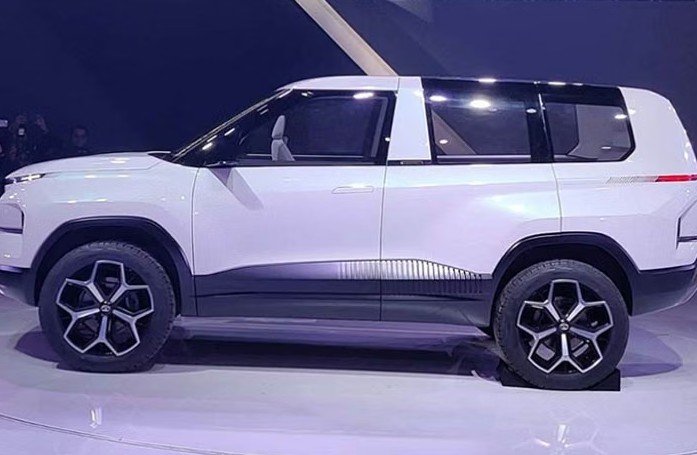
Tata is expected to offer two battery options, sticking to its usual strategy. A claimed driving range of up to 500 km is on the table, along with the possibility of an all-wheel-drive variant.
Pricing, while not officially announced, is likely to start around ₹15 lakh ex-showroom, placing it squarely in the growing mid-size electric SUV space.
For many buyers, the Sierra EV feels like Tata betting on nostalgia, but with modern expectations baked in.
Punch EV update aims to keep a bestseller fresh
While the Sierra and Avinya grab headlines, the Tata Punch EV plays a different role in Tata’s strategy.
The Punch EV is already one of the more approachable electric vehicles in the country, and Tata plans to give it a model-year update in 2026 rather than a full overhaul.
The changes are expected to be modest but noticeable.
Tata may add a few features to lift the cabin experience, including a revised freestanding infotainment screen with slimmer bezels, similar to what has been spotted on test versions of the Punch ICE facelift. New exterior and interior colour options are also likely.
Audio upgrades and small software tweaks could be part of the package. On the mechanical side, Tata may fine-tune the powertrain to squeeze out a slightly better claimed range, though no dramatic jump is expected.
This approach makes sense. The Punch EV doesn’t need reinvention. It needs to stay relevant in a segment that’s filling up fast with new entrants.
Sometimes, staying competitive is about small steps taken at the right time.
Avinya positions Tata at the premium end of EVs
At the opposite end of the spectrum sits Avinya.
The Tata Avinya isn’t just another model. It’s meant to be a statement. Tata showcased the Avinya X earlier, giving a clearer idea of where this sub-brand is headed.
The design leans into an SUV-coupe form, with details that make it stand out instantly. T-shaped LED daytime running lights, a closed front, vertical headlamps, and a silver skid plate give it a distinctive road presence.
Inside, the Avinya follows a stripped-back, minimalist theme. A dual-tone interior, a two-spoke steering wheel, and an integrated digital display layout set the tone. Physical clutter is kept to a minimum.
Tata hasn’t shared technical specifications yet, but Avinya is expected to sit above the Sierra EV in pricing and positioning. Think fewer compromises, more comfort, and a sharper focus on experience.
The Avinya brand signals Tata’s intent to compete beyond mass-market EVs, especially as buyer expectations shift upward.
Five EV launches and one update by FY2030
The bigger story sits beyond individual models.
Tata Motors has confirmed plans to introduce five new electric vehicles and one model update by FY2030. The Sierra EV, Avinya, and Punch EV update form the first wave in 2026.
Beyond that, three entirely new EV nameplates are planned, though details remain under wraps.
This long-term planning reflects Tata’s confidence in EV demand continuing to grow in India, even as adoption rates vary by segment and region.
The roadmap also shows Tata hedging its bets across price points:
-
Entry-level and compact EVs for city buyers
-
Mid-size electric SUVs for families
-
Premium EVs aimed at buyers ready to spend more
By spreading its lineup this way, Tata reduces reliance on any single model or segment.
Competition is heating up, fast
Tata may lead India’s EV sales charts today, but the space is getting crowded.
Global manufacturers are stepping up their electric plans for India, while domestic rivals are rolling out new platforms and designs. Price sensitivity remains high, charging infrastructure is still uneven, and buyers are becoming more informed.
In that environment, product freshness matters.
Analysts say Tata’s advantage lies in its early-mover position, local manufacturing scale, and brand trust. But those advantages need constant reinforcement.
The upcoming EV launches aren’t just about adding numbers. They’re about defending ground already won.
What this roadmap tells us about Tata’s priorities
Reading between the lines, Tata’s EV plan reveals a few clear priorities.
First, it’s doubling down on familiar nameplates like Sierra and Punch, reducing the risk that comes with entirely new brands. Second, it’s carving out a premium space with Avinya, acknowledging that Indian EV buyers aren’t all shopping on price alone anymore.
Third, Tata is pacing itself. Instead of flooding the market all at once, it’s spacing launches across years, giving each model room to breathe.
For consumers, that means more choice. For rivals, it means Tata isn’t done yet.
As 2026 approaches, the Sierra EV, Avinya, and refreshed Punch EV will serve as early markers of how well Tata’s long game is playing out. The real test, though, will come later in the decade, when those additional EV nameplates finally step into the spotlight.