Scientists have uncovered new clues about how life began on Earth by studying massive structures deep in the planet’s mantle. A 2025 study in Nature Geoscience, led by Yoshinori Miyazaki from Rutgers University, links these odd formations to ancient processes that shaped our world’s habitability.
Strange Formations Lurk Below
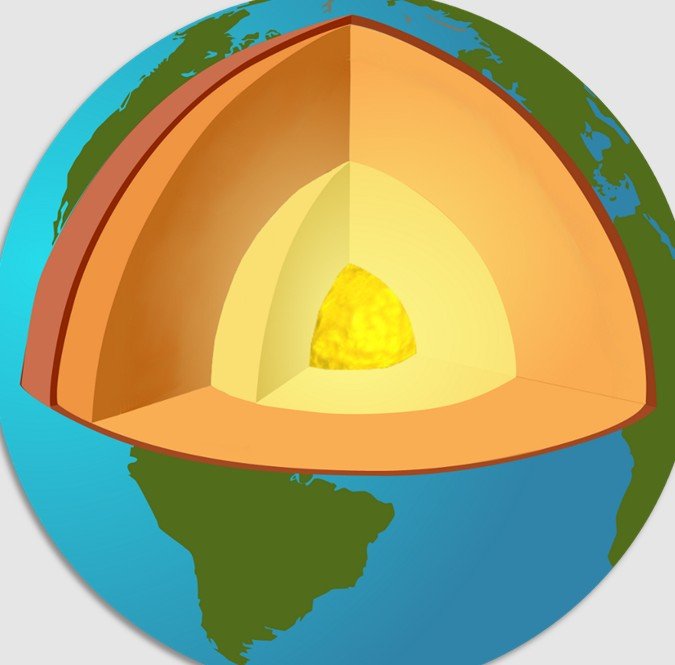
These enormous blobs sit about 1,800 miles under the surface, one below Africa and another under the Pacific. They stretch as wide as continents and rise higher than Mount Everest.
Experts first spotted them decades ago using seismic waves, which slow down when passing through these zones. The waves show the material is denser and hotter than nearby rock.
Recent models suggest these are not random. They formed billions of years ago during Earth’s early days.
The study points to leaks from the core into a basal magma ocean. This mix stopped the mantle from forming clean layers.
How Ancient Leaks Shaped the Planet
Earth started as a hot ball of molten rock after forming about 4.5 billion years ago. As it cooled, a global magma ocean should have separated into distinct layers.
But something went wrong. Silicon and magnesium seeped from the core, mixing with the magma. This created lumpy, uneven areas that persist today.
Miyazaki’s team used computer simulations to test this idea. Their work matches what seismic data shows in 2025.
This process affected how Earth lost heat over time. It influenced volcanoes and the release of gases that built our atmosphere.
Without this mixing, Earth might have ended up like its neighbors. Venus became a hot house of carbon dioxide, while Mars turned into a cold desert.
Clues to Why Earth Supports Life
These mantle structures may explain Earth’s unique setup for life. They helped create a stable climate with water and air.
The study ties them to ocean formation and early volcanic activity. These events released elements needed for life, like carbon and water.
Here are key ways these blobs connect to life’s origins:
-
-
- They slowed cooling, allowing time for chemical reactions that built complex molecules.
- Material from them reaches the surface through hotspots, enriching soil and seas.
- Their presence hints at hidden water reservoirs deep underground, vital for plate tectonics.
-
Experts say this could rewrite books on planetary evolution. It shows internal chaos led to surface stability.
Comparing Earth to Other Worlds
To grasp the impact, look at nearby planets. Earth stands out with its life friendly traits.
| Planet | Atmosphere | Surface | Mantle Features | Habitability |
|---|---|---|---|---|
| Earth | Balanced gases, water vapor | Oceans, continents | Large low velocity provinces | High, supports diverse life |
| Venus | Thick carbon dioxide | Extreme heat, no water | Possible uniform mantle | None, too hot |
| Mars | Thin, mostly carbon dioxide | Dry, frozen | No similar blobs detected | Low, potential past life |
This table highlights how mantle differences lead to varied outcomes. Earth’s blobs may have prevented a runaway greenhouse effect like on Venus.
Recent missions to Mars in 2025 found no such deep structures. This backs the idea that Earth’s messy interior fostered life.
What This Means for Science Today
The findings open doors for new research. Scientists plan to use advanced seismic networks to map these blobs better.
In 2025, projects like the Deep Earth Imaging Initiative aim to probe deeper. They combine AI with earthquake data for clearer pictures.
This work also aids the search for life elsewhere. Understanding Earth’s recipe could help spot habitable exoplanets.
As climate change presses on, knowing our planet’s deep history helps predict future shifts.
Looking Ahead to More Discoveries
These revelations show Earth’s secrets are still unfolding. They remind us that life’s story ties to forces far below our feet.
Share your thoughts on this deep Earth mystery in the comments. What do you think it means for finding life on other planets? Spread the word by sharing this article with friends interested in science breakthroughs.