
A quiet suburb in Georgia is currently the center of a political firestorm. Rumors are swirling that federal authorities plan to turn a massive local warehouse into a detention center for immigrants.
State and federal leaders are demanding answers but getting none. The potential facility could hold double the number of people who currently live in the entire town. Residents are worried about their safety and the future of their community.
Silence from Washington Fuels Local Panic
The Department of Homeland Security has remained silent regarding inquires about a new facility in Social Circle. This lack of transparency has sparked fear among the 5,000 residents who call this town home.
Reports suggest that Immigration and Customs Enforcement (ICE) is scouting a property here. The building in question is a one million square foot warehouse located less than a mile from a local elementary school.
U.S. Senator Jon Ossoff has taken the lead in demanding clarity. He sent a formal letter to DHS Secretary Kristi Noem this week. He is asking for immediate confirmation or denial of these reports.
“We are not getting any transparency,” Ossoff stated in a recent interview.
He expressed frustration that local officials are being kept in the dark. The Senator described the situation as “shrouded in secrecy” and criticized the agency for evading oversight.
Residents are relying on rumors and news reports rather than official notices. This uncertainty is causing anxiety for families who live near the proposed site.
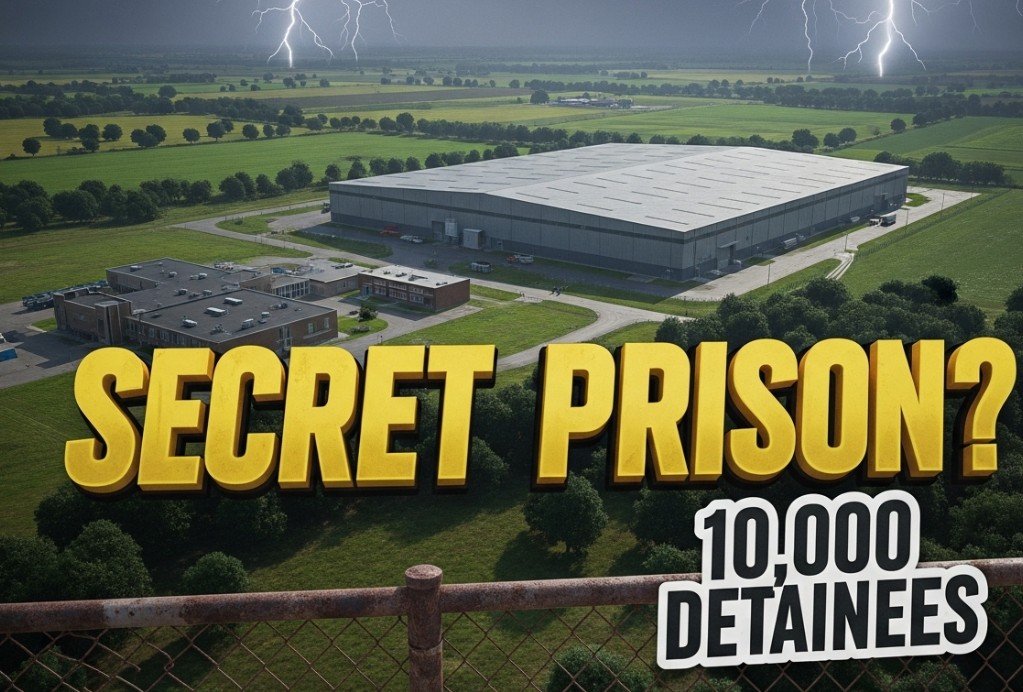
A Small Town Facing a Triple Population Surge
The scale of the rumored facility is staggering compared to the size of the town. Social Circle is a small, tight-knit community with a population of roughly 5,000 people.
If the reports are accurate, the new detention center could house up to 10,000 detainees slated for deportation.
This would effectively triple the population of the area overnight. Local infrastructure is not built to support such a massive increase in people.
Residents are asking serious questions about the logistics of such a site:
- How will this impact local traffic and roads?
- What does this mean for the safety of children at the nearby school?
- Will there be an increased law enforcement presence in the neighborhoods?
- How will this affect property values in the surrounding area?
The sheer volume of detainees would turn the small suburb into one of the largest detention hubs in the country. This contrast between a quiet town and a mega-prison is what drives the local outrage.
Bipartisan Push for Answers in Georgia
The concern over the facility crosses party lines. It is not just a Democratic or Republican issue for the people living here.
Representative Mike Collins, a Republican who represents Social Circle in the House, is also involved. While Collins and Ossoff are potential political rivals for a Senate seat, both face pressure from constituents to get the truth.
Local city leaders have tried to contact federal agencies on their own. They have hit a brick wall.
City officials confirmed they have been unable to learn anything new since the story first broke. The initial report from the Washington Post sparked the inquiry, but official channels have remained silent.
This bipartisan pressure highlights how disruptive this project could be for the local community.
When both sides of the political aisle are asking the same questions, it usually signals a major issue. The silence from DHS suggests that plans may be moving forward behind closed doors.
Community Safety and Economic Concerns
The location of the warehouse is a primary sticking point for opponents. Placing a high-security facility so close to a school violates the norms of community planning.
Parents are particularly vocal about the risks. The thought of thousands of detainees and the associated security operations near a playground is unsettling.
Beyond safety, there are economic worries. While some might argue a new facility brings jobs, the type of facility matters.
Prisons and detention centers often carry a stigma that can hurt local business growth. Social Circle has worked hard to attract positive industrial development in recent years.
Turning a prime industrial warehouse into a detention camp could scare away other investors.
The town has seen growth in its industrial sector recently. Using this space for detention rather than manufacturing feels like a step backward to many locals. They want jobs that build the community, not facilities that lock people up.
The lack of an environmental or economic impact study is also raising alarms. Usually, projects of this size require public hearings and detailed analysis. None of that has happened yet.
It appears the federal government is trying to bypass local input entirely. This “top-down” approach is fueling the anger just as much as the facility itself.
Residents are waiting for the next shoe to drop. Until DHS answers the letter from Senator Ossoff, the town remains on edge.
The rumor of the detention center has united the town in fear and frustration. People in Social Circle feel ignored by the federal government. They are asking for basic transparency about a project that could forever change their home. The safety of their children and the character of their town hangs in the balance.
