Samsung’s biggest flagship redesign in years is no longer an educated guess. Internal test firmware for One UI 8.5 has revealed new official-looking renders of the Galaxy S26, S26 Plus, and S26 Ultra, confirming a major camera island makeover and subtle structural changes across the entire 2026 premium lineup.
The leak, first spotted by Android Authority, came from Samsung’s own development files rather than speculative render artists. That instantly turns the design shift from rumor to reality.
A Camera Island Replaces Floating Lenses
For the first time since the Galaxy S22 series, Samsung is ditching its familiar floating ring lenses. All three S26 models now use a pill-shaped rear camera island with circular lens cutouts housed inside.
The renders were basic — placeholder quality, not final marketing shots — but their presence inside Samsung’s One UI 8.5 firmware makes them the clearest confirmation available so far.
Samsung labels the three new phones internally as:
-
M1: Galaxy S26
-
M2: Galaxy S26 Plus
-
M3: Galaxy S26 Ultra
That alone shows how far along development has progressed.
One sentence fits here — floating-camera design is now officially retired.
The new island resembles the design language seen in Samsung’s Fold series since 2021, suggesting a deeper push toward unified aesthetics across foldables and slab phones.
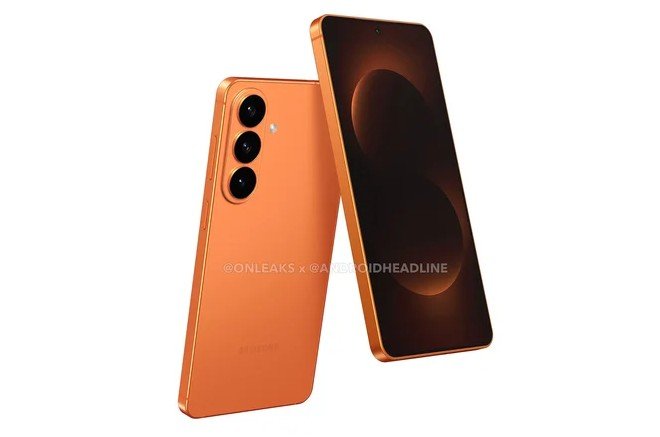
A More Harmonized Family Look
Samsung’s internal “Miracle” project — the codename for the S26 lineup — reportedly focused on consistent visual identity. For several years, Galaxy Ultra phones looked boxier and more Note-inspired, while the smaller models leaned into rounded edges.
That difference is shrinking.
The leaked S26 Ultra render shows softened corners, slightly more rounded than the current S25 Ultra. It feels closer to the S26 and S26 Plus rather than strictly Note-shaped.
A one-sentence breather: that shift could influence how users perceive the Ultra category.
Camera islands, contouring, and lens spacing now appear standardized across all models, something Samsung has never fully executed before.
From the rear, the S26 family looks more like a group than three unrelated devices.
Why Samsung Is Moving Away From Floating Cameras
Floating lenses were bold when Samsung introduced them on the S22 series. The clean, minimalist layout helped distinguish Samsung from iPhones and other Android brands.
But design uniformity across the portfolio has become more important for brand identity.
Some analysts believe Samsung faced internal design pressure:
-
Foldables had their own visual language
-
The S Ultra looked like a Note successor
-
Standard and Plus models were softer and less angular
Too many design directions at once.
The unified island sharpens brand consistency without requiring dramatic mechanical redesigns.
A single-line pause: the Fold family may have influenced Samsung more than expected.
A Clear Firmware Trail Confirms Authenticity
These images did not leak through accessory factories, CAD modelers, or anonymous render channels. They came from the One UI 8.5 test firmware, installed on Samsung internal units used by developers.
That makes authenticity extremely difficult to challenge.
One screenshot inside the firmware presents the low-resolution shells for all three phones, confirming:
-
Shape dimensions
-
Lens placement
-
Island block geometry
-
Material transition points
Marketing renders will eventually look cleaner — glossy promo backgrounds, stronger shadows, and finished textures — but mechanical geometry rarely changes between placeholder design and final production.
A shorter paragraph: Samsung never embeds fake design placeholders inside UI firmware.
That’s why analysts now consider this design confirmed rather than speculated.
One UI 8.5 May Arrive Ahead of Launch
The firmware version itself — One UI 8.5 — also becomes a story. It signals Samsung’s next major interface update is actively being tested on upcoming devices.
Galaxy firmware testing often happens months before release. This matches Samsung’s timeline:
-
S26 announcements usually land early Q1
-
Software enters polishing stage before manufacturing
-
Device marketing begins late December or early January
The leak implies One UI 8.5 is getting close to pre-release status — perhaps for Galaxy S26 beta builds.
One line for pacing: more previews could appear before CES or Samsung’s January event window.
Why This Design Matters for Samsung’s Flagship Strategy
Samsung’s identity has been stretched for years by having:
-
Foldables with a strong camera island identity
-
Ultra phones with a boxier Note identity
-
Smaller S models with different silhouettes
The S26 brings them together, at least visually from the rear.
Unifying design signals that Samsung wants a top-of-line identity recognizable at a glance, the way iPhones do with their consistent camera framing.
A short break sentence: branding is easier when all premium phones look like siblings.
Some industrial designers argue that floating lenses had become harder to scale with multiple sensors, periscopes, or stabilization housings. A structured camera island offers more flexibility, especially when higher optical zoom modules grow in size.
What About Hardware Specs?
The leak shows design, not specifications. Firmware images are rarely tied to final processor blocks, battery sizing, display refresh, or camera megapixels.
But a few reasonable expectations circulate among insiders:
-
Ultra models could extend periscope zoom further
-
Standard models may adopt higher main-sensor stabilization
-
Display coherence across the family might improve brightness uniformity
None of this is confirmed by firmware files — they reveal hardware structure, not detailed specs.
A compact line: design is the beginning of the story, not the end.
Looking Ahead: Market Reactions Will Be Interesting
Design shifts often divide users. Some loved floating lenses for their clean minimalism. Others preferred islands because they feel visually practical and easier to protect with cases.
Android accessory makers will welcome it — islands offer more consistent case mold designs and reduced misalignment risk.
Phone collectors and photographers will care more about optical hardware than cosmetic framing, but the new island could accommodate larger sensors and smoother stabilization modules.
Samsung’s internal objective seems straightforward: make its premium lineup look premium in a unified way.
A closing pace sentence: all eyes now turn to Samsung’s official event window.