A major geological breakthrough has emerged from the dust of Rajasthan. Scientists studying the Ramgarh crater have discovered microscopic magnetic particles hidden deep within the soil. These tiny clues presented at a major global science conference might finally confirm the origin of the massive space rock that smashed into Earth. It could solve a mystery held for thousands of years in the Baran district.
This discovery changes how we look at India’s geological history. The presence of these particles suggests a violent collision from the distant past. Researchers believe this finding brings them one step closer to identifying the exact type of asteroid responsible for the impact.
New Evidence Found in Crater Soil
Researchers recently conducted a detailed analysis of the soil inside the Ramgarh structure. They dug two shallow trenches to collect fresh sediment samples for testing. The team collected around 30 distinct samples from different layers of the earth.
The goal was simple.
They wanted to find material that does not belong to the local rock formations. The team used advanced magnetic separation techniques to isolate specific grains from the dirt. What they found was remarkable. The samples contained tiny magnetic spherules.
These are not ordinary dust particles.
This indicates they formed during a high-velocity impact event. When a meteor hits the ground, the heat melts both the rock and the space object. This molten material flies into the air and cools down rapidly. It falls back to earth as microscopic round spheres.
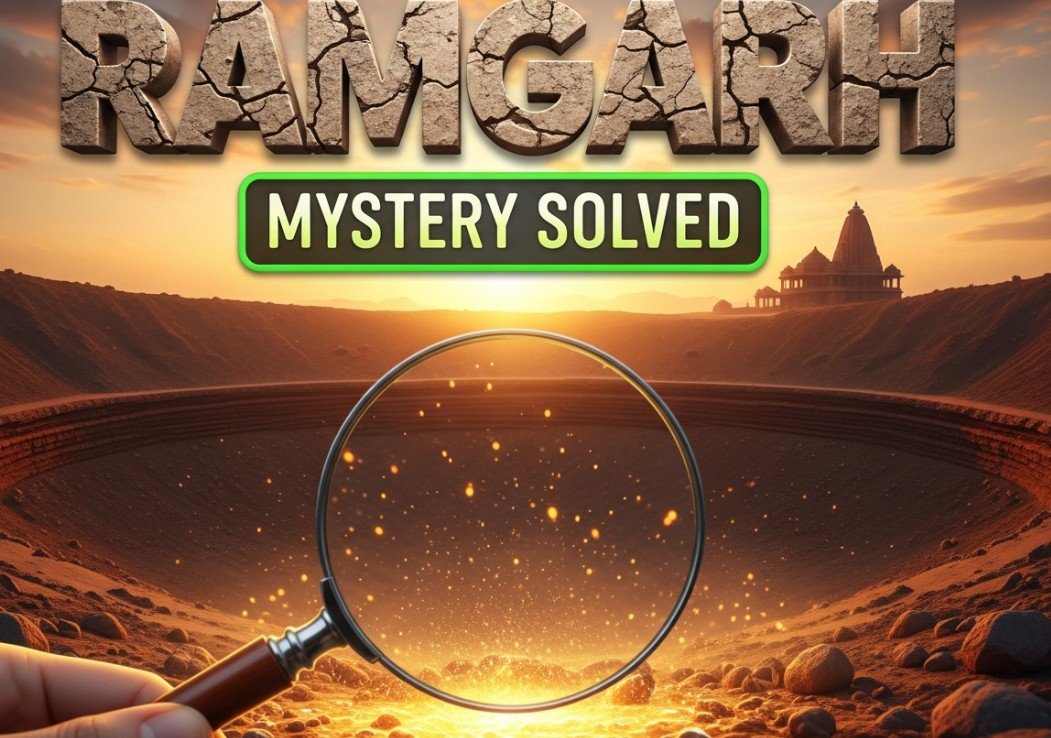
Finding these spheres is like finding a fingerprint at a crime scene. It proves that something massive and metallic exploded at this location.
Key Details of the Discovery
- Location: Ramgarh Village, Baran District, Rajasthan.
- Sample Depth: Shallow trench excavation.
- Key Find: Magnetic spherules and particles.
- Significance: Evidence of high-temperature impact melting.
Decoding the Asteroid Type
The discovery does more than just prove an impact happened. It helps scientists figure out what kind of object hit us. Most asteroids are made of stone, metal, or a mix of both. The magnetic properties of the new samples point toward a specific class of space rocks.
If the particles are rich in iron, the impactor was likely an iron meteorite. This type of asteroid is denser and causes significant damage even at smaller sizes. The findings were shared at the Lunar and Planetary Science Conference (LPSC) 2026.
Global experts are now reviewing the data. This validation is crucial for Ramgarh.
Why does this matter?
Knowing the asteroid type helps scientists model the ancient crash. They can estimate how fast it was traveling and the angle at which it struck. This data helps planetary defense experts understand the damage potential of similar objects today.
The scientific community has waited decades for this level of detail. Previous studies relied mostly on satellite images and basic rock surveys. This chemical evidence is much harder to dispute.
History of the Ramgarh Structure
The Ramgarh crater is not a new feature on the map. It is a circular landform with a diameter of about 3.5 kilometers. It rises visibly above the surrounding flat plains of Rajasthan.
Locals have lived near it for centuries without knowing its cosmic origin.
The crater is often called the “Bhand Deva” structure. It is named after the 10th-century Shiva temple located in the center. This temple was built in the Khajuraho style and sits right inside the impact zone.
The connection between geology and history here is unique. Ancient builders likely chose this spot because of its unusual raised rim and circular shape. They treated the unique landscape as a sacred site.
India’s Confirmed Impact Craters
| Crater Name | Location | Diameter | Status |
|---|---|---|---|
| Lonar | Maharashtra | 1.8 km | Confirmed |
| Dhala | Madhya Pradesh | 11 km | Confirmed |
| Ramgarh | Rajasthan | 3.5 km | Strong Evidence |
Ramgarh has struggled to get the same official recognition as Lonar crater in Maharashtra. Lonar is famous worldwide for its saline lake and clear impact signs. Ramgarh is dry and heavily eroded. This makes it harder to study.
The new magnetic data might finally push Ramgarh onto the confirmed list. It would make it the third confirmed impact crater in India.
Future Implications for Science
This discovery opens new doors for tourism and education in Rajasthan. Confirmed impact craters are rare geological treasures. They attract students, geologists, and tourists from all over the world.
The local government could develop the area as a geo-heritage site. This would protect the crater from damage and illegal mining. It would also boost the local economy in the Baran district.
Scientists are not stopping here.
The team plans to drill deeper into the crater floor. They want to find the “breccia” layer. This is a layer of broken and melted rock that sits below the surface sediments. Finding this layer would be the final piece of the puzzle.
We are living in an exciting time for planetary science. Technology allows us to read the history written in the dirt under our feet.
The tiny particles found at Ramgarh tell a story of cosmic violence. It is a reminder that our planet is part of a larger, active solar system. The rocks in Rajasthan are whispering secrets from space. It is up to us to listen to them.