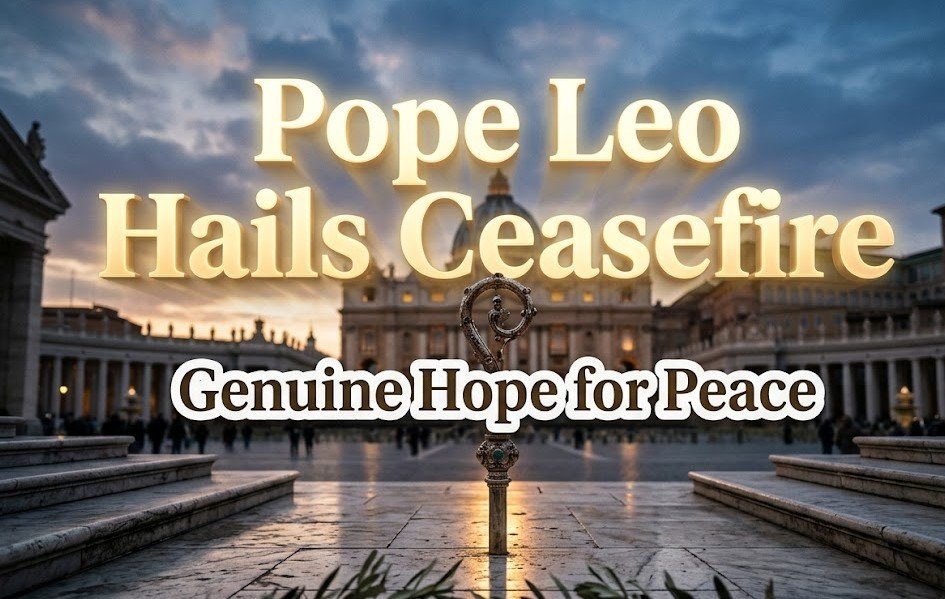
Pope Leo XIV has welcomed the new ceasefire between Iran and the United States as a sign of genuine hope. After hours of extreme tension that threatened to pull the region into deeper conflict, the pope called for leaders to return to the negotiating table. His words offered comfort to many watching the crisis unfold.
The pontiff made his remarks on April 8 right after his weekly general audience in St. Peter’s Square. He urged the faithful to pray for peace and invited them to join a special vigil on April 11.
Pope Urges Leaders to Choose Dialogue Over Conflict
Only by returning to negotiations can the war be brought to an end. Pope Leo spoke these words clearly in Italian as he addressed the crowd. He described the ceasefire as a positive step after days of worry that affected people far beyond the Middle East.
The pope has consistently pushed for peace in recent weeks. His appeal comes at a time when many families in the region live in fear. He reminded everyone that true solutions come through talk, not force. This message carries extra weight because Pope Leo is the first pope from the United States, giving him a unique perspective on tensions involving his home country.
He also used the moment to reflect on holiness during the Easter season. Flowers decorated the steps of St. Peter’s Basilica as he spoke about how every baptized person shares a call to live in God’s grace. Yet the focus quickly returned to the urgent need for peace.
What Sparked the Ceasefire and Why It Matters
The two-week ceasefire took shape just hours before a deadline set by US President Donald Trump. On April 7, Trump had warned that Iran must reopen the Strait of Hormuz to oil and gas tankers or face severe consequences. He spoke of destroying critical infrastructure and used strong language about the potential cost to Iranian society.
The agreement narrowly avoided further escalation. The Strait of Hormuz serves as a vital passage for global energy supplies. Any long closure would disrupt oil flows and shake economies around the world. Leaders on all sides recognized the danger and stepped back from the edge.
Pope Leo had already voiced concern the evening before at Castel Gandolfo. He told journalists the threat against the entire people of Iran was truly unacceptable. He pointed out that while international law plays a role, the deeper issue remains moral. Protecting innocent lives must come first.
Moral Questions Raised by Threats of Destruction
The pope stressed that actions threatening whole populations go against basic human values. He warned that such moves could spark greater instability and feed cycles of hatred. His comments highlighted the human suffering already visible in the region, from displaced families to damaged communities.
Many observers noted the speed of events. Trump’s deadline created intense pressure. The ceasefire announcement brought immediate relief but also questions about what comes next. Will this short pause lead to real talks, or will old problems return once the two weeks end?
Pope Leo called on ordinary people to get involved. He encouraged citizens to contact their political leaders and advocate for peaceful solutions. This grassroots approach shows his belief that peace requires effort from everyone, not just those in power.
Global Economic Risks and the Path Forward
The conflict carries risks that reach every corner of the planet. A major disruption in energy supplies could trigger higher prices and economic uncertainty. The pope spoke of great instability that might worsen divisions between nations and within societies.
He invited the faithful to join him in prayer. The upcoming vigil on April 11 offers a chance for believers to come together for peace. During his audience, he balanced the serious news with a message of hope rooted in faith.
This moment tests the world’s ability to step back from conflict. The ceasefire provides breathing room. Yet the pope made clear that lasting change demands commitment to dialogue and respect for human dignity.
In these uncertain times, Pope Leo’s voice reminds us that hope can emerge even from the darkest hours. Leaders have a narrow window to build something better. Ordinary people everywhere can support that effort through prayer and advocacy for peace. The coming days will show whether this genuine hope turns into real progress for the region and the world.
What are your thoughts on the pope’s call for dialogue in the Middle East? Share your opinions in the comments below. Your perspective matters as we watch how this ceasefire unfolds.