
Elon Musk has officially integrated his aerospace giant SpaceX with his artificial intelligence venture xAI to tackle the global energy crisis.
This massive strategic shift aims to move power-hungry AI training operations off the surface of the Earth. The billionaire entrepreneur claims that space-based solar power and orbital cooling systems are the only viable path forward for the future of computing.
A Strategic Union for The Future
Elon Musk announced the acquisition of xAI by SpaceX in a statement released earlier today. This merger effectively turns the rocket company into a vertically integrated AI infrastructure firm. The primary goal is to bypass the limitations of Earth’s power grids.
The tech industry is currently facing a massive bottleneck.
Artificial intelligence models are consuming electricity at an alarming rate.
Data centers on Earth are struggling to find enough power to run the latest generation of supercomputers. Musk stated that scaling these operations on the ground would soon impose “hardship on communities and the environment.”
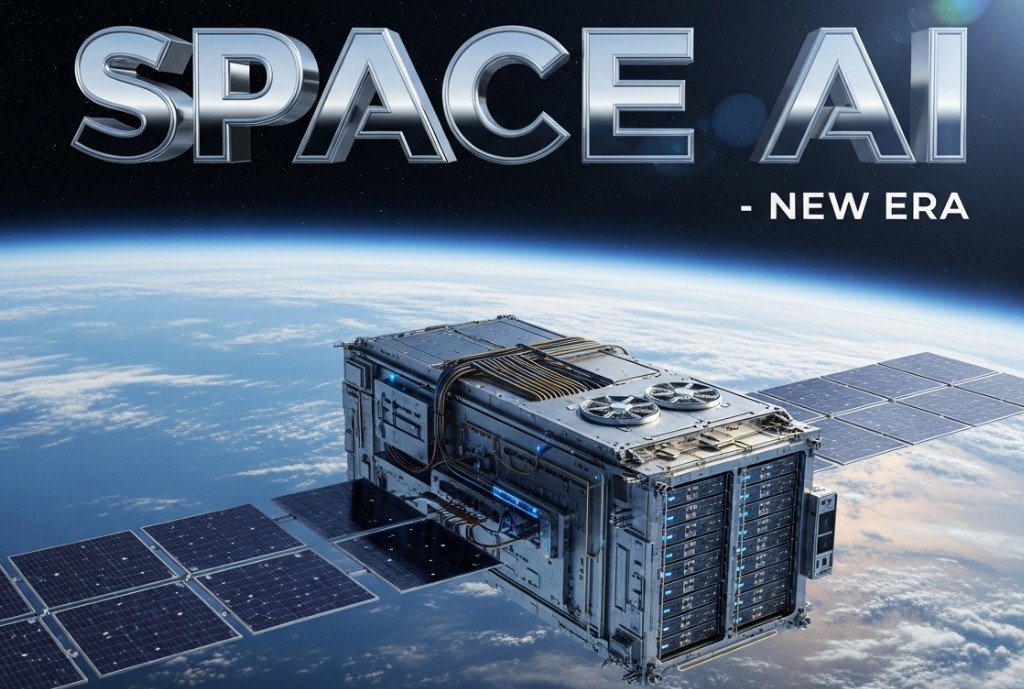
By bringing xAI under the SpaceX umbrella, the company plans to utilize the massive lift capacity of the Starship rocket. This launch vehicle is the only rocket in existence capable of hauling heavy server racks and cooling equipment into orbit at a commercially viable price.
This move signals a new era where space is not just for exploration. It is becoming the engine room for the digital economy.
Solving The Energy Bottleneck
The decision to look to the stars for computing power is driven by hard data.
Recent reports indicate that AI energy demand is projected to skyrocket in the coming years.
- Global Surge: The International Energy Agency expects data center electricity consumption to double by 2026.
- Grid Strain: Major utility providers in the US are already warning of brownouts due to the load from AI server farms.
- Water Usage: Earth-based data centers consume billions of gallons of water annually for cooling.
Moving these centers to space eliminates the strain on terrestrial resources.
In orbit, a data center can access the sun 24 hours a day without atmospheric interference. The solar intensity in space is significantly higher than on the ground. This allows for constant, clean energy generation without the need for battery storage to last through the night.
Musk emphasized that capturing even a tiny fraction of the sun’s output in space exceeds our civilization’s total energy capability.
Technical Feasibility and Starship
The merger relies entirely on the success of the Starship launch system.
Traditional rockets are too small and too expensive for this task. However, Starship is designed to carry over 100 tons to low Earth orbit. This capacity is essential for lifting heavy AI processors and the massive radiators required to cool them.
Cooling remains the most complex engineering challenge.
On Earth, we use air or water to cool servers. In the vacuum of space, you cannot use fans. Heat must be expelled through radiation.
SpaceX engineers are reportedly designing foldable radiator panels. These panels will expand once in orbit to release waste heat into the freezing void of space. The absence of atmosphere means there is no ambient heat to fight against, making the cooling process efficient once the radiator infrastructure is in place.
The company predicts that within two to three years, the cost per unit of compute in space will be lower than on Earth. This is due to free solar energy and the elimination of expensive land and water costs.
Risks and Industry Skepticism
While the vision is bold, the timeline faces significant hurdles.
Critics point out that electronics in space face harsh conditions. Cosmic radiation can flip bits in computer memory and damage sensitive processors. Shielding these computers adds weight and complexity to the launch.
Latency is another major concern for users.
Data takes time to travel from Earth to orbit and back. While this might be acceptable for training AI models, which takes months, it could be too slow for real-time consumer interactions.
However, Musk argues that the primary use case is “training runs.” These are the massive computational tasks that teach an AI how to think. Since this process does not require instant interaction with a human, the slight delay in data transmission is irrelevant.
SpaceX plans to test a small-scale prototype server on an upcoming Starship flight later this year. If successful, this could mark the beginning of the off-world industrial revolution.
The race to build the orbital cloud has officially begun.
