
A cracked window aboard China’s Shenzhou-20 spacecraft has once again pushed space debris into the global spotlight. The incident has revived old worries about how safe human activity in orbit really is, as tiny, fast-moving objects continue to test the limits of spacecraft design.
It’s a problem engineers know well. It’s also one that keeps getting harder.
A near-miss that grabbed the world’s attention
The recent damage to a window on Shenzhou-20 did not end the mission, but it did ring alarm bells far beyond China’s space program.
A single strike. No injuries. No loss of control. Still, it was enough.
At orbital speeds, even something the size of a grain of sand can behave like a bullet. Space agencies don’t need dramatic explosions to worry. A small crack is already a warning.
Incidents like this remind mission planners that danger in orbit isn’t always visible on radar screens. Much of it is invisible, untrackable, and moving far faster than intuition allows.
This combined hazard has a name. Micrometeoroids and Orbital Debris, or MMOD.
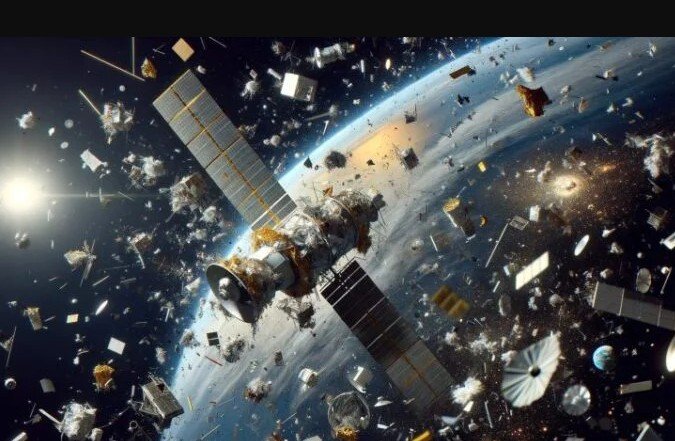
What exactly MMOD means, in plain terms
MMOD refers to two different threats that share one ugly trait: speed.
Micrometeoroids are natural particles left behind by comets or collisions between asteroids. Orbital debris, on the other hand, is human-made. Dead satellites, fragments from old rockets, pieces created by collisions or weapons tests. All of it circles Earth at terrifying velocities.
In Low Earth Orbit, where most crewed missions operate, debris typically travels around 10 kilometers per second. Micrometeoroids can move much faster, up to 72 kilometers per second.
At those speeds, size stops mattering.
A paint fleck can punch through metal. A millimeter-scale fragment can rip into pressurized cabins. And most of these objects are too small to track in real time.
Space agencies estimate more than 34,000 debris objects larger than 10 centimeters are actively tracked today. Hundreds of millions more are out there, unseen.
They don’t announce themselves. They just arrive.
Where the danger is greatest
Most orbital debris is packed into Low Earth Orbit, roughly between 200 and 2,000 kilometers above the planet. That’s the same neighborhood used by the International Space Station, Earth-observation satellites, and many crewed spacecraft.
Micrometeoroids don’t respect orbital lanes. They move through interplanetary space, with Earth’s gravity pulling some into higher-risk paths near the planet.
Spacecraft face the greatest danger on their forward-facing surfaces, where relative speeds peak. Engineers design shielding with this in mind, layering materials to absorb and disperse impact energy.
But shields have limits. And mass is expensive to launch.
The longer a mission lasts, the more exposure builds up. Months turn into years. Risk compounds quietly.
Why debris keeps multiplying
One of the most worrying aspects of MMOD is the feedback loop it creates.
When two objects collide in orbit, they don’t just disappear. They shatter. One impact becomes hundreds or thousands of new fragments, each capable of triggering another collision.
This chain reaction is known as Kessler Syndrome. It’s not science fiction. It’s math.
Several high-profile collisions and anti-satellite tests over the past two decades have already added long-lived debris to busy orbital zones. Some fragments will remain aloft for decades. Others for centuries.
That persistence matters. Space doesn’t clean itself up.
Once debris density crosses certain thresholds, avoiding collisions becomes harder, not easier.
How astronauts and satellites are affected
For astronauts, MMOD is a direct safety concern. Crewed spacecraft and space stations rely on layered shielding, careful orientation, and constant monitoring.
Even so, impacts still happen.
Windows are among the most vulnerable components. They must remain transparent, strong, and lightweight. A single strike can force inspections, repairs, or even early mission changes.
For satellites, the stakes are different but just as serious. A hit can knock out communications, degrade sensors, or end a mission outright.
Collision-avoidance maneuvers are now routine. Satellites burn fuel to dodge tracked debris, shortening their operational lives. Operators must weigh risk against mission goals, often with incomplete data.
Here’s a snapshot of how MMOD affects different assets:
| Asset Type | Primary Risk |
|---|---|
| Crewed spacecraft | Hull breach, cabin damage |
| Space stations | Long-term structural wear |
| Communication satellites | Signal loss, mission failure |
| Navigation systems | Service disruption |
| Earth observation | Data gaps, sensor damage |
Each avoidance maneuver costs fuel. Each fuel burn reduces lifespan. The economics add up fast.
Why tracking isn’t enough
Modern radar and optical systems do an impressive job tracking large debris. But most MMOD particles are simply too small.
That forces space agencies to rely on probability rather than certainty.
Engineers calculate risk envelopes. They design shielding based on models. They accept that some impacts are inevitable.
That acceptance is uncomfortable, especially as more countries and companies launch satellites. Mega-constellations promise better connectivity on Earth, but they also crowd orbital lanes.
The more objects in orbit, the tighter the margins become.
This is why recent incidents, like the Shenzhou-20 window damage, resonate so strongly. They are visible proof of an invisible problem.
Global concern, limited global rules
There is no single authority governing orbital debris.
Agencies like NASA, ESA, and others follow debris-mitigation guidelines. Satellites are designed to deorbit at end of life. Launch providers try to minimize leftover fragments.
But guidelines aren’t binding law. And enforcement is weak.
As space activity accelerates, coordination struggles to keep pace. National interests, commercial competition, and security concerns complicate cooperation.
Everyone agrees debris is bad. Agreement on who pays to clean it up is another matter.
Why MMOD shapes the future of spaceflight
Unchecked debris growth doesn’t just threaten current missions. It shapes what comes next.
If key orbits become too risky, future exploration plans face constraints. Crewed missions, space tourism, and large infrastructure projects depend on predictable, safe orbital environments.
MMOD turns space into a more expensive, more hazardous place to work.
That reality is already influencing design choices, insurance costs, and mission planning.
The cracked window on Shenzhou-20 didn’t change the equation. But it reminded the world that the equation is still unsolved.
