
Joe Root walked off the Sydney Cricket Ground to warm applause and a page of history tucked under his arm. His 41st Test century pulled him level with Ricky Ponting on the all-time list, yet by stumps on day two, the story had shifted. Australia, sparked by Travis Head, dragged the fifth Test back into a tense balance.
England’s senior batter did his job, and more. But cricket, as always, had other plans.
Root’s hundred carries weight, history, and timing
Resuming on 72 after a rain-hit opening day, Joe Root looked calm, almost casual, in the morning session.
The pitch had its moods. Some balls stayed low, others kicked. Australia bowled with more bite than the day before. None of it rattled him.
Root nudged singles early, waited for width, and kept the scoreboard ticking. It felt familiar, almost routine, which is exactly what makes his longevity startling.
By lunch, he was 138 not out.
That innings took him to 41 Test hundreds, drawing him level with Ricky Ponting in equal third on the men’s all-time list. Only Jacques Kallis and Sachin Tendulkar sit above now.
Ponting, seated in the stands at the Sydney Cricket Ground, rose to acknowledge the moment. No speeches. Just a nod, one great to another.
Root’s milestone also nudged him closer to 14,000 Test runs, a figure that once seemed unreachable for players of his era.
He made it look, well, normal.
Holding England together as wickets tumble
While Root settled in, chaos flickered at the other end.
Harry Brook played one of those innings that sits between brilliance and impatience. His 84 was full of intent, sharp cuts, bold drives, and then, suddenly, it was over.
Ben Stokes lasted just a ball. A golden duck. The crowd barely had time to react.
Jamie Smith, though, gave Root some breathing room. His 46 was scrappy, honest, and valuable. He blocked, he poked, he ran hard. Sometimes that’s all you need.
Still, the pattern was clear. England lost wickets in clusters.
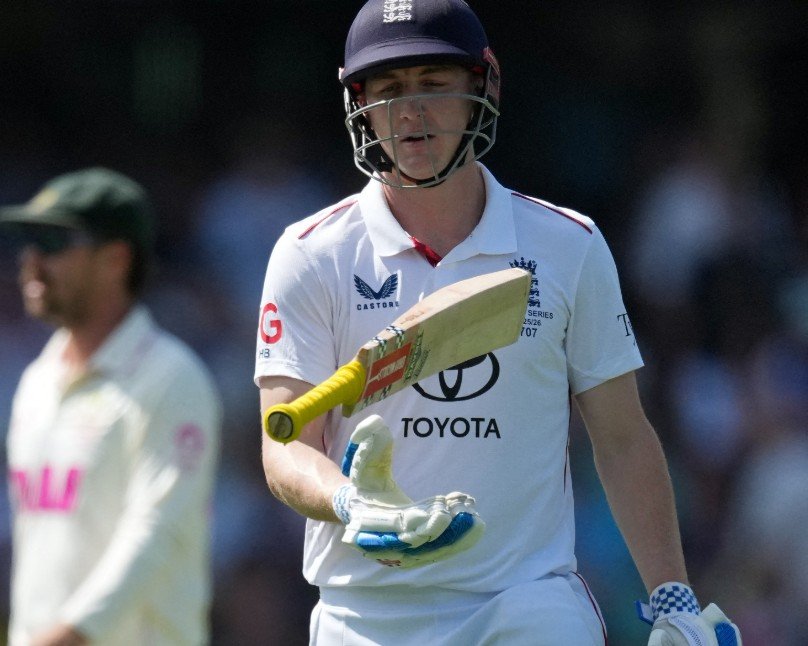
Root adapted. When partners fell, he slowed things down. When bowlers tired, he pressed again. It was Test batting stripped to its basics.
In the second session, he eased past 150 with a gentle push into the covers. No raised bat theatrics. Just business.
Eventually, on 160, his watch ended.
Michael Neser produced a moment of pure athletic instinct, leaping to his left for a sharp caught-and-bowled. Root stood for a second, hands on hips, then walked off. Applause followed him all the way.
England had a platform. Australia had an opening.
Australia’s response begins with Head
The mood shifted quickly once Australia began their reply.
There was urgency now, and maybe a bit of edge.
At the center of it stood Travis Head, who has made a habit of changing games in short bursts.
Head didn’t hang around. He drove on the up. He pulled anything short. He swept when spinners dared to toss it up.
The scoreboard moved fast enough to quiet the English fielders.
This wasn’t reckless hitting. It was calculated aggression, the kind that forces bowlers to rethink plans mid-over.
Australia’s middle order followed with purpose, turning what looked like a tricky response into a proper counterpunch.
By stumps, the hosts had erased a good chunk of England’s advantage.
Not all of it. But enough to keep everyone guessing.
Numbers, context, and what that century really means
Root’s hundred wasn’t just another line in a record book.
Here’s why it matters, especially now:
-
His 41 Test centuries place him alongside Ponting, achieved in fewer matches.
-
He is within touching distance of 14,000 Test runs, a milestone reached by only a handful in history.
-
This was his first Test hundred in Sydney, completing a quiet personal box-tick across major venues.
Those numbers carry weight in dressing rooms, not just headlines.
They also underline how Root has quietly reshaped England’s batting story in an era of shorter formats and restless attention spans.
Test cricket asks for patience. Root keeps paying the price, year after year.
A Test match finely balanced, and slightly edgy
By the close of day two, neither side owned the narrative outright.
England had Root’s runs, a solid first-innings total, and bowlers who know how to exploit tired legs.
Australia had momentum, crowd energy, and batters who look ready to swing the contest in a session.
The pitch remains unpredictable. Some deliveries misbehave. Others skid through.
Fielding standards are high. Tempers, just beneath the surface.
And looming over all of it is the sense that this Test, the last of the series, doesn’t want to drift quietly into the record books.
It wants a moment.
Maybe a collapse. Maybe a counterattack. Maybe a spell that turns everything upside down.
Root has already had his say. Ponting has nodded his approval.
