
Apple’s latest flagship is suddenly far more reachable. The iPhone 17 Pro, typically priced well above the psychological ₹1 lakh mark, is now effectively available for ₹85,500 on Amazon after exchange benefits, reshaping how premium smartphones are being priced during India’s festive retail cycle.
A steep cut driven by exchange mechanics
The 256GB variant of the Apple iPhone 17 Pro is currently listed on Amazon at a standard price of ₹1,34,900.
That number, however, is no longer the real story.
Amazon’s exchange programme allows buyers to trade in eligible older smartphones and receive a discount that can stretch as high as ₹49,500, depending on the model, condition, and serviceability at the delivery location.
Once the maximum applicable exchange value is applied, the effective checkout price drops to ₹85,500.
That shift is not subtle.
It places the iPhone 17 Pro much closer to upper-midrange Android pricing than to the ultra-premium bracket Apple usually occupies in India.
Retail analysts say this reflects a broader push by online platforms to stimulate high-value purchases without cutting the list price directly.
How the exchange deal actually works
Amazon’s exchange structure is simple on paper but variable in practice.
Customers select an eligible smartphone during checkout, confirm its condition, and receive an instant discount applied to the order total. The final valuation is verified during delivery.
A single sentence matters here. The quoted exchange value is conditional.
Several factors influence the final amount, including physical wear, screen damage, battery health, and whether the device powers on.
The delivery pincode also plays a role, as exchange services are not uniformly available across all regions.
At its upper end, though, the offer dramatically reduces the barrier to entry for Apple’s latest Pro device.
For many buyers, this is the first time the iPhone 17 Pro sits within practical reach.
Display and design: compact, bright, and polarising
Apple has stuck with a relatively compact profile for the iPhone 17 Pro, a choice that continues to divide opinion.
The phone features a 6.3-inch Super Retina XDR OLED display with HDR10 support and a 120Hz refresh rate. Peak brightness is rated at up to 3,000 nits in outdoor conditions, placing it among the brightest smartphone displays currently available.
Fingerprint-resistant coating helps with daily usability, though smudges never disappear entirely.
Some users praise the manageable size, especially compared with larger “Ultra” class phones.
Others still want more screen.
That tension has followed Apple’s Pro lineup for years, and the 17 Pro does little to settle it.
What it does offer is visual consistency. Smooth scrolling. Sharp contrast. And excellent outdoor readability, which matters in Indian conditions.
Performance backed by Apple’s latest silicon
Under the hood, the iPhone 17 Pro runs on Apple’s A19 Pro Bionic chipset.
Built on TSMC’s 3nm process, the processor features a six-core CPU with two performance cores and four efficiency cores.
Paired with 8GB of RAM, the phone handles demanding workloads comfortably, from gaming to heavy multitasking.
Thermal performance has also been a point of focus this generation, according to early hands-on impressions, with fewer reports of throttling under sustained load.
Storage options include 256GB and 512GB variants, though the exchange deal highlighted on Amazon currently applies to the 256GB model.
For most users, that capacity strikes a balance between cost and longevity.
Especially in a device expected to receive long software support.
Cameras remain Apple’s quiet strength
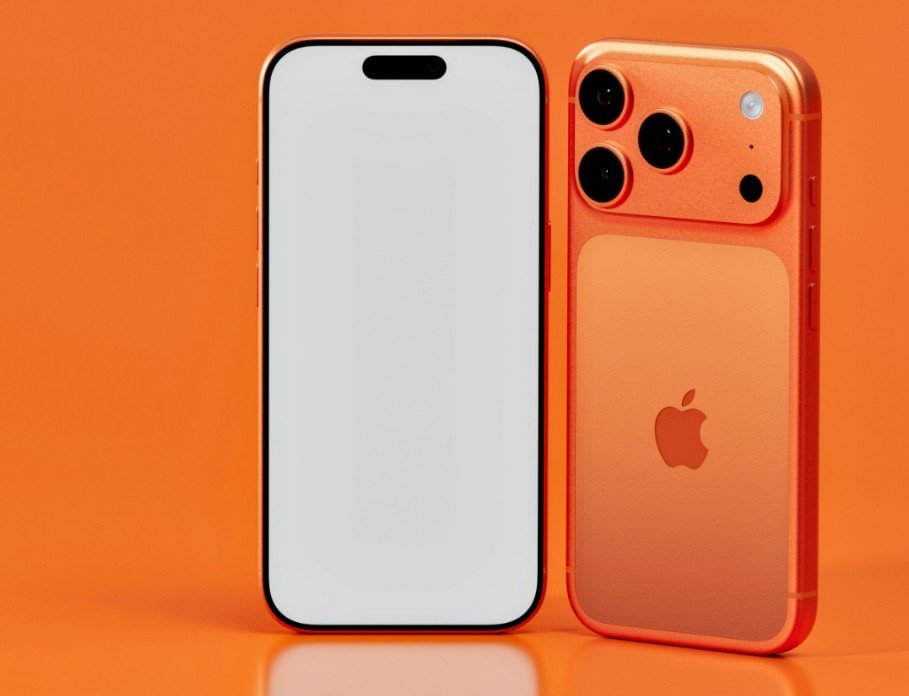
The camera system on the iPhone 17 Pro sticks to a familiar three-sensor layout.
All three rear cameras are 48MP units: a primary wide sensor, an ultra-wide lens, and a telephoto camera.
Apple claims improved computational photography across all lenses, with better low-light consistency and more accurate color rendering.
The telephoto system supports optical zoom, while the ultra-wide lens now plays a larger role in macro and environmental shots.
On the front, the phone features an 18MP camera aimed at sharper video calls and selfies.
Camera hardware alone rarely tells the full story with iPhones.
It is the software tuning, particularly in video and portrait modes, that continues to attract creators and professionals.
That has not changed here.
Why this pricing move matters in India
Apple’s pricing strategy in India has long been a balancing act between aspiration and affordability.
While local assembly has helped narrow the gap, flagship iPhones still launch at prices out of reach for most buyers.
Exchange-driven discounts change the equation without devaluing the product on paper.
They reward existing smartphone owners, particularly those upgrading from older premium devices.
They also keep Apple’s brand positioning intact.
Industry watchers note that such aggressive effective pricing tends to appear when inventory pipelines are stable and demand needs a nudge.
It also reflects growing competition from Android brands offering premium features at lower price points.
Apple does not often chase volume in India.
But it does not ignore momentum either.
A familiar pattern in festive online sales
This is not the first time Amazon has leaned heavily on exchange mechanics to push premium phones.
Similar strategies were seen with earlier iPhone generations, especially around year-end sales periods.
What stands out this time is the scale of the discount.
Dropping from ₹1,34,900 to ₹85,500 shifts the iPhone 17 Pro into a different mental category for buyers.
It becomes a considered purchase rather than a stretch.
That psychological shift often matters more than the numbers themselves.
Retail data from previous years shows exchange-backed deals tend to drive higher conversion rates than flat discounts.
People like the feeling of upgrading, not just buying.
What buyers should keep in mind
While the headline price is attractive, the final amount depends on accurate condition assessment of the old device.
Any mismatch during pickup can reduce the discount.
Delivery timelines may also vary based on exchange verification.
There is also the matter of bank offers, which fluctuate independently and may stack or disappear without notice.
Still, the core takeaway remains unchanged.
The iPhone 17 Pro is, for now, significantly cheaper than its list price suggests.
That alone makes this deal notable in India’s premium smartphone market.
