
India has crossed a symbolic and economic milestone, overtaking Japan to become the world’s fourth-largest economy. The shift reflects years of steady growth that appears to be accelerating, pushing India closer to a rank once thought to be decades away.
A Ranking Change Years in the Making
According to India’s end-of-year economic review, the country’s gross domestic product has climbed to roughly $4.18 trillion, edging past Japan and placing India behind only the United States, China, and Germany.
The review suggests the gap with Germany may not last long. On current trends, India could become the world’s third-largest economy within the next three years.
That projection would have sounded ambitious not long ago. Now, it’s being discussed in official documents.
Still, there’s a technical caveat. Final confirmation depends on full annual GDP data due in 2026, meaning global institutions may validate the ranking slightly later. Even so, momentum is clearly on India’s side.
How Fast Is India Actually Growing?
India’s recent growth numbers help explain the confidence.
Real GDP expanded 8.2% in the second quarter of the 2025–26 financial year, up from 7.8% in the previous quarter. That marked a six-quarter high, reinforcing the view that economic activity has picked up faster than expected.
The Reserve Bank of India has taken notice. It revised its full-year growth forecast upward to 7.3%, signaling confidence that domestic demand and investment can offset global uncertainty.
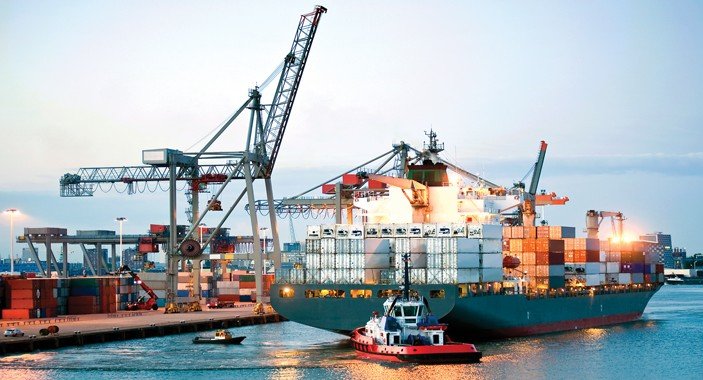
Exports are adding to the picture. Merchandise exports rose to $38.13 billion in November, compared with $36.43 billion earlier in the year, driven by engineering goods, electronics, pharmaceuticals, and petroleum products.
These aren’t one-off spikes. Officials say the trend reflects deeper shifts in production and competitiveness.
Domestic Demand Is Doing the Heavy Lifting
Unlike export-led booms seen elsewhere, India’s growth story is being powered mainly from within.
Private consumption has remained strong, supported by rising incomes, urban demand, and steady credit availability. Government spending and capital investment have also played a role, particularly in infrastructure.
The review describes the current phase as a rare “Goldilocks” moment. Growth is strong. Inflation is relatively contained. Corporate balance sheets are healthier than they were a decade ago.
That combination matters. It gives policymakers room to keep pushing reforms without triggering immediate instability.
One line from the review stands out: India is among the world’s fastest-growing major economies and is positioned to sustain that pace.
Why Japan Slipped Behind
Japan’s economy hasn’t collapsed. It’s stagnated.
Years of low growth, an aging population, and weak domestic demand have kept Japan’s GDP expanding slowly in nominal terms. Currency movements have also played a role, making comparisons in dollar terms less favorable.
India, by contrast, is benefiting from demographics, urbanization, and a still-growing workforce. While per capita income remains far lower than Japan’s, total output has surged as the population and consumption base expanded.
This is a reminder that size and prosperity are not the same thing.
India is bigger. Japan remains richer on a per-person basis.
What Comes Next: Germany in Sight
The government review projects India’s GDP could reach about $7.3 trillion by 2030. If current trends hold, only the United States and China would remain ahead.
Europe’s largest economy, Germany, now sits in the crosshairs.
The International Monetary Fund has also suggested India may surpass Japan officially next year, lending weight to New Delhi’s claims.
Germany’s growth has been sluggish, weighed down by energy transitions, industrial restructuring, and geopolitical shocks. India, meanwhile, continues to post expansion rates that advanced economies struggle to match.
The race isn’t guaranteed. But it’s no longer theoretical either.
The “Goldilocks” Phase, Explained
The government’s use of the term “Goldilocks” is deliberate.
Inflation, while not negligible, has stayed within manageable bounds. Credit growth remains steady rather than overheated. Corporate leverage has improved compared to the stressed balance sheets of the mid-2010s.
At the same time, reforms in taxation, insolvency resolution, and digital infrastructure have reduced friction in the economy.
This mix has allowed growth to feel broad-based rather than fragile.
It also explains why policymakers sound unusually confident.
The Long-Term Vision: 2047
Beyond rankings, India’s ambitions stretch further.
The review links current performance to a longer-term goal: reaching high middle-income status by 2047, the centenary of India’s independence.
That timeline matters politically and economically. It frames growth not as a short burst, but as part of a multi-decade push built on reforms, social programs, and structural change.
Officials argue the foundations are already in place. Whether execution keeps pace is the harder question.
The Cracks Beneath the Headline Numbers
For all the optimism, challenges remain.
Income inequality persists. Job creation has not always matched growth, especially for younger workers. Regional disparities are widening, with some states pulling far ahead of others.
Infrastructure gaps still exist, particularly outside major urban corridors.
And external risks haven’t vanished. Global trade remains uncertain, geopolitical tensions linger, and energy markets are volatile.
Growth at this scale brings pressure. Managing it is as hard as achieving it.
Why This Moment Still Matters
Rankings can feel abstract. But they influence investor sentiment, geopolitical clout, and domestic confidence.
Being the fourth-largest economy reshapes how India is perceived, from trade negotiations to climate talks. It strengthens New Delhi’s voice in global forums where economic weight still matters.
At home, it reinforces a narrative of momentum.
But the real test lies ahead. Sustaining growth, translating size into prosperity, and managing the social stresses that come with rapid expansion will determine whether this milestone becomes a turning point or just a headline.
