
Local officials in a quiet Texas border community are scrambling for answers after the federal government secretly finalized a massive property deal.
Documents reveal the Department of Homeland Security purchased three colossal warehouses to transform them into immigrant detention centers. This sudden move has left residents and city leaders in the dark about the future of their town.
A Quiet Purchase in Socorro
Rumors began circulating fast in Socorro last week.
Residents noticed unusual activity near the industrial park at the edge of the Rio Grande.
City officials tried to investigate the whispers about federal agents eyeing local properties.
They were too late.
A property deed filed recently confirms that the Department of Homeland Security has already closed the deal.
The federal government paid $122.8 million for three massive warehouses totaling 826,000 square feet.
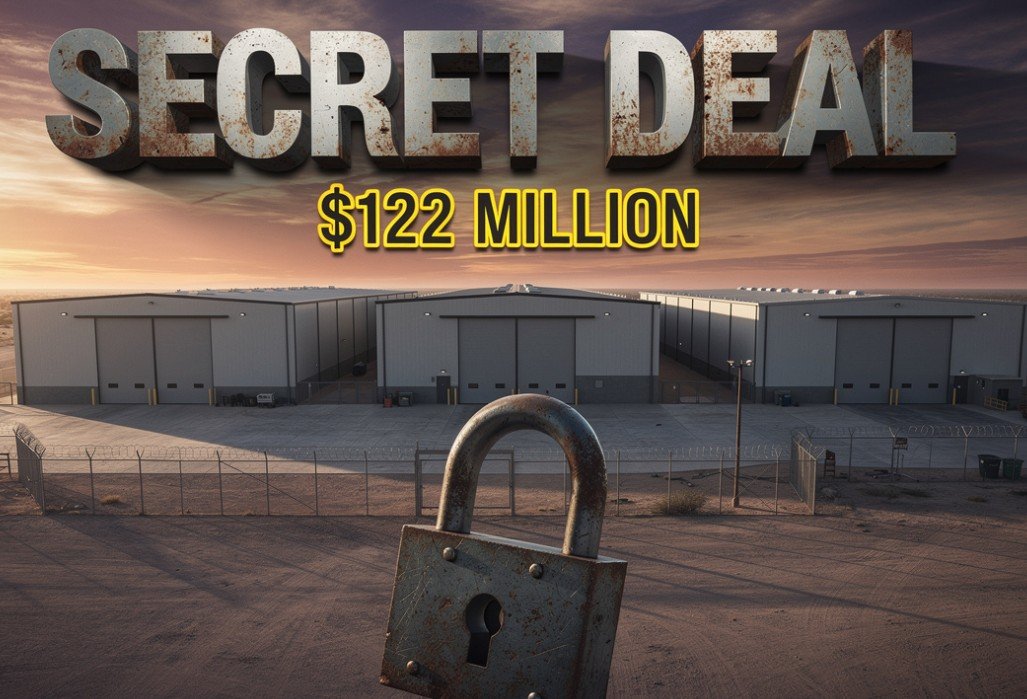
This purchase in the bedroom community of 40,000 people happened without a single public hearing.
Socorro Mayor Rudy Cruz Jr. expressed deep frustration over the lack of communication.
The warehouses sit among low-slung ranch homes and local businesses.
This area was zoned for commercial distribution and logistics.
Now it will likely house thousands of detainees as part of a federal crackdown on immigration.
Growing Fears in Georgia
The situation in Texas is not an isolated event.
Similar anxieties are gripping the town of Social Circle in Georgia.
Residents there have spotted federal officials inspecting a newly built warehouse complex.
Locals worry their community is the next target for a rapid detention expansion.
Officials in Georgia confirm that ICE is actively scouting large industrial spaces to retrofit into holding facilities.
The strategy seems clear and consistent across multiple states.
The government is bypassing the long construction process of building new jails.
They are buying ready-made shells to speed up operational capacity.
This allows the agency to scale up detention numbers within months rather than years.
The Push for Rapid Expansion
This aggressive acquisition strategy aligns with recent federal directives.
The administration is seeking a massive budget increase to support strict border enforcement.
Reports indicate a push for a $45 billion expansion to fund detention and deportation efforts.
The goal is to increase detention capacity significantly to handle the projected rise in border apprehensions.
Buying existing warehouses offers a quick solution to a logistical problem.
Construction of a standard prison takes extreme planning and time.
Warehouses offer open floor plans that can be quickly divided into holding cells.
Here is why the government prefers warehouses:
- Speed: Existing structures save years of construction time.
- Size: Industrial buildings offer massive square footage for holding large groups.
- Location: These sites are often near highways or airports for easy transport.
- Privacy: Industrial parks are usually set back from residential neighborhoods.
However, this efficiency comes at a cost to local transparency.
Bypassing local zoning discussions prevents communities from voicing concerns.
It creates a relationship of distrust between federal agencies and local municipalities.
Economic and Social Impact
The conversion of commercial space into detention centers carries heavy economic implications.
Warehouses in Socorro were intended to bring jobs and tax revenue.
Logistics companies pay local taxes and employ truck drivers and warehouse workers.
Federal property is generally exempt from local property taxes.
This deal could cost the small town of Socorro massive amounts of annual tax revenue.
Residents are also worried about the social impact on their tight-knit community.
Living next to a detention center changes the character of a neighborhood.
There are concerns about increased law enforcement presence and traffic.
Environmental concerns are also rising among the locals.
These facilities require massive amounts of water and sewage services.
Small towns like Socorro and Social Circle may not have the infrastructure to support them.
The sudden spike in utility usage could strain local resources meant for residents.
City leaders are now looking for legal avenues to challenge the lack of notice.
But with the deed signed and money exchanged, their options may be limited.
The silence from Washington has been the loudest part of this transaction.
Communities across the southern United States are now on high alert.
They are watching their own industrial parks for signs of federal interest.
For the people of Socorro, the reality has already arrived.
They must now adapt to having a major federal detention facility in their backyard.
