SCIENCE
How Long Does Oobleck Last?
How long does oobleck last depends on mold and drying. Seal it 24 hours on the counter, keep it cold only while a squeeze firms it, and trash a sour batch.

You made a bowl of cornstarch and water, and it is still sitting on the counter after play. That mixture is oobleck, and it is meant for the day you mix it.
How long does oobleck last? Use the bowl on the day you mix it. Seal a leftover if you want another round soon, and throw it out if it smells sour or looks fuzzy.
A watery layer on top is starch settling, and you can stir that layer back in. The sections below cover the counter, the fridge, a bowl that dried out, and a cleanup that stays out of the drain.
What Is Oobleck Made Of?
Oobleck is cornstarch mixed with water until the grains hang in the liquid instead of dissolving. In British kitchens that same powder is sold as cornflour, and that is the word on the Science Museum Group oobleck sheet. Teachers call the mix a non-Newtonian fluid, which means how thick it feels changes with the force you use.
Activity sheets describe the grains as long and thin, or as tiny irregular bits of starch. Move slowly and water lets the grains slip past one another, so the mix runs. Hit it quickly and the grains lock, so it hardens, then turns runny again as soon as you ease off. Physics labs that study the mix, including Cornell notes on shear thickening, trace that sudden lock to friction between the grains.
A classroom sheet uses ketchup as the comparison, because a shake makes ketchup runnier and a slap makes this mix firmer. The name comes from the Dr. Seuss book Bartholomew and the Oobleck. Some protective armor stays flexible in ordinary movement and hardens on a sudden hit, and museum notes trace that idea to materials like this one. None of those facts sets a storage date. Storage is about water leaving the bowl, and about mold finding wet starch.
The Handful Test That Shows a Good Batch
You know the batch is ready when a handful dribbles between your fingers and then firms the moment you squeeze. Open your hand and it should flow again. A slap on the surface, or a light hit with a mallet, should not send it splashing the way plain water would.
Slowly press your hand in, then try to pull it out fast. The slow push sinks. The fast pull meets resistance. That same pair of moves is how you retest a bowl the next time you open the lid. If a squeeze no longer makes a ball you can hold for a moment, the mix is not in playing shape.
The short demo below shows the mix turning firm in a hand and running again when the hand opens. Use it as a picture of the test, then try the bowl you actually have.
If the mix stays soupy no matter how you squeeze, work in more cornstarch a little at a time. If it cracks and will not flow when you relax your hand, add a small splash of water and work it through. Stop as soon as the handful test works. Extra water is what shows up later as a puddle on top of a stored bowl.
Home Cups and a Classroom Tub
Home bowls and classroom tubs start from different amounts, and both are only starting points. Cornstarch packs differently from brand to brand, so you finish by the handful test rather than by scraping the cup clean. A big group needs the shallow tub in Science World’s 30-minute oobleck activity, used in that session rather than saved for a later class.
BATCH SIZES FROM ACTIVITY SHEETS
| Where you make it | Starch | Water | What that guide clocks |
|---|---|---|---|
| A teaching video | About 1.5 cups cornstarch | About 1 cup | Mix, then play |
| A home recipe | 2 cups cornstarch | 1 cup | 5 minutes to mix |
| Science World class | 3 or 4 boxes | About 1 litre | 30 minutes |
| Science Museum Group | Heaped cornflour | Added a bit at a time | 20 minutes, for ages 7 to 11 and 11 to 14 |
A class tub uses several boxes because many hands are in it at once. A home bowl does not need that volume, and a smaller bowl is easier to seal without trapping a pool of spare water. Whatever size you mix, plan the play for the day the starch meets the water.
Oobleck Shelf Life on the Counter and in the Fridge
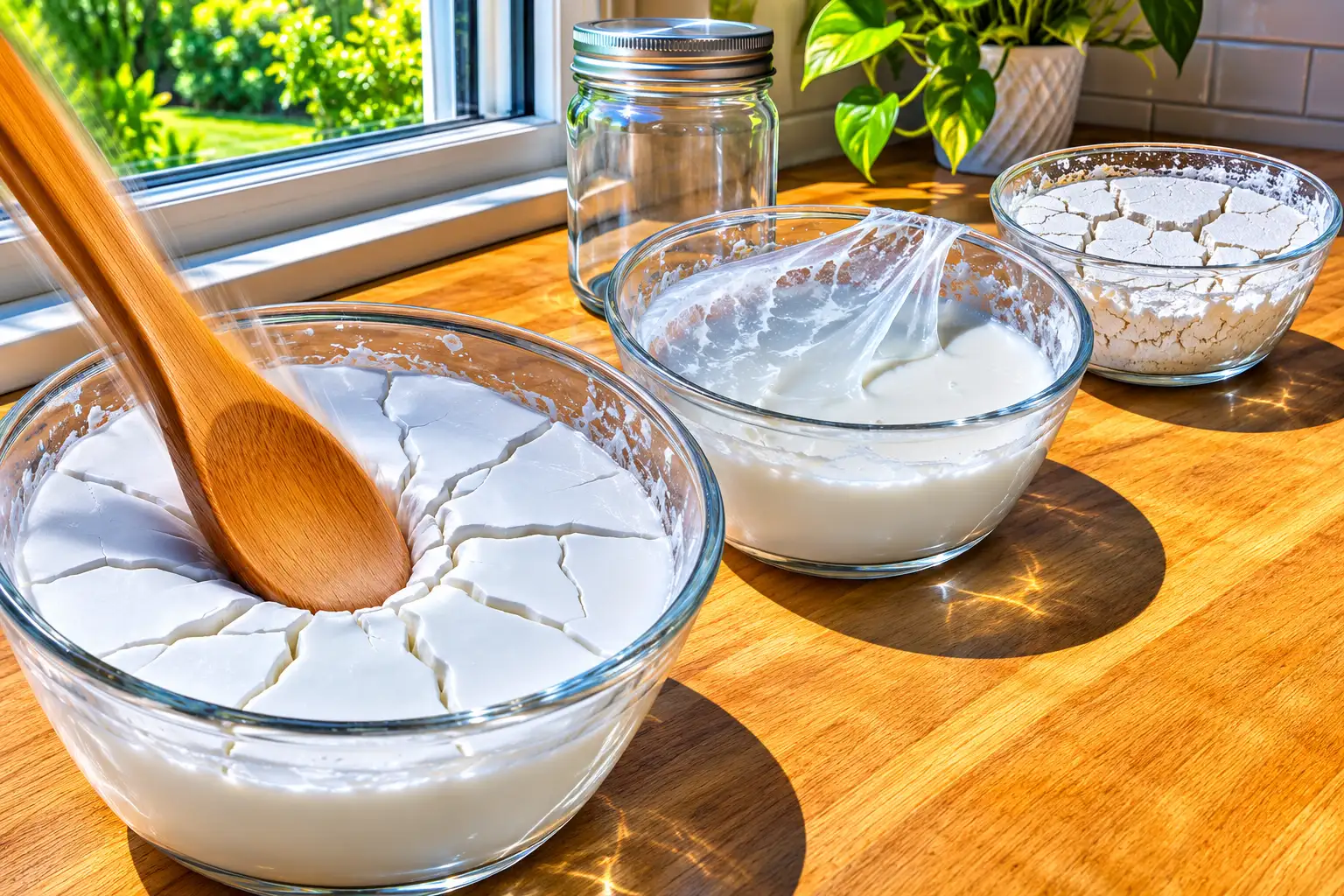
Two changes end a bowl, and they are not the same event. Water evaporates, or it rises and leaves a thick layer under a watery cap, which changes the feel. Mold moves in because wet starch is food, which changes the smell and the look of the surface. A watery cap by itself is the starch settling, and a home recipe tells you to work that layer back through with your hands.
Left open, the surface dries while you play, and a bowl left open long enough turns back toward powder. Sealed on the counter, one home recipe sets the limit at 24 hours, because mold may start after that. A class sheet does not ask the bowl to survive the night. The session on the sheet is the whole plan.
WHAT EACH STORAGE SPOT DOES
| How you leave it | What changes | What you do |
|---|---|---|
| Open during play | The surface dries | Cover it when you stop, or throw it out when play is over |
| Sealed at room temperature | Mold may start after 24 hours | Smell it and squeeze it before another session |
| Sealed in the fridge | Cold slows drying and mold | Stir the watery layer back, then use the same checks |
| Dried, with no sour smell and no mold | It is close to cornstarch powder again | Add water to revive it, or sweep the powder into the trash |
The fridge is how you ask for more time than that counter stretch. Cold slows drying and it slows mold, so a sealed tub belongs there if you want another session after the first day. Mixed oobleck has no date printed on a package. The checks in the next section decide whether the cold bowl is still a toy.
How to Store Oobleck for the Next Day
Pack the batch while the handful test still works, before a crust forms on top. Scrape it into a clean tub with a lid, or into a zip bag with the air pressed out. A loose sheet of plastic over a mixing bowl lets air sneak in at the rim, so it is a weak cover if the bowl has to wait overnight.
When the next play time is past that first sealed day, put the container in the fridge. Before you play, stir, and give a cold batch a few minutes on the counter if it feels stiff. Add only a splash of water if the squeeze test is too firm. Clean hands matter at this step. Fingers that just held a snack carry crumbs into wet starch, and those crumbs give mold more to feed on.
If you want color, stir food coloring into the water before the cornstarch goes in. That is the classroom order, and it keeps you from chasing dry pockets of white powder. Color does not keep the batch fresh. It only helps you see the mix while you play.
- Seal the batch in a clean tub or a zip bag with the air pressed out.
- Leave that sealed container at room temperature for no more than 24 hours.
- Move it to the fridge when you want time past that 24 hours.
- Stir any watery layer back in before you decide to play or to throw it out.
A bowl you sealed after school and opened the next afternoon still gets those steps in order. Stir first. Then smell, then squeeze. If it firms and smells like starch, it is still oobleck. If the smell is sour, the stir does not save it.
Signs That Oobleck Has Gone Bad
Use the same order every time you open the container. Smell comes first, because a sour bowl is finished even when it still feels interesting in your hand. Fresh oobleck smells like plain starch, or like almost nothing. A sour smell, in the range of spoiled milk, means the starch is breaking down, and the whole container goes out.
THE MORNING-AFTER CHECK
- The smell: Plain starch is fine, and a sour or foul smell means the whole container is finished.
- The surface: Fuzzy spots in green, black, or pink mean mold, and lifting those spots off does not save the rest.
- The stir: A watery layer on top should blend back in when you work it with a clean hand.
- The squeeze: After that stir, a handful should firm into a ball and then run when you open your hand.
If the watery layer will not blend back into one smooth mix, treat the batch as finished rather than as a normal settle. Drying is a separate case. A crust that is still just starch, with no sour smell and no fuzzy color, can take water again. Mold cannot be stirred back into a safe toy.
Bringing Dried Oobleck Back With Water
A bowl that dried in open air can turn chalky and cracked. That powder is cornstarch again when nothing fuzzy grew first. Revival means putting the water back until the handful test returns. Use it only on a clean dry powder. A batch that soured and then dried still goes in the trash.
- Check for a sour smell and for green, black, or pink growth. If you find either, bag the batch for the trash.
- Break the dry sheet so no hard lump is hiding damp mix in the middle.
- Add water a little at a time and work it with your hands.
- Stop when a squeeze firms and a relaxed hand lets the mix flow.
If the revived mix never firms, it is too wet, and a little dry cornstarch from the box can bring the test back. If it will not flow at all, it needs another small splash of water. Once it passes, start the clock again: 24 hours at room temperature in a sealed tub, or the fridge if you need longer, with the same smell and squeeze checks either way.
Throwing Oobleck Away Without Clogging a Drain
Wet oobleck and a household drain are a bad pair. In the pipe the flow slows, the starch settles, and it can pack into a clog that a typical drain cleaner does not clear. You throw finished oobleck in the trash. That is the step in the Science Buddies note on disposal, and it covers the sink, the toilet, and a storm drain.
In a classroom, the risky moment is the cleanup rush. A tub carried to the sink and tipped can pack a pipe with one pour. Scrape at the table, wipe with paper towels, and tie the bag before anyone turns a tap on. A home bowl is smaller, and it still follows that same order.
- Scrape the mix into a bag with a spatula, a spoon, or your hands.
- Wipe the bowl, the tools, and the table with paper towels until the wet film is gone.
- Wash the bowl only after that wipe. A rinse while it is still coated sends starch into the pipe.
- If you would rather dry it first, spread a thin layer on a tray, wait until it is chalky, and crumble the powder into the trash.
- Wash your hands after the bag is tied.
SKIP THE HOT RINSE
- Cold water: If a little already slipped down the drain, flush with plenty of cold water.
- No hot tap: Heat can cook the starch into a thick lump, closer to gravy than to a rinse that moves.
- The bend: If the sink still will not empty, starch can sit in the trap under the sink, and that is a plumbing job rather than more rinsing.
A dried drip on a hard floor can be swept or vacuumed, so let table splatters dry before you chase them with a wet sponge. Fabric that caught cornflour can go through a normal wash once the thick bits are scraped off into the trash. The paper-towel wipe, done before any water, is the step that keeps the pipe out of the story.
Frequently Asked Questions
Can You Freeze Oobleck?
Some storage notes keep a sealed bag of oobleck in the freezer to slow mold while it stays frozen. Thaw the bag in the fridge, stir any watery layer back in, and run the smell and squeeze checks before play. Freezing does not rescue a batch that already smelled sour.
Will Oobleck Stain Clothes?
Cornflour on clothes washes out in a normal wash, and a dried spill on a hard floor can be swept or vacuumed. Let a puddle dry before you scrape it, then launder the fabric as usual. Skip wiping a wet glob into a sink, because that route is how starch reaches the pipes.
Can You Compost Dried Oobleck?
Dry, mold-free powder can be composted or bagged for the trash, since the water is gone and what remains is cornstarch. Wet oobleck goes in a bag in the trash, not into a compost pail and not into a sink. A batch with fuzzy spots should be bagged and thrown out rather than composted.
Is Oobleck Safe to Taste?
Oobleck is not for eating, and young children need a grown-up nearby while they play. The powder in a sealed box is a cooking starch before it is mixed and handled. Once the bowl has been a play surface, keep it away from mouths, and never taste a batch that smells sour or looks fuzzy.
Should You Leave Oobleck Outside to Dry?
Dry a thin layer on a tray indoors, then crumble the chalky sheet into the trash, or compost it if it never grew mold. A pile in the yard can draw insects, and rain turns it back into a wet mix. That wet mix still does not belong in a storm drain.
A sealed box of dry cornstarch is the part that keeps until the next time you want to play. Mix a fresh bowl when you want the handful test again, and give a bowl that already holds water another round only when it still firms in your hand and still smells like starch.


Greed Held After a $697 Million Crypto Long Flush

Fed Minutes Keep a Year-End Rate Hike Alive

A Nanny-Cam Tape Follows Tyreek Hill Into Free Agency

Star Wars Galactic Racer Makes a Crash End the Tour

Amazon Puts Apple’s June MacBook Prices Back on Sale

Sophia Wootten Turns the Miss Georgia Crown Toward Cleft Care

The iPhone 16 Pro Flipkart Cut Did Not Last

Georgia Beach Bacteria List Leaves Swim Areas Open

Microsoft Prints Azure’s $29.42 Billion Quarter and Shrinks the Map

UltraTech’s Ultravolt Launch Puts Cable Multiples on Trial
-
 ENTERTAINMENT4 months ago
Sophia Wootten Turns the Miss Georgia Crown Toward Cleft Care
-
 NEWS1 year ago
The iPhone 16 Pro Flipkart Cut Did Not Last
-
 NEWS4 months ago
Georgia Beach Bacteria List Leaves Swim Areas Open
-
 BUSINESS2 months ago
UltraTech’s Ultravolt Launch Puts Cable Multiples on Trial
-

 NEWS10 months ago
IXI Autofocus Glasses Still Lack a European CE Mark
-
 NEWS2 months ago
Microsoft Prints Azure’s $29.42 Billion Quarter and Shrinks the Map
-

 NEWS4 months ago
Little St. Simons Island Hatches Loggerheads at 72.4 Percent
-

 NEWS4 months ago
OnePlus Ends OxygenOS After Quitting US and Europe