
Georgia native and University Police Department investigator Heiko Ellis crossed the commencement stage this December with a master’s degree in criminal justice and criminology, adding another chapter to a career built on service, learning, and quiet determination.
For Ellis, the moment wasn’t about titles or applause. It was about keeping a promise to himself.
A Degree Earned Through Purpose, Not Pause
Ellis, now a two-time graduate of Georgia Southern University, completed his Master of Science while continuing full-time work as an investigator with the university’s Police Department.
The balance wasn’t easy.
Classes, case files, late nights, early mornings. It stacks up fast. Still, Ellis stayed the course, believing education isn’t something you “finish” and walk away from.
“Education stands among the most enduring commitments we can make to ourselves,” Ellis said, reflecting on the milestone. “It’s a promise to keep learning, to keep questioning, to keep pushing for a deeper sense of how the world actually works.”
That mindset shows up in both his classroom work and his day job.
And yeah, it shows up on graduation day too.
From Undergraduate Roots to a ‘Double Eagle’
Ellis’ path through higher education began years earlier, back when he enrolled as an undergraduate studying criminal justice, criminology, and psychology.
Georgia Southern, he says, has a way of pulling students in and then asking more of them once they’re there.
“Curiosity is encouraged here,” Ellis said. “Growth isn’t optional. It’s expected.”
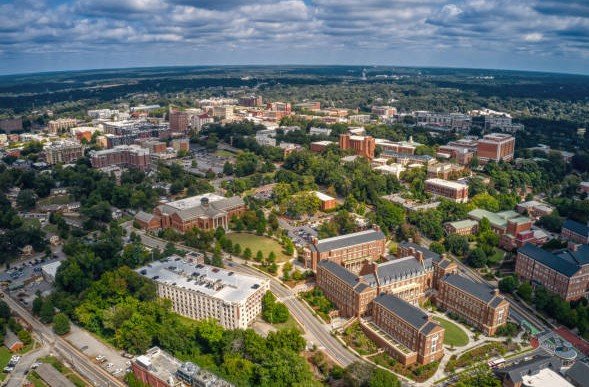
That environment mattered. So did the faculty who challenged him and the peers who pushed conversations beyond textbooks.
He completed his bachelor’s degree in 2021.
Then he didn’t leave.
Instead, Ellis joined the University Police Department, stepping into professional work while staying closely tied to the campus that shaped him.
Returning for a graduate degree felt less like a new start and more like a continuation.
Inside the Work of a University Investigator
Ellis has worked with the University Police Department for roughly four years, handling investigations that demand patience, judgment, and emotional intelligence.
No two cases look the same.
Some are procedural. Others carry weight that lingers well after the paperwork is done. Over time, those experiences sharpen how an investigator thinks, listens, and reacts.
Ellis says his academic training helped frame that work in ways that weren’t obvious at first.
Theory met reality.
And sometimes they clashed.
That friction, he notes, is where learning happens.
His graduate coursework in the College of Behavioral and Social Sciences directly informed how he approached investigations, decision-making, and even conversations with colleagues and students.
It wasn’t abstract stuff. It showed up on the job.
Where Classroom Theory Meets Campus Reality
Graduate study gave Ellis space to slow down and look closely at systems that many people only see from the outside.
Policing. Accountability. Ethics. Human behavior.
Those ideas don’t stay on paper for someone working active cases.
They follow you back to the office.
Ellis credits the program with helping him see investigations as more than fact-finding exercises. Context matters. Motives matter. So do social pressures, trauma, and institutional responsibility.
In his words, academic work and professional duties “grow together,” shaping how problems are framed and solved.
Some lessons stuck harder than others.
-
Clear documentation protects everyone
-
Listening often matters more than speaking
-
Every decision carries ripple effects
Those ideas sound simple. They aren’t.
Support Systems That Made It Possible
Ellis is quick to point out that earning a graduate degree while working full time isn’t a solo effort.
Faculty flexibility mattered.
Supervisors mattered.
So did colleagues who understood when schedules got tight or energy ran low.
Georgia Southern, he says, creates space for staff members to grow professionally without stepping away from their roles.
That culture of support made returning to school feel realistic, not reckless.
It also sent a message: advancement isn’t reserved for one phase of life.
Learning doesn’t have an expiration date.
A Commitment That Doesn’t End at Graduation
Walking across the stage marked a finish line, sure.
But it wasn’t an ending.
Ellis sees education as something ongoing, something that evolves alongside work and life experience. The master’s degree didn’t replace his field experience. It sharpened it.
It asked better questions.
It challenged assumptions.
And it reminded him why he started in the first place.
Service, after all, isn’t static. Communities change. Institutions change. So must the people who protect them.
Ellis’ achievement stands as a reminder that growth doesn’t always come with loud announcements. Sometimes it looks like showing up, again and again, balancing duty with study, and refusing to stand still.
That quiet persistence might be the real lesson here.
