Georgia’s ruling Georgian Dream party announced on October 28, 2025, that it will ask the Constitutional Court to outlaw the three largest opposition parties, citing threats to the nation’s constitutional order. This step, revealed by Parliament Speaker Shalva Papuashvili in Tbilisi, targets pro-Western groups and raises fears of a slide toward authoritarian rule in the European Union candidate country.
Background on the Political Shift
Georgia has long stood out as a pro-Western beacon among former Soviet states. But recent years have seen a turn under Georgian Dream’s leadership.
The party won a majority in the October 2024 parliamentary elections, amid claims of irregularities from opponents. Since then, the government has paused EU membership talks, while aiming to keep good relations with Russia.
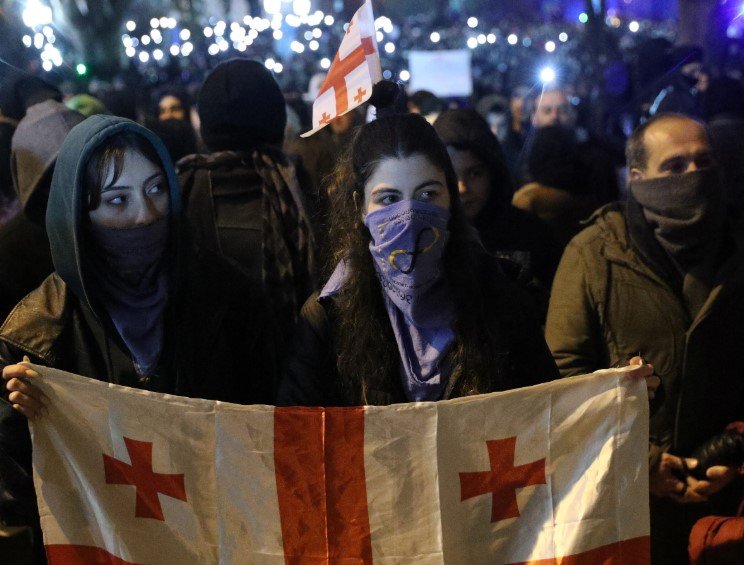
This ban request comes against a backdrop of growing tensions. Protests have rocked Tbilisi for over a year, with police cracking down hard.
Opposition leaders argue this move aims to silence dissent. They point to jailed figures like former President Mikheil Saakashvili as proof of a crackdown.
Details of the Proposed Ban
The lawsuit focuses on three key opposition blocs. Georgian Dream accuses them of undermining stability.
Here are the targeted parties and their main features:
- Coalition for Change: Led by figures like Nika Gvaramia and Nika Melia, this group pushes for strong Western ties and reforms.
- United National Movement: Founded by Saakashvili, it remains a vocal critic of the current government and advocates for NATO integration.
- Strong Georgia: A bloc including parties like Lelo for Georgia, it focuses on economic growth and anti-corruption efforts.
Papuashvili stated these groups pose a real threat. If approved, the ban would bar them from politics, revoke mandates, and prevent members from forming new parties.
Local media reports suggest the court could rule quickly, given the government’s influence. Analysts warn this could lead to a one-party state.
Reactions from Opposition and International Community
Opposition voices have condemned the action swiftly. Irakli Kupradze from Strong Georgia called it a blow to democracy and promised to fight back.
Protests are expected to intensify in Tbilisi. Demonstrators have already clashed with authorities over similar issues.
On the global stage, the move draws concern. The European Union has urged Georgia to uphold democratic standards for membership hopes.
The United States expressed worry, with officials noting it harms Georgia’s path to Western alliances. Neighboring countries watch closely, fearing regional instability.
Human rights groups highlight risks to free speech. They argue the ban violates international norms on political pluralism.
Potential Impacts on Georgia’s Future
This development could reshape Georgia’s political landscape. With opposition sidelined, Georgian Dream might push through more laws without checks.
Economic ties with Russia have grown, including trade deals. Yet, public support for EU integration remains high, polls show over 80 percent favor it.
A table below outlines key recent events leading to this point:
| Date | Event | Impact |
|---|---|---|
| October 2024 | Parliamentary elections | Georgian Dream secures majority amid fraud allegations |
| April 2025 | Anti-government protests peak | Thousands demand democratic reforms |
| October 2025 | Ban lawsuit announced | Escalates fears of authoritarian shift |
If the court approves, it might spark larger unrest. Experts predict legal challenges and possible international sanctions.
The move echoes actions in other nations facing democratic backsliding. Georgia risks isolation if it continues this path.
Broader Context and Analysis
Georgia’s situation ties into global trends of rising authoritarianism. The war in Ukraine has influenced regional politics, with Russia gaining leverage.
Domestically, the government justifies the ban as protecting order. Critics see it as consolidating power.
Logical reasoning suggests this could deter foreign investment. Businesses value stable, democratic environments.
Recent data from 2025 shows Georgia’s GDP growth at 4.5 percent, but political turmoil might slow it.
Balanced views note Georgian Dream’s popularity in rural areas. They campaign on stability and traditional values.
Yet, urban youth drive protests, seeking closer Western ties. This divide could define the nation’s direction.
As this story unfolds, stay informed on how it affects Georgia and the region. Share your thoughts in the comments below, and spread the word if you found this insightful.